Introduction
Rugby School is one of the most famous historic schools in England and is widely recognized as an important institution in the development of modern British education. Located in the town of Rugby in Warwickshire, England, the school has a history stretching back more than four centuries. Founded in 1567, Rugby School has witnessed enormous changes in British society, education, politics, literature, sport, and culture.
The school is particularly famous because of its connection with the development of rugby football, one of the world’s most popular team sports. However, the history of Rugby School is much broader than the sport that carries its name. Over the centuries, it developed from a local grammar school into an internationally respected independent school known for academic education, character development, extracurricular activities, and a strong tradition of public service.
Rugby School has educated numerous influential figures, including writers, politicians, scientists, explorers, military leaders, and other prominent public figures. Its educational philosophy has also influenced schools beyond Britain.
This article explores the complete history of Rugby School, from its foundation in the sixteenth century to its role in modern education.
1. The Foundation of Rugby School
Rugby School was founded in 1567 through the bequest of Lawrence Sheriff, a wealthy Elizabethan merchant and grocer who was born in Rugby.
Lawrence Sheriff became a successful businessman in London and developed connections with the royal court. Despite achieving wealth and status, he maintained a strong connection with his hometown.
His charitable intentions eventually resulted in the establishment of a grammar school in Rugby.
The original purpose of the school was to provide education for local boys. During the sixteenth century, grammar schools played an important role in expanding access to classical education. Latin, religious studies, grammar, rhetoric, and other subjects were central to the curriculum.
Sheriff’s foundation also reflected an important Elizabethan belief: education could improve both individuals and communities.
The school therefore began as a relatively local educational institution rather than the internationally famous boarding school it would eventually become.
2. Lawrence Sheriff and His Educational Vision
Lawrence Sheriff is central to the history of Rugby School.
Born in Rugby in the early sixteenth century, Sheriff moved to London and established himself as a successful merchant. His business career gave him considerable financial resources.
Sheriff’s connection with Queen Elizabeth I also contributed to his prominence.
When he created provisions for education in Rugby, his objective was not simply to establish another institution. He wanted his wealth to benefit future generations.
The original foundation included educational and charitable provisions connected with Rugby and nearby areas.
The school that developed from his bequest eventually became known as Rugby School.
Sheriff’s legacy remains important because the institution continues to connect its modern identity with its Elizabethan origins.
3. Rugby School in the Elizabethan Period
The sixteenth century was a period of enormous transformation in England.
The reign of Elizabeth I brought changes in religion, politics, literature, exploration, and education. Schools increasingly emphasized classical learning as preparation for universities, professions, and public life.
Rugby School’s early curriculum reflected these educational traditions.
Latin was particularly important. Students were expected to develop the ability to read and write Latin and to study classical authors.
Education was generally strict by modern standards. Discipline was an important feature of school life, and teachers possessed significant authority.
The school was initially much smaller than the modern Rugby School. Its primary purpose was local education rather than preparation for an international professional career.
Nevertheless, the foundation established in 1567 provided the basis for centuries of development.
4. Growth During the Seventeenth Century
During the seventeenth century, Rugby School continued to develop within the changing educational environment of England.
This was a politically turbulent period. England experienced the English Civil War, the Commonwealth, the Restoration of the monarchy, and major religious and political disputes.
Schools were affected by these changes.
Rugby School continued its educational role while gradually establishing a stronger institutional identity.
Classical education remained central, but the school increasingly became associated with the broader traditions of English grammar-school education.
As its reputation developed, the school began attracting pupils from outside the immediate area.
This gradual expansion would eventually transform Rugby from a local grammar school into a major public school.
5. Rugby School During the Eighteenth Century
The eighteenth century saw major changes in British society.
The growth of the British Empire, commercial expansion, scientific development, and increasing interest in classical culture influenced education.
Rugby School continued to provide a traditional classical education.
However, like other English schools, it faced questions concerning discipline, teaching quality, and institutional management.
During this period, the concept of the English public school began becoming more clearly established.
Schools such as Rugby, Eton, Harrow, Winchester, and Westminster developed distinctive identities.
Rugby School gradually became one of the important institutions within this educational tradition.
6. Thomas Arnold and the Transformation of Rugby School
One of the most important chapters in Rugby School’s history began in 1828, when Thomas Arnold became headmaster.
Arnold transformed the school and became one of the most influential headmasters in British educational history.
His tenure lasted until his death in 1842.
Arnold believed that education should develop much more than academic ability.
He wanted students to develop:
- Moral responsibility
- Self-discipline
- Leadership
- Personal integrity
- Religious awareness
- A sense of duty
- Responsibility toward society
Under Arnold, Rugby School became famous for its approach to character and leadership.
His educational philosophy influenced the wider British public-school system.
7. Arnold’s Educational Philosophy
Thomas Arnold believed that a school should help prepare young people for responsible adulthood.
He regarded education as a combination of intellectual, moral, and personal development.
Academic success was important, but it was not enough.
Arnold expected students to develop strong personal character.
He also believed that older pupils should accept greater responsibilities.
This idea contributed to the development of the prefect system, in which senior students were given authority and responsibility for helping maintain discipline.
The concept of leadership through responsibility became strongly associated with Rugby School.
Arnold’s influence eventually extended far beyond Rugby.
His methods became an important model for the Victorian public-school system.
8. Rugby School and the Development of Rugby Football
Perhaps the most famous story associated with Rugby School concerns the development of rugby football.
According to the traditional story, in 1823, a pupil named William Webb Ellis allegedly picked up the ball during a football match and ran with it.
This story became one of the foundational legends of rugby football.
The Rugby Football Union later named the Rugby World Cup trophy the Webb Ellis Cup in recognition of the tradition.
However, historians have debated how accurately the story reflects the actual origins of rugby.
Football games involving handling the ball existed in various forms before the nineteenth century. Rugby School itself had distinctive football traditions.
What is historically important is that Rugby School became a major center in the development and codification of a form of football in which carrying the ball became an accepted feature.
9. William Webb Ellis
William Webb Ellis is one of the most famous names connected with Rugby School.
He attended the school during the early nineteenth century.
The famous story says that during a football match he demonstrated a revolutionary act by picking up the ball and running toward the opponents’ goal.
Although historians have questioned the precise details of the event, the story became deeply embedded in rugby culture.
The name William Webb Ellis remains internationally associated with rugby.
The Webb Ellis Cup, awarded to the winners of the Rugby World Cup, is one of the most recognizable trophies in international sport.
10. The Rugby Football Tradition
Rugby School’s football traditions became increasingly organized during the nineteenth century.
Different schools in England played different forms of football, with variations in rules.
At Rugby, carrying the ball became a defining feature.
As former pupils took the game to universities, clubs, military institutions, and other schools, the Rugby version of football spread.
Eventually, organizations were created to standardize the rules.
The Rugby Football Union, founded in 1871, became central to the development of rugby union in England.
The sport subsequently spread throughout Britain and the wider world.
Today rugby is played internationally across Europe, Africa, Asia, Oceania, and the Americas.
11. Rugby School During the Victorian Era
The Victorian period was one of the most important eras in Rugby School’s history.
Britain was undergoing industrialization, urbanization, imperial expansion, scientific progress, and major social changes.
Public schools increasingly became associated with educating future leaders.
Rugby School became particularly influential because of the educational reforms associated with Thomas Arnold.
Its reputation grew among families seeking a prestigious education for their sons.
The school also became closely connected with ideas of leadership, service, discipline, and character.
These principles were later adopted in different forms by educational institutions throughout the British Empire.
12. Thomas Hughes and Tom Brown’s School Days
Rugby School became internationally famous through literature as well as education.
Former pupil Thomas Hughes wrote Tom Brown’s School Days, published in 1857.
The novel was inspired by Rugby School and drew heavily upon the experiences and educational culture of the nineteenth-century public school.
The story describes school life, friendships, discipline, sport, bullying, moral development, and relationships between pupils and teachers.
The book became extremely influential.
It helped shape popular ideas about the English public school.
The world of Rugby School portrayed in the novel became part of British cultural history.
13. The Impact of Tom Brown’s School Days
The influence of Tom Brown’s School Days extended far beyond Rugby.
The book became a popular representation of Victorian school life.
It helped establish literary traditions surrounding British boarding schools.
Themes such as friendship, courage, competition, loyalty, bullying, leadership, and personal growth became common elements of school stories.
The book also reinforced the image of Rugby as a place where sport and character formation were closely connected.
Although the real Rugby School has changed considerably since the nineteenth century, the cultural influence of Hughes’s novel remains important.
14. Expansion of the School
As Rugby School’s reputation increased, its facilities and organization expanded.
The school developed additional buildings, classrooms, boarding facilities, playing fields, and administrative structures.
Boarding became an important part of school life.
The house system also became increasingly significant.
Pupils lived and competed within houses, creating strong communities and traditions.
Sport became a major element of the school’s identity.
Cricket, athletics, football, rugby, and other activities contributed to the school’s educational culture.
15. The House System
The house system became an important part of Rugby School life.
Houses provide students with smaller communities within the larger school.
They create opportunities for:
- Friendship
- Competition
- Leadership
- Teamwork
- Mentoring
- Sporting activities
- Cultural events
The system also encourages students to develop relationships across different age groups.
Senior pupils may take leadership responsibilities, while younger students benefit from guidance and support.
The house tradition remains a distinctive feature of many British boarding schools, including Rugby.
16. Rugby School and Academic Education
Although Rugby is famous for sport, academic education has always remained an important part of the school’s identity.
Traditional subjects included Latin and Greek.
Over time, the curriculum expanded to include subjects such as:
- Mathematics
- English
- History
- Modern languages
- Sciences
- Geography
- Economics
- Art
- Music
- Technology
The modern school provides a much broader curriculum than the Elizabethan institution could have imagined.
This expansion reflects the transformation of education from a predominantly classical model toward a multidisciplinary approach.
17. Science and Modern Education
During the nineteenth and twentieth centuries, science became increasingly important in British education.
Rugby School adapted to these developments.
Scientific subjects became part of the curriculum, reflecting the growing importance of scientific research and technological innovation.
The modern school provides students with opportunities to study sciences alongside humanities, languages, mathematics, creative subjects, and other disciplines.
This balance reflects the school’s continuing effort to combine traditional educational values with modern academic requirements.
18. Rugby School and World War I
The First World War had a major impact on British schools.
Many former pupils and members of school communities served in the armed forces.
Rugby School was affected by the war through the loss of former pupils and changes to normal school life.
The school remembers those who served and died through memorials and ceremonies.
The experience reflected a wider pattern across British public schools, where military service was strongly associated with ideas of duty and national service.
19. Rugby School During World War II
The Second World War again brought significant disruption.
Students, teachers, families, and former pupils were affected by the conflict.
Schools had to adapt to wartime conditions.
The war also accelerated changes in British society.
After 1945, educational expectations changed considerably, and traditional public schools gradually began modernizing their structures and curricula.
Rugby School was part of this wider transformation.
20. The Twentieth-Century Transformation
The twentieth century brought dramatic changes to British education.
Ideas about social mobility, equality, university education, and child development became increasingly important.
Rugby School gradually evolved from its Victorian model.
The school expanded educational opportunities and modernized its facilities.
New academic disciplines were introduced.
Sport remained important, but it increasingly became one part of a much broader extracurricular program.
Music, drama, debating, art, community service, and other activities became significant parts of school life.
21. The Evolution of Boarding Education
Boarding remains an important part of Rugby School’s identity.
Historically, boarding schools were closely associated with Britain’s professional and governing classes.
Today, boarding education is more diverse.
Students can come from different regions and countries.
Boarding can provide opportunities for students to participate fully in school activities while living within a structured educational community.
Modern boarding also places greater emphasis on student welfare, pastoral care, safeguarding, and personal development.
22. Rugby School for International Students
Rugby School has developed an international reputation.
Students from different parts of the world have attended the school over the years.
The international dimension reflects the global influence of British education.
Former pupils have gone into universities, government, business, science, literature, medicine, the military, and many other professions.
The school continues to attract families interested in a British independent-school education.
23. Famous Alumni of Rugby School
Rugby School has educated many notable people.
Its former pupils include writers, politicians, scientists, military figures, explorers, academics, and public servants.
Among the most famous are:
Thomas Hughes
Thomas Hughes was a nineteenth-century writer and former Rugby pupil.
He is best known for Tom Brown’s School Days, which was inspired by Rugby School.
Neville Chamberlain
Neville Chamberlain, who later became Prime Minister of the United Kingdom, was educated at Rugby School.
He served as prime minister from 1937 to 1940.
Matthew Arnold
Poet and cultural critic Matthew Arnold was associated with Rugby School through his family connection with Thomas Arnold and his education there.
He became one of the major literary and cultural figures of Victorian Britain.
Rupert Brooke
The poet Rupert Brooke was educated at Rugby School.
He became famous for his poetry associated with the First World War.
Lewis Carroll
Charles Lutwidge Dodgson, better known as Lewis Carroll, was educated at Rugby School before becoming famous for works including Alice’s Adventures in Wonderland.
24. Rugby School and Literature
Literature has played a major role in Rugby’s history.
The school has connections with several important writers.
The most famous literary connection is undoubtedly Tom Brown’s School Days.
The book helped turn the school into a cultural symbol.
Rugby School’s literary tradition also reflects the importance of English education in developing writers.
The school continues to encourage literature, creative writing, drama, debating, and communication.
25. Rugby School and Sport
Sport is one of the strongest elements of Rugby School’s identity.
Rugby football naturally occupies a special position.
However, the school supports a wide range of sports.
These may include:
- Cricket
- Athletics
- Hockey
- Tennis
- Swimming
- Rowing
- Cross-country
- Football
- Fencing
- Golf
- Basketball
- Other team and individual sports
Sport is viewed not only as physical activity but also as an opportunity to develop teamwork, resilience, leadership, discipline, and sportsmanship.
26. The Global Spread of Rugby
The influence of Rugby School can be seen in the global popularity of rugby football.
The sport spread through schools, universities, military institutions, clubs, and British communities.
Eventually, rugby became a major international sport.
Today, rugby union and rugby league have millions of participants and supporters around the world.
International competitions such as the Rugby World Cup have turned the sport into a global phenomenon.
The connection between Rugby School and the sport remains one of the most fascinating examples of how a school tradition can influence global culture.
27. Rugby World Cup and the Webb Ellis Legacy
The Rugby World Cup is the premier international competition in rugby union.
Its trophy is officially known as the Webb Ellis Cup.
This name recognizes the traditional story connecting William Webb Ellis with Rugby School.
The trophy symbolizes the worldwide legacy of the game.
Although historians continue to debate the exact origins of rugby, Rugby School remains permanently connected to the sport’s historical development.
28. Changes in School Culture
Modern Rugby School is very different from the institution of the sixteenth or nineteenth century.
Students today have access to technologies and educational resources that earlier generations could not have imagined.
Teaching methods have changed.
Pastoral care has become much more developed.
Student wellbeing, safeguarding, inclusion, and mental health awareness are now important parts of modern education.
At the same time, the school continues to emphasize traditional values such as discipline, responsibility, teamwork, and service.
29. Girls and the Modern Rugby School
Historically, Rugby School was a boys’ school.
The wider British independent-school sector changed significantly during the twentieth century.
Rugby School eventually developed coeducational education.
The inclusion of girls represented an important transformation in the institution’s history.
Modern Rugby School provides educational opportunities for both boys and girls.
This change reflects broader developments in British education and changing expectations about gender and educational access.
30. Rugby School’s Educational Philosophy Today
The modern philosophy of Rugby School is based on more than examination results.
Academic achievement remains important, but education also involves personal growth.
Students are encouraged to develop:
- Confidence
- Independence
- Curiosity
- Creativity
- Leadership
- Communication
- Resilience
- Teamwork
- Social responsibility
This broad approach reflects the school’s historical tradition while responding to modern educational needs.
31. Rugby School and Character Education
Character education has been associated with Rugby School since the nineteenth century.
Thomas Arnold famously emphasized the importance of moral and personal development.
Modern interpretations of character education are different from Victorian approaches, but many similar ideas remain.
Students are encouraged to take responsibility for their actions and contribute positively to their communities.
Leadership opportunities are available through academic, sporting, cultural, and community activities.
32. Arts and Cultural Life
Rugby School is not exclusively focused on academics and sport.
The arts are also important.
Students can participate in:
- Music
- Theatre
- Drama
- Visual arts
- Creative writing
- Debating
- Public speaking
Performing arts can help students develop confidence and communication skills.
Cultural activities also create opportunities for students to explore ideas outside the traditional academic curriculum.
33. Rugby School and Community Service
The concept of service has long been connected with British public-school education.
Modern Rugby School continues this tradition through community activities and service-oriented opportunities.
Students may participate in projects designed to support local communities or wider charitable causes.
Such activities encourage students to understand that education carries responsibilities as well as privileges.
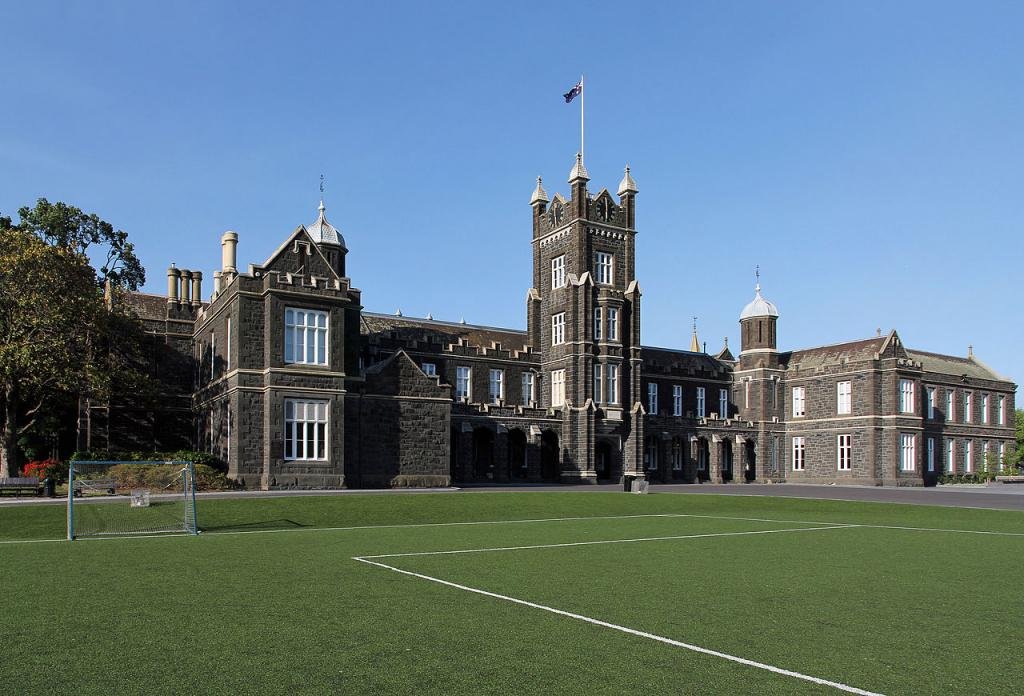
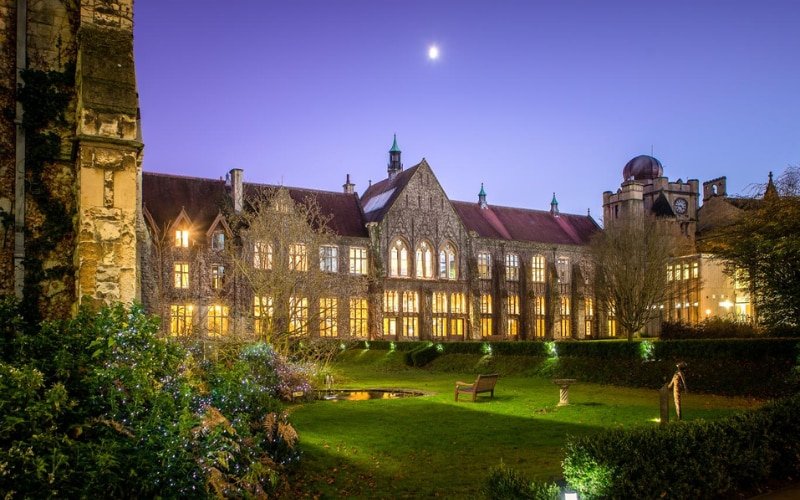
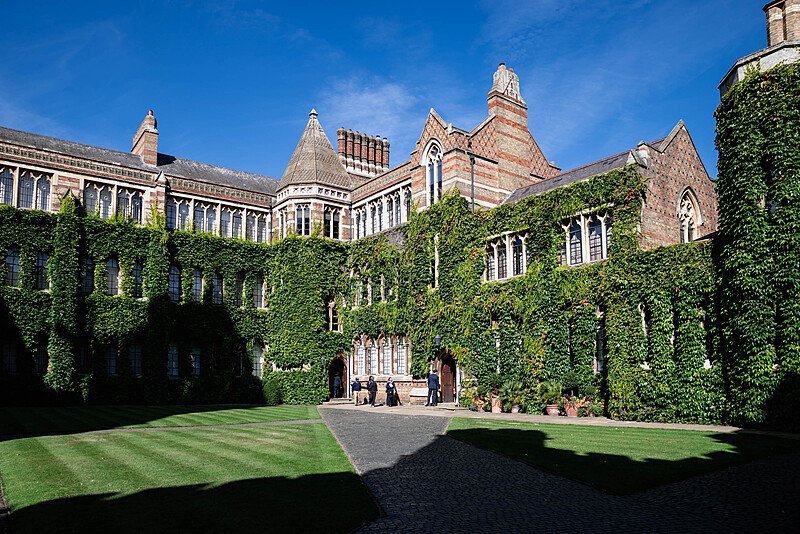
34. Architecture and Historic Buildings
Rugby School’s physical environment reflects its long history.
The campus contains buildings associated with different periods of the school’s development.
Historic architecture stands alongside modern educational facilities.
This mixture reflects the institution’s ability to preserve its heritage while adapting to contemporary needs.
The school’s buildings and grounds also contribute to its distinctive identity.
35. Rugby School and the Town of Rugby
The relationship between the school and the town is historically significant.
The institution was founded as a local grammar school and was originally closely connected with the community.
As the school became more nationally and internationally famous, its identity became increasingly distinct.
Nevertheless, the town of Rugby remains essential to understanding the school’s history.
The school’s name has also become globally recognized because of the sport that developed from its football tradition.
36. Education Beyond the Classroom
Rugby School’s educational model extends beyond classrooms.
Boarding, sport, music, drama, societies, leadership, and community activities all contribute to student development.
This reflects the traditional idea that education should prepare young people for life rather than simply examinations.
Students are given opportunities to discover interests and develop skills that may not be measured through conventional academic assessments.
37. Rugby School’s Global Influence
The influence of Rugby School extends beyond England.
Its educational traditions contributed to the wider British public-school model.
Former pupils carried ideas about education, sport, leadership, and institutional organization around the world.
The international spread of rugby provides the clearest example.
Schools and sporting institutions in many countries adopted versions of the Rugby game.
Thus, Rugby School’s historical influence can be seen both in education and in international sport.
38. Why Rugby School Is Historically Important
Rugby School is historically important for several reasons.
First, it is one of England’s historic educational institutions.
Second, its connection with Thomas Arnold makes it highly significant in the history of British education.
Third, its association with the development of rugby football gives it worldwide cultural importance.
Fourth, its alumni include numerous influential figures.
Finally, its history demonstrates how educational institutions evolve while maintaining connections with their past.
39. Rugby School’s Legacy
The legacy of Rugby School can be divided into several areas.
Educational Legacy
The school’s approach to character, leadership, and academic development influenced other schools.
Sporting Legacy
Rugby football became an international sport.
Literary Legacy
Tom Brown’s School Days helped establish the cultural image of the English public school.
Social Legacy
The school educated generations of people who entered influential professions.
International Legacy
Its traditions spread through British educational and sporting networks across the world.
40. Rugby School in the Twenty-First Century
In the twenty-first century, Rugby School continues to operate as a major independent school.
Modern education requires institutions to address challenges that previous generations could not have predicted.
Technology has transformed learning.
Globalization has changed student communities.
Universities and employers increasingly value creativity, communication, adaptability, and critical thinking.
Rugby School has therefore continued to evolve.
Its historic traditions remain visible, but modern educational practices play an increasingly important role.
41. Balancing Tradition and Modern Education
One of Rugby School’s biggest challenges is balancing tradition with modern expectations.
Historic institutions possess powerful traditions.
However, education cannot remain unchanged.
Rugby School’s history demonstrates repeated periods of adaptation.
From the Elizabethan grammar school to the Victorian public school and then to the modern independent school, the institution has repeatedly changed in response to society.
This ability to adapt has contributed to its longevity.
42. Rugby School’s Place in British Educational History
Rugby School belongs to a small group of historic English schools that have had an unusually strong influence on British culture.
Its importance comes from the combination of education, literature, sport, and public life.
Thomas Arnold’s reforms helped shape the nineteenth-century public-school model.
The school also became a cultural symbol through Tom Brown’s School Days.
Its sporting legacy became international.
Few schools can claim such a wide-ranging influence.
43. Frequently Asked Questions About Rugby School
When was Rugby School founded?
Rugby School was founded in 1567 through the charitable foundation established by Lawrence Sheriff.
Who founded Rugby School?
The school was founded through the bequest of Lawrence Sheriff, a wealthy Elizabethan merchant from Rugby.
Where is Rugby School located?
Rugby School is located in Rugby, Warwickshire, England.
Why is Rugby School famous?
It is famous for its long educational history, its association with Thomas Arnold, its notable alumni, its literary connections, and especially its role in the development of rugby football.
Who was Thomas Arnold?
Thomas Arnold was headmaster of Rugby School from 1828 until his death in 1842. He became one of the most influential figures in nineteenth-century British education.
Did rugby football originate at Rugby School?
Rugby School played a major role in the development and codification of the form of football that became rugby. The traditional story involving William Webb Ellis is famous, although historians debate the precise details of the story.
Who was William Webb Ellis?
William Webb Ellis was a pupil at Rugby School who became associated with the traditional story that he picked up and carried the ball during a football match in 1823.
What book was inspired by Rugby School?
Thomas Hughes’s Tom Brown’s School Days, published in 1857, was inspired by Rugby School and Victorian school life.
Is Rugby School still operating?
Yes. Rugby School continues to operate as an independent school in England.
Is Rugby School coeducational?
Yes, modern Rugby School provides education for both boys and girls.
What sports are associated with Rugby School?
Rugby football is the school’s most famous sporting association, but the school supports many other sports and physical activities.
Why is Rugby School important in history?
Rugby School is important because of its long history, its influence on British education, its notable alumni, its literary legacy, and its connection with the development of rugby football.
Conclusion
Rugby School has a remarkable history that stretches from the Elizabethan period to the modern era.
Founded in 1567 through the generosity of Lawrence Sheriff, it began as a local grammar school and gradually developed into one of England’s best-known independent schools.
Its transformation under Thomas Arnold during the nineteenth century was particularly significant. Arnold’s emphasis on character, responsibility, discipline, and leadership influenced British education far beyond Rugby.
The school’s connection with rugby football gave it another extraordinary legacy. The traditional William Webb Ellis story became one of the most famous legends in international sport, while Rugby School’s football traditions contributed to the development of a game that eventually spread across the globe.
Rugby School’s literary connections are equally important. Thomas Hughes’s Tom Brown’s School Days helped create a lasting cultural image of Victorian public-school life and introduced Rugby to generations of readers.
Over the centuries, the school has educated writers, politicians, scientists, military figures, academics, and other influential people.
Yet the most important part of Rugby School’s history is perhaps its ability to change.
The Elizabethan school was very different from the Victorian institution, and the Victorian school was very different from the modern school. Each generation introduced new subjects, technologies, social expectations, educational methods, and opportunities.
Today, Rugby School remains connected to its historic foundations while operating within a modern educational environment. Its story demonstrates how an institution can preserve tradition while adapting to a changing world.
From Lawrence Sheriff’s sixteenth-century vision to the international legacy of rugby football, Rugby School occupies a unique position in the history of British education and global sport.
For anyone interested in the history of English schools, Victorian education, British literature, or the origins of rugby, Rugby School provides an extraordinary case study.
Its more than four centuries of history are not simply the story of one school. They are also a story about changing ideas of education, leadership, character, sport, society, and the responsibilities of young people.
That enduring combination of tradition and transformation is what makes Rugby School one of England’s most historically significant educational institutions.