Introduction
Charterhouse School is one of the most historically important and prestigious independent schools in England. Located near Godalming in Surrey, Charterhouse has a history stretching back more than four centuries. Founded in London in 1611 by Thomas Sutton, the school was established as part of a charitable foundation designed to provide education for boys while also supporting elderly men in need. Over time, Charterhouse developed from its original London setting into one of Britain’s best-known boarding schools.
The history of Charterhouse is closely connected with major changes in English society, education, religion, politics, science, literature and sport. From its beginnings in a former Carthusian monastery in London to its later home in the Surrey countryside, the school has continually adapted while preserving many of its traditions.
Today, Charterhouse is widely recognized for its distinctive architecture, historic character, strong academic education, boarding tradition and contribution to British public-school culture. Its alumni include influential figures from politics, literature, science, the military, business, the arts and sport.
This article explores the complete history of Charterhouse School, including its foundation, early years, move to Surrey, educational development, traditions, famous former pupils, wartime history and modern identity.
1. The Origins of Charterhouse
The story of Charterhouse begins long before the school itself was founded. The site on which the original school was established in London had religious origins.
The London Charterhouse was originally associated with the Carthusian order, a Catholic monastic community founded in England in the medieval period. The monastery became an important religious institution before the English Reformation transformed the country’s religious and political landscape.
During the reign of Henry VIII, monasteries and religious houses were dissolved. The Charterhouse was eventually taken into royal possession and later passed through different owners.
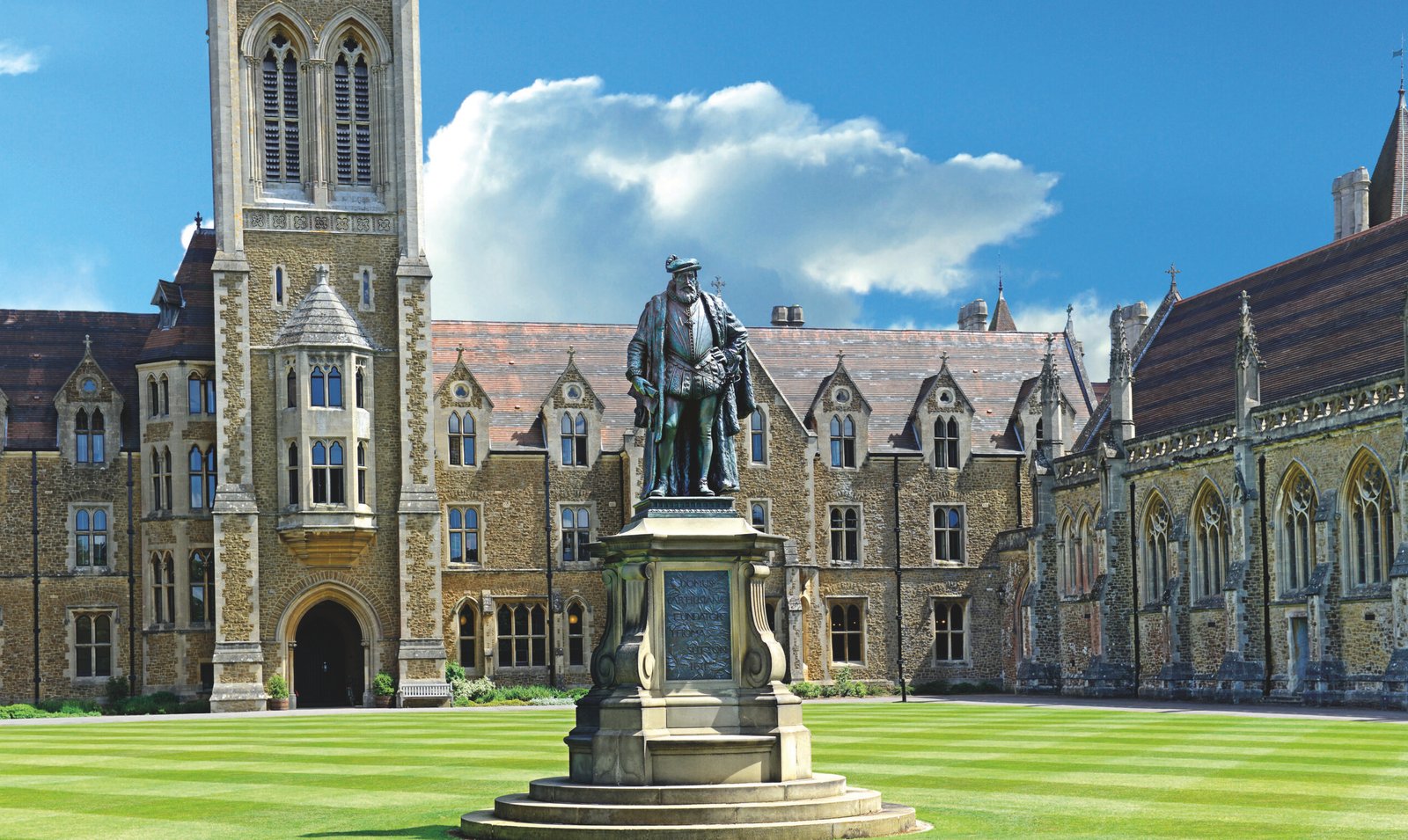
The site became associated with Thomas Sutton, a wealthy English businessman and philanthropist whose vision eventually led to the creation of Charterhouse School and Sutton’s Hospital.
Thomas Sutton was born in 1532 and became one of the wealthiest men in England. He made his fortune through business and property and became known for his interest in charitable causes.
Sutton’s most important philanthropic project was the foundation that eventually became known as Charterhouse.
2. Thomas Sutton and the Foundation of the School
Thomas Sutton died in 1611, but before his death he established a major charitable foundation.
His objective was unusual for the period because the foundation combined education with care for elderly people. Sutton wanted to establish a school for boys while also providing accommodation and support for poor or elderly men.
The institution was formally established in 1611.
The educational side of the foundation became Charterhouse School, while the charitable residential community became the Brothers of the Charterhouse.
This dual purpose remained an important part of the institution’s identity.
The school was intended to educate boys who could benefit from a structured classical education. Like many leading schools of the period, its curriculum was heavily influenced by Latin, Greek, theology, rhetoric and classical literature.
Education during the seventeenth century was very different from education today. Schools focused strongly on classical languages and religious instruction, while modern subjects such as computing, economics and experimental sciences had little or no place in the curriculum.
Charterhouse gradually developed a reputation for providing a rigorous education.
3. Charterhouse in Seventeenth-Century London
The early Charterhouse was located in London, an increasingly important center of political, commercial and cultural life.
The school occupied historic buildings associated with the former monastery. These surroundings gave Charterhouse a distinctive atmosphere from its earliest years.
Students lived and studied in a highly structured environment.
Discipline was strict, as was common in schools of the seventeenth and eighteenth centuries. Teachers expected obedience, religious commitment and academic effort.
The school’s classical curriculum reflected the educational priorities of the English elite.
Latin was especially important. Students learned to read and write Latin and studied classical authors.
Greek was also valued, particularly for students preparing for university.
Religion formed another important component of education. Charterhouse was established during a period when religious identity remained deeply connected with public and private life.
The school therefore developed within a culture that emphasized discipline, scholarship and moral character.
4. Charterhouse and the Development of English Education
During the eighteenth century, Charterhouse became increasingly established within the network of leading English schools.
The school was part of a broader educational tradition that emphasized classical learning and preparation for university.
Students from Charterhouse went on to universities such as Oxford and Cambridge.
The school also developed strong connections with influential families and institutions.
As Britain became more prosperous and powerful during the eighteenth century, demand for elite education increased.
The Industrial Revolution later transformed British society. New scientific discoveries, industrial technologies and commercial opportunities created new expectations for education.
Charterhouse eventually expanded beyond its traditional classical curriculum.
However, the process was gradual.
5. The Nineteenth Century and Educational Change
The nineteenth century was one of the most important periods in Charterhouse history.
Britain underwent enormous changes during this period.
The Industrial Revolution transformed the economy. Railways connected towns and cities. London expanded rapidly. The British Empire grew. Scientific knowledge advanced. New professions emerged.
Schools were increasingly expected to prepare students for a changing society.
Charterhouse responded to these developments.
The curriculum expanded beyond traditional classics to include mathematics, science, modern languages and other subjects.
The nineteenth century also saw growing concern about school discipline, sports, character development and organized boarding.
These ideas would become central to the culture of British public schools.
6. The Decision to Move from London
Perhaps the most significant change in Charterhouse history was the decision to leave London.
By the nineteenth century, London had become increasingly crowded and industrialized.
The urban environment was very different from the countryside setting associated with the ideal of a residential boarding school.
School leaders began considering whether a new location would provide better conditions for education.
Eventually, the decision was made to relocate Charterhouse to Surrey.
The new location was near Godalming.
The move represented more than a change of address. It marked the beginning of a new chapter in Charterhouse’s history.
7. The Move to Godalming, Surrey
Charterhouse moved from London to its present location near Godalming in the late nineteenth century.
The new school was designed as a purpose-built educational community.
Architects created a campus that combined classrooms, boarding houses, administrative buildings, chapels and recreational spaces.
The surrounding countryside provided a completely different environment from central London.
The Surrey setting became one of Charterhouse’s defining characteristics.
The school could now develop as a large residential community with extensive grounds.
This environment encouraged outdoor activities and organized sport.
The move also strengthened the school’s boarding identity.
8. The Architecture of Charterhouse
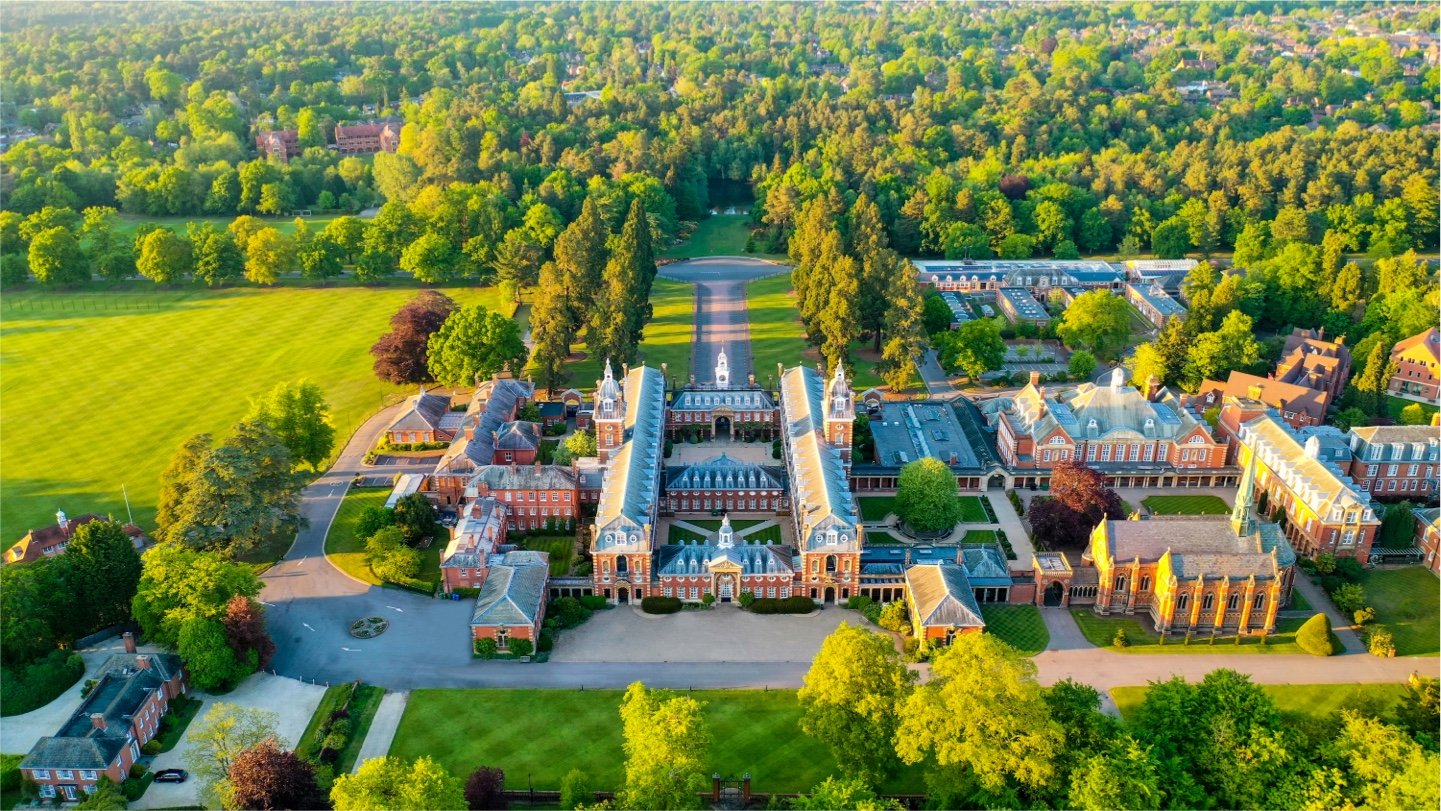
One of the most impressive aspects of modern Charterhouse is its architecture.
The Surrey campus contains buildings designed in styles influenced by traditional English architecture.
The school was planned as a coherent educational community rather than simply a collection of unrelated buildings.
Stone structures, courtyards, gardens, pathways and playing fields contribute to the school’s distinctive character.
Architecture at Charterhouse is closely connected with its history.
Many buildings have traditional features while also serving modern educational purposes.
The result is a school environment in which historic atmosphere and contemporary education coexist.
9. Boarding at Charterhouse
Boarding has always been central to Charterhouse’s identity.
Traditional British boarding schools developed communities in which students lived together during term time.
This created relationships between students, teachers and house staff that extended beyond the classroom.
Charterhouse developed a house system in which students belonged to individual boarding houses.
House life became an important part of school culture.
Students participated in academic competitions, sporting activities, music, drama and social events through their houses.
The house system also encouraged leadership.
Older students often took responsibilities for younger pupils.
This structure was intended to develop independence, confidence and a sense of community.
10. Academic Education
Charterhouse has traditionally maintained high academic expectations.
The school’s curriculum has changed considerably since the seventeenth century.
Early students focused heavily on classical education.
Modern students study a much wider range of subjects.
These can include:
- English
- Mathematics
- Sciences
- History
- Geography
- Modern languages
- Classical subjects
- Economics
- Politics
- Art
- Music
- Drama
- Computer science
The objective is not simply examination success.
Like many historic boarding schools, Charterhouse emphasizes intellectual curiosity and independent thinking.
Students are encouraged to develop interests beyond the compulsory curriculum.
11. Science and Innovation
The development of science became increasingly important during the nineteenth and twentieth centuries.
Charterhouse responded by expanding scientific education.
Laboratories and specialist facilities became an important part of the school.
Students gained opportunities to study subjects such as physics, chemistry and biology through practical work.
The importance of scientific education has continued to grow.
Today, science and technology form major parts of secondary education, and schools must prepare students for a world increasingly influenced by digital technology.
Charterhouse has continued to adapt its educational provision to these changes.
12. Literature and the Arts
Charterhouse has also played an important role in literature and the arts.
The school’s educational traditions encouraged students to read widely and develop communication skills.
Literature became an important area of study.
Students have also participated in theatre, music, visual arts and other creative activities.
School productions provide opportunities for students to develop confidence and teamwork.
Music has similarly remained an important part of school life.
The presence of choirs, instrumental groups and performances contributes to the cultural character of the school.
13. Charterhouse and Sport
Sport is one of the most famous aspects of Charterhouse’s history.
British boarding schools played a major role in the development of organized school sport during the nineteenth century.
Charterhouse was particularly important in the early development of football.
The school’s students played forms of football before standardized modern rules were fully established.
Different schools had different rules, and these games varied considerably.
Charterhouse became associated with the development of football traditions that eventually influenced the wider sport.
Sport at the school also included cricket, rugby, hockey, athletics and other activities.
14. The History of Football at Charterhouse
Football occupies a special place in Charterhouse history.
During the nineteenth century, football was becoming increasingly organized in England.
Schools developed their own versions of the game.
Charterhouse was one of the institutions where football was played in a relatively organized form.
Former Charterhouse pupils later participated in the development of football beyond the school.
The school is therefore frequently mentioned in histories of the origins of modern football.
Football became an important part of the school’s sporting culture and remains a major activity.
15. Cricket and Other Sports
Cricket has also had a long association with Charterhouse.
The sport was deeply embedded in English school culture.
Matches against other schools created opportunities for competition and social interaction.
Cricket encourages teamwork, patience and strategic thinking.
Other sports have become increasingly important over time.
Rugby, hockey, athletics, tennis and various other activities provide students with opportunities for physical development.
Modern school sport also emphasizes participation and personal improvement rather than simply winning.
16. Charterhouse During the First World War
The First World War had a profound impact on British schools.
Many former students and teachers joined the armed forces.
Charterhouse was no exception.
Members of the school community served during the conflict.
Many lost their lives.
Like other British schools, Charterhouse commemorated those who died.
War memorials became important parts of school campuses.
The First World War also changed British society permanently.
The loss of so many young men affected families, communities and educational institutions.
17. The Interwar Years
After the First World War, Charterhouse entered a period of adjustment.
The school continued its academic and sporting traditions while adapting to changes in British society.
The 1920s and 1930s saw significant cultural change.
Technology developed rapidly.
Cars, radio and aviation transformed everyday life.
Education also became increasingly influenced by modern scientific and cultural ideas.
Charterhouse maintained its traditional identity but continued to broaden its curriculum.
18. Charterhouse During the Second World War
The Second World War again had a major impact on the school.
Former pupils served in the armed forces and other wartime roles.
The conflict affected school life in practical ways.
Britain faced shortages, security concerns and disruption.
As with the First World War, members of the Charterhouse community lost their lives.
The war created another generation of memories and memorials.
After 1945, Britain entered a period of enormous social transformation.
Charterhouse gradually adapted to the new post-war environment.
19. Post-War Education
The decades after the Second World War brought major changes to British education.
Traditional independent schools increasingly incorporated modern approaches to teaching.
Science and technology became more important.
Foreign languages expanded.
New teaching methods encouraged discussion, research and independent thinking.
Charterhouse continued to maintain its boarding traditions while adapting academically.
The school’s historic buildings remained central to its identity.
At the same time, modern classrooms and facilities were introduced.
20. Charterhouse and Modern Britain
The second half of the twentieth century saw British society become more diverse.
Social attitudes changed significantly.
Traditional institutions were increasingly expected to demonstrate broader access and greater awareness of changing social needs.
Charterhouse evolved alongside these developments.
The school continued to provide a highly structured boarding education but gradually developed a more modern understanding of student welfare and pastoral care.
Academic education also became broader.
Students were encouraged to participate in activities outside their traditional subjects.
21. Girls and the Modern School
For much of its history, Charterhouse was a boys’ boarding school.
The wider British educational system, however, gradually moved toward greater coeducation.
Charterhouse eventually developed arrangements allowing girls to become part of the school’s senior educational community.
This represented an important change in the school’s long history.
The development reflected broader changes in independent education.
Modern Charterhouse has a significantly different educational structure from the institution founded in 1611.
22. Pastoral Care and Student Wellbeing
Modern education places greater emphasis on student wellbeing.
Boarding schools have particularly important responsibilities because students spend much of their lives within the school community.
Charterhouse’s house system provides pastoral support alongside academic education.
Teachers and house staff can help students manage academic pressure, friendships and personal development.
The goal is to create an environment where students can develop confidence while learning to become responsible members of the wider community.
23. Character and Leadership
One of the traditional goals of Charterhouse education is character development.
The school seeks to encourage qualities such as:
- Responsibility
- Independence
- Integrity
- Leadership
- Teamwork
- Resilience
- Curiosity
- Service
Leadership opportunities can come through school societies, sports teams, house activities, music, drama and student organizations.
These experiences allow students to develop skills that may not be measured by examinations.
24. Clubs and Societies
A modern school education extends beyond the classroom.
Charterhouse students can participate in a broad range of extracurricular activities.
These may include academic societies, debating, music, drama, art, sports, community service and specialist interests.
Clubs encourage students to explore subjects that may not be part of their formal academic timetable.
For many students, extracurricular activities become some of their most memorable school experiences.
25. The Importance of Tradition
Charterhouse is a historic institution, and tradition remains an important part of its identity.
School traditions create a connection between generations.
Students become part of a community that existed long before they arrived and will continue after they leave.
Uniform, houses, ceremonies, sporting competitions and school songs can all contribute to this sense of continuity.
However, traditions must also adapt.
Modern schools must balance heritage with contemporary expectations.
Charterhouse’s history demonstrates how an institution can preserve its identity while changing with society.
26. Notable Former Pupils
One of the most interesting aspects of Charterhouse history is its alumni.
The school has educated many notable people across different fields.
Former Charterhouse pupils have included politicians, writers, scientists, military officers, artists, sportsmen and business leaders.
Among the best-known literary figures associated with Charterhouse is Robert Baden-Powell, who later founded the Scout movement.
The school has also been associated with influential writers and intellectuals.
Its alumni network demonstrates the breadth of careers available to students educated there.
27. Robert Baden-Powell and Charterhouse
Robert Baden-Powell is one of the most internationally famous figures connected with Charterhouse.
He attended the school before beginning a military career.
Baden-Powell later became famous for his work in scouting.
His ideas about outdoor education, leadership, self-reliance and teamwork influenced millions of young people around the world.
His connection with Charterhouse is especially interesting because many of the qualities associated with scouting—discipline, leadership, outdoor activity and teamwork—also reflect traditions common in British boarding education.
28. Charterhouse and the Military Tradition
British public schools historically had strong connections with the armed forces.
Charterhouse educated many students who later entered military careers.
This reflected the social expectations of the nineteenth and early twentieth centuries.
Students were often encouraged to develop discipline and leadership.
Military service was considered an important career for members of many upper-class and professional families.
The two World Wars reinforced the school’s connection with military history.
Today, students have a much wider range of career choices.
29. Charterhouse and Public Life
Former pupils of Charterhouse have entered politics, government, diplomacy and public administration.
This reflects the traditional role of leading British schools in educating members of the country’s professional and political classes.
However, the modern school emphasizes a much broader range of careers.
Students can pursue university study and professional paths in areas such as medicine, engineering, finance, technology, law, science and the creative industries.
30. The School’s Religious Heritage
Religion played a significant role in the foundation of Charterhouse.
The original institution emerged during a period when Christian education was central to English schooling.
Chapel services and religious traditions remained important for many generations.
Over time, British society became more religiously diverse.
Modern independent schools increasingly recognize students from different backgrounds.
Charterhouse’s religious heritage remains part of its historical identity, while contemporary school life reflects a broader society.
31. The Charterhouse Community
A school is more than its buildings.
The Charterhouse community includes students, teachers, support staff, former pupils and families.
Old Carthusians—the traditional term associated with former pupils—form an important alumni community.
Alumni networks help preserve connections between generations.
Former students may return to the school for events, sporting fixtures, reunions and other occasions.
This creates a strong sense of continuity.
32. Charterhouse and the Surrey Landscape
The school’s Surrey location is central to its character.
Unlike its original London environment, the modern campus is surrounded by countryside.
This provides extensive opportunities for outdoor education and sport.
The landscape also contributes to the atmosphere of the school.
Historic buildings set among gardens, playing fields and mature trees create a distinctive educational environment.
The location near Godalming also provides access to the cultural and economic life of southern England.
33. Why Charterhouse Remains Historically Important
Charterhouse is historically important for several reasons.
First, it has survived for more than four centuries.
Second, it provides an example of how British education developed from a classical religious model into a modern curriculum.
Third, its move from London to Surrey demonstrates the changing nature of nineteenth-century boarding education.
Fourth, Charterhouse contributed to the history of organized football.
Finally, its alumni have made contributions across many fields.
The school therefore represents more than one institution. It is a window into several centuries of British social and educational history.
34. Charterhouse in the Twenty-First Century
In the twenty-first century, Charterhouse continues to combine tradition with modern education.
Contemporary students live in a world shaped by technology, globalization and rapid social change.
Schools must prepare young people for careers that may not even exist in their current form.
Charterhouse therefore places importance on academic flexibility, digital skills, communication and independent thinking.
At the same time, the school continues to value boarding, sport, music, drama, community and leadership.
The balance between heritage and innovation remains one of its defining characteristics.
35. Technology and Modern Learning
Digital technology has transformed education.
Students now have access to online research, digital learning platforms and sophisticated scientific tools.
Technology can make education more interactive and allow students to explore information independently.
However, the traditional classroom remains important.
Teachers continue to play a central role in guiding students, explaining complex ideas and encouraging critical thinking.
The challenge for historic schools such as Charterhouse is to use modern technology without losing the personal community that has always been central to boarding education.
36. Global Connections
Modern education is increasingly international.
Students are exposed to different cultures, languages and global issues.
Charterhouse’s long history has given it international connections through its alumni and educational relationships.
Former students have lived and worked across the world.
This global network contributes to the school’s modern identity.
Students are increasingly expected to understand international issues and communicate across cultural boundaries.
37. The Value of a Boarding Education
Boarding education offers experiences that differ from those of day schools.
Students live within a structured community.
They learn to manage their time, share spaces and cooperate with others.
They also develop friendships that can last for many years.
Boarding can encourage independence because students must take responsibility for everyday aspects of life.
At the same time, good pastoral support is essential.
The modern boarding model therefore combines independence with guidance and community.
38. Challenges Facing Historic Schools
Historic schools also face challenges.
Maintaining old buildings can be expensive.
Educational expectations continue to change.
Parents and students expect strong academic results as well as modern facilities.
Schools must also address issues such as student wellbeing, digital safety, inclusion and sustainability.
Charterhouse’s long history provides experience in adapting to change.
Its challenge is to preserve valuable traditions while ensuring that education remains relevant to future generations.
39. Sustainability and the Future
Environmental concerns are increasingly important in education.
Schools with large campuses have opportunities to reduce energy use, improve biodiversity and teach students about environmental responsibility.
The countryside location of Charterhouse provides an excellent setting for students to understand nature and sustainability.
Future generations of students are likely to face major environmental challenges.
Education can help prepare them to respond through scientific understanding, responsible decision-making and community action.
40. The Legacy of Charterhouse School
The legacy of Charterhouse extends far beyond its buildings.
For more than 400 years, the school has educated generations of young people.
Its history includes periods of religious change, industrialization, war, technological development and social transformation.
Through each period, Charterhouse has changed while maintaining a recognizable identity.
Its contribution to education, sport and British cultural history makes it an important institution.
The school also demonstrates the long-term influence that educational communities can have on society.
Conclusion
Charterhouse School has one of the most remarkable histories of any British independent school.
Founded by Thomas Sutton in 1611, it began as part of a charitable institution in London. Its original mission combined education with care for elderly men, creating a distinctive foundation that reflected the charitable values of its founder.
For centuries, Charterhouse developed within London’s historic environment. Its classical curriculum reflected the educational ideals of the time.
The nineteenth century brought dramatic change. Britain industrialized, London expanded and educational expectations evolved. The decision to move Charterhouse to Surrey created a new chapter in the school’s story.
The modern campus near Godalming became a major center of boarding education. Its buildings, playing fields, houses and traditions created a strong community environment.
Charterhouse also became associated with the history of football, making a contribution to one of Britain’s most internationally popular sports.
Across the twentieth century, the school experienced the effects of two World Wars, social change and educational reform. It gradually developed a more modern curriculum while preserving many historic traditions.
Today, Charterhouse continues to provide a broad education combining academics, sport, arts, leadership and community life.
Its greatest strength may be its ability to connect past and present. Students can study in an environment shaped by centuries of history while preparing for a rapidly changing future.
Charterhouse is therefore not simply an old school. It is a living institution whose history continues to influence its identity.
From Thomas Sutton’s original charitable vision to the modern Surrey campus, the story of Charterhouse reflects the wider history of British education itself.
Frequently Asked Questions About Charterhouse School
1. When was Charterhouse School founded?
Charterhouse School was founded in 1611 through the charitable foundation established by Thomas Sutton.
2. Where was Charterhouse originally located?
The original school was located at Charterhouse in London, on the site associated with a former Carthusian monastery.
3. Where is Charterhouse School located today?
The modern school is located near Godalming in Surrey, England.
4. Why did Charterhouse move from London to Surrey?
The school moved from London to Surrey during the nineteenth century as part of a major redevelopment. The new countryside location provided space for a purpose-built boarding school and extensive sporting facilities.
5. What is Charterhouse famous for?
Charterhouse is famous for its long history, boarding-school tradition, historic architecture, academic education, notable alumni and association with the development of football.
6. Who founded Charterhouse?
Thomas Sutton founded the charitable institution from which Charterhouse School developed.
7. What subjects are taught at Charterhouse?
Modern students can study a wide range of subjects, including mathematics, English, sciences, history, languages, classics, economics, politics, arts and technology.
8. Is Charterhouse a boarding school?
Yes. Boarding has historically been one of the defining features of Charterhouse.
9. Is Charterhouse associated with football history?
Yes. Charterhouse is frequently associated with the development of organized football in nineteenth-century England.
10. Who are Old Carthusians?
Old Carthusians is the traditional term used for former pupils of Charterhouse.
11. What is Charterhouse’s most important historical feature?
Its longevity is one of its most important features. The institution has roots dating back to 1611 and has experienced more than four centuries of British history.
12. What makes Charterhouse different from modern schools?
Its combination of historic traditions, boarding culture, extensive grounds, distinctive architecture and modern academic education gives it a particularly strong historical identity.
SEO Keywords
Primary Keyword: Charterhouse School
Secondary Keywords:
- Charterhouse School history
- history of Charterhouse School
- Charterhouse School England
- Charterhouse School Surrey
- Charterhouse School Godalming
- Thomas Sutton Charterhouse
- Charterhouse boarding school
- Charterhouse School football
- Charterhouse School alumni
- Old Carthusians
- British public schools
- historic schools in England
- famous English boarding schools
- Charterhouse School history and traditions
Suggested SEO Title
Charterhouse School: Complete History, Traditions, Education and Legacy
Suggested Meta Description
Explore the complete history of Charterhouse School, from Thomas Sutton’s 1611 foundation in London to its modern Surrey campus, traditions, education, football history and famous alumni.
Suggested URL Slug
charterhouse-school-history
Suggested Featured Image Alt Text
Charterhouse School historic buildings and grounds in Surrey, England