Winchester College is one of the most historic and academically distinctive schools in England. Founded in 1382 by William of Wykeham, Bishop of Winchester and Chancellor of England, the College has developed over more than six centuries while maintaining a strong connection with its original educational purpose. Today, Winchester combines centuries-old traditions with modern teaching, advanced facilities, a broad curriculum and an educational philosophy that places particular emphasis on independent thought and intellectual curiosity.
Located in the historic cathedral city of Winchester in Hampshire, England, the school occupies a remarkable setting beside the River Itchen. Its medieval buildings, cloisters, chapel, libraries, museums, playing fields and modern facilities form an educational environment unlike that of most contemporary schools. Winchester College describes itself as having the longest continuous history of any school in England.
The College is particularly famous for its distinctive approach to education. While academic achievement is important, Winchester does not define education purely through examination results. One of its most unusual features is Div, a non-examined subject taught across the school. Div encourages pupils to explore ideas across subjects, discuss complex questions, challenge assumptions and develop independent perspectives.
This article provides a detailed guide to Winchester College, including its history, founder, academic curriculum, Div, boarding system, traditions, campus, sports, music, admissions, scholarships, student life and continuing influence.
What Is Winchester College?
Winchester College is an independent school in Winchester, Hampshire. Its traditional model has been strongly associated with boarding education, although the College has evolved in recent years. The school currently offers full boarding for boys aged 13–18, alongside day and boarding places for Sixth Form boys and day places for girls in the Sixth Form.
The institution was originally established to provide education for a group of scholars and to prepare them for further study at New College, Oxford. William of Wykeham established Winchester alongside New College as part of a wider educational vision.
The school has retained a strong sense of institutional identity. Its pupils are traditionally known as Wykehamists, a name derived from William of Wykeham. The term reflects the continuing connection between the modern school community and its medieval founder.
Winchester is not simply known because it is old. Its importance comes from the way it has preserved historical traditions while continually adapting its educational approach.
The school itself emphasizes original thought, curiosity, academic excellence, service and intellectual engagement. Its educational philosophy seeks to give pupils both the knowledge required for examinations and the intellectual habits needed for life beyond school.
The History of Winchester College
Founded in 1382
The story of Winchester College begins in the fourteenth century.
In 1382, William of Wykeham founded what became Winchester College. England at the time was experiencing enormous social, economic and demographic change. The Black Death had caused devastating loss of life, and education had an important role to play in rebuilding society.
William of Wykeham had risen from relatively modest origins to become Bishop of Winchester and Chancellor of England. His personal experience and career influenced his approach to education.
He established two major educational foundations: Winchester College and New College, Oxford. His vision was not simply to create a school for wealthy families. The original foundation was designed to provide educational opportunities to talented scholars and prepare them for service to society.
The school’s official history explains that Wykeham’s foundation was intended to educate 70 scholars and help create educated individuals capable of serving society after the devastation caused by the Black Death.
William of Wykeham and His Educational Vision
William of Wykeham remains central to the identity of Winchester College.
His famous motto is:
“Manners Makyth Man.”
The phrase is traditionally associated with the idea that a person’s character, behaviour and qualities matter more than inherited status.
The principle is particularly interesting when considered in the context of fourteenth-century England. Wykeham’s educational vision placed considerable importance on ability, character and achievement.
Modern Winchester has developed far beyond its medieval origins, but the underlying principle remains important. The school continues to emphasize intellectual curiosity, courtesy, independent thinking and service.
Six Centuries of Continuity
One of Winchester’s most remarkable characteristics is continuity.
Many schools have long histories, but Winchester has occupied the same historic location for centuries. The physical environment therefore becomes part of the educational experience.
The medieval cloisters, historic courtyards, Chapel, College Hall and other buildings provide pupils with a daily connection to the past.
At the same time, Winchester has not simply preserved itself as a museum. Historic buildings have been adapted for modern purposes, while new facilities have been constructed to support contemporary education.
This mixture of old and new is one of the most distinctive characteristics of Winchester College.
Winchester College and New College Oxford
Winchester College was founded in connection with New College, Oxford.
The relationship was part of William of Wykeham’s broader educational plan. Winchester was intended to prepare scholars for higher education at New College.
This connection helps explain why academic scholarship became so central to Winchester’s identity.
The original foundation created a system in which education could continue from school to university. Over the centuries, the relationship between the institutions has changed, but the historical connection remains an important part of Winchester’s heritage.
The school’s traditions, academic culture and emphasis on scholarship continue to reflect this foundation.
The Meaning of “Manners Makyth Man”
The Winchester motto deserves special attention because it represents more than an old phrase carved into a historic building.
“Manners Makyth Man” can be understood as a statement about character.
Education is not only about collecting information. A successful education should also help young people learn how to communicate, cooperate, make decisions, handle disagreement and contribute to society.
Modern Winchester places considerable emphasis on courtesy and respect alongside intellectual independence. Its educational philosophy encourages pupils to challenge ideas without abandoning respectful discussion.
This balance is increasingly important in modern education.
Students need to be capable of forming independent opinions while also listening to people who disagree with them. They need confidence without arrogance and ambition without losing a sense of responsibility.
The Wykehamist tradition attempts to bring these qualities together.
Academic Excellence at Winchester College
Academic excellence is one of Winchester College’s central priorities.
The school employs specialist teachers, traditionally called dons, who teach pupils across a broad range of disciplines. Winchester states that its teachers come from varied academic backgrounds and are focused not only on preparing pupils for examinations but also on developing a love of learning.
This approach means that classroom education is intended to go beyond memorization.
Students are encouraged to ask questions, investigate subjects and explore complicated ideas.
Academic life at Winchester can therefore be described as a combination of:
- Strong examination preparation
- Specialist teaching
- Independent research
- Intellectual discussion
- Academic societies
- Competitions and Olympiads
- Interdisciplinary learning
- Cultural education
- Critical thinking
The combination creates an environment in which academic ambition can extend beyond the formal curriculum.
Winchester College Curriculum
The curriculum covers traditional academic subjects as well as modern disciplines.
Students study subjects including:
- English
- Mathematics
- Biology
- Chemistry
- Physics
- History
- Geography
- French
- German
- Latin
- Ancient Greek
- Spanish
- Russian
- Religious Studies
- Computer Science
- Art
- Design and Technology
- Music
The exact subjects and pathways depend on the year group and qualifications being studied.
Winchester’s curriculum information describes GCSE study as including English Language, Mathematics, French or German and two or three sciences, alongside a range of optional subjects.
In the Sixth Form, pupils normally study advanced qualifications, with the College’s published curriculum describing A-level pathways.
This academic structure gives pupils both breadth and opportunities for specialization.
What Is Div at Winchester College?
Perhaps the most distinctive feature of a Winchester education is Div.
Div is short for Division, and it is a non-examined subject designed to encourage intellectual exploration.
Unlike conventional examination subjects, Div does not exist primarily to prepare students for a particular test.
Instead, it gives teachers and pupils space to discuss ideas.
Topics can cross conventional subject boundaries and may include:
- History
- Philosophy
- Literature
- Politics
- Science
- Culture
- Ethics
- Technology
- Society
- Current affairs
The school describes Div as an intellectual root of the community and a subject that encourages pupils to discuss ideas and challenge conventions.
Why Is Div Important?
Modern education can sometimes become heavily focused on examination preparation.
Examinations are valuable because they provide measurable qualifications. However, education involves more than examination performance.
Students also need to learn how to:
- Ask meaningful questions
- Analyse evidence
- Recognize assumptions
- Compare different perspectives
- Discuss controversial issues
- Build logical arguments
- Listen to alternative opinions
- Connect different areas of knowledge
Div provides space for these skills.
The College’s recent inspection reporting also highlighted Div as a significant strength of its educational approach.
Original Thinking and Independent Enquiry
Winchester places considerable importance on original thinking.
Students are encouraged to develop their own perspectives rather than simply reproduce what teachers or textbooks say.
This does not mean ignoring established knowledge. Instead, it means understanding existing knowledge deeply enough to question it intelligently.
A pupil studying history, for example, may be encouraged to examine primary sources, compare interpretations and consider why historians disagree.
A science student may investigate a problem rather than simply memorize a conclusion.
A literature student may explore competing interpretations of a text.
This type of education can help develop intellectual confidence.
Boarding Life at Winchester College
Boarding is an important part of the Winchester experience.
For many pupils, school is not simply a place they attend during the day. It is their living environment.
Winchester’s full-boarding tradition creates a close community in which academic, social and extracurricular activities continue outside classroom hours.
Boarding can teach young people important life skills, including:
- Independence
- Time management
- Cooperation
- Responsibility
- Communication
- Resilience
- Community participation
Living with other students also exposes pupils to different personalities and perspectives.
The experience can create strong friendships that continue long after students leave school.
Houses and Community
Winchester has a historic system of boarding houses.
Scholars traditionally live in College, the original heart of the foundation, while other pupils live in boarding houses located around the wider school environment. The College has expanded significantly from its original medieval foundation over the centuries.
The house system helps create smaller communities within the larger school.
A pupil can therefore experience Winchester at two levels:
- The wider College community
- The smaller house community
This can help students develop a sense of belonging.
Winchester College Campus
The Winchester campus is one of the school’s greatest distinguishing features.
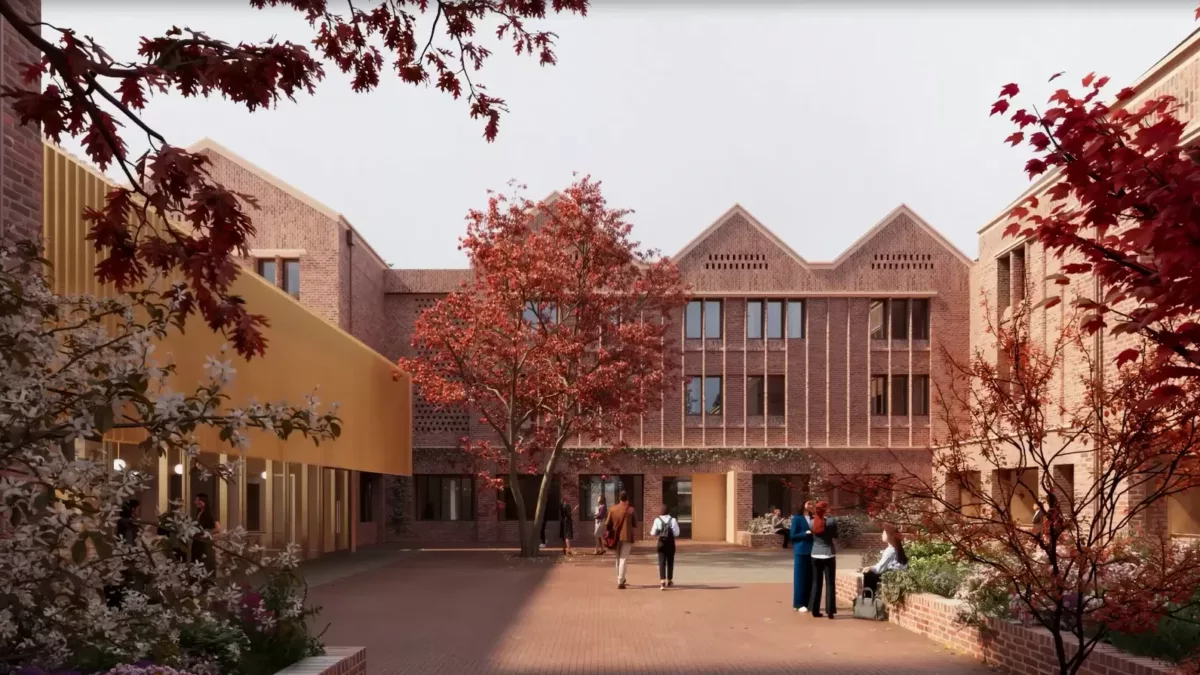
It combines medieval architecture with modern educational facilities.
The College reports that it maintains numerous listed buildings, including Grade I, Grade II* and Grade II structures.
The historic buildings are not simply decorative.
Many remain active parts of school life.
The Medieval Cloister
The medieval cloister is one of the most recognizable elements of the College.
The covered walkway provides a physical connection with the school’s medieval past.
It also continues to be used as a place for study and reflection.
This illustrates a broader Winchester principle: historical spaces can remain useful in modern education.
College Hall
College Hall has traditionally been an important dining and ceremonial space.
It remains associated with the Scholars and with formal College functions.
The hall represents the continuity of institutional traditions.
The Treasury
The College’s historic Treasury contains important art and archaeological collections.
The school’s collections contribute to the educational environment by giving pupils direct access to physical objects connected with history, culture and art.
This type of learning can make academic subjects more tangible.
Instead of learning about an ancient object only through a photograph in a textbook, students may be able to encounter collections within their own school environment.
The Science School
Science education is supported by specialist facilities.
The Science School includes laboratories and an observatory, giving students opportunities to study scientific subjects in an environment designed for experimentation and investigation.
Sports Centre
Winchester has also invested in modern sporting infrastructure.
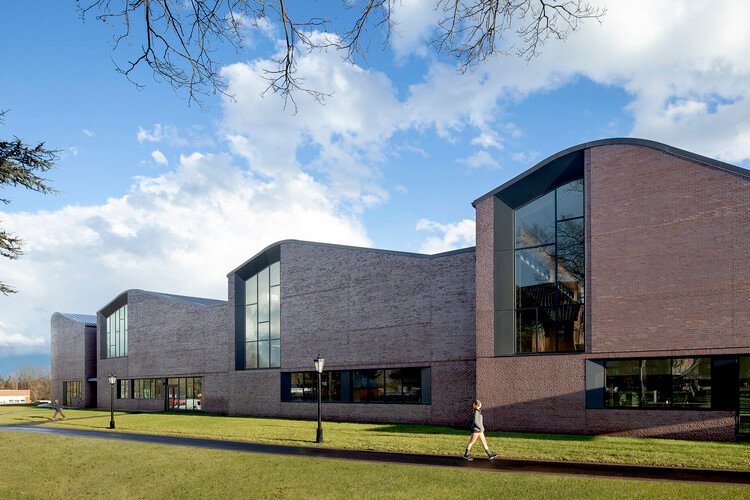
Its new Sports Centre, opened in 2024, includes facilities such as a gym, squash and fives courts, dance space, martial arts facilities and a multi-use sports hall.
The development demonstrates how the College combines historical architecture with contemporary facilities.
Sports at Winchester College
Sport forms an important part of life at Winchester.
Students have opportunities to participate in team sports, individual activities and recreational pursuits.
Sport can contribute to education in several ways.
It teaches:
- Teamwork
- Discipline
- Leadership
- Resilience
- Fitness
- Strategic thinking
- Competition
- Sportsmanship
School sport can also help students develop friendships outside academic settings.
The goal is not necessarily for every pupil to become an elite athlete. A strong sporting programme can instead give students opportunities to discover interests, develop confidence and remain physically active.
Music and the Quiristers
Music has a particularly long history at Winchester College.
When William of Wykeham founded the school, he made provision for young boys to sing in the Chapel. The College’s choral tradition has continued for more than six centuries.
These young singers are known as Quiristers.
The Quirister tradition demonstrates how some elements of the original foundation remain visible in modern school life.
Music education at Winchester therefore has both artistic and historical significance.
Students interested in music can participate in performance, composition and wider musical activities.
Arts and Creative Education
Academic education is not limited to mathematics, science and languages.
Creative subjects such as Art, Music and Design and Technology provide opportunities for pupils to develop imagination and practical skills.
Creative education can complement traditional academic study.
For example, design work can combine:
- Mathematics
- Engineering
- Art
- Problem-solving
- Practical construction
Similarly, music can develop concentration, discipline, listening skills and creative expression.
Winchester’s broad curriculum reflects the idea that a well-rounded education should develop multiple forms of ability.
Winchester College Traditions
Traditions are central to Winchester’s identity.
Because the school is more than six centuries old, many ceremonies have developed around its history.
Some continue today.
Founder’s Obit
Founder’s Obit commemorates William of Wykeham.
The tradition has changed over time, but it continues as an important part of the school calendar.
New pupils participate in a service at Winchester Cathedral and later attend a formal gathering.
Domum
Domum is an event associated with pupils leaving the College.
The name comes from the traditional school song “Domum, Dulce Domum.”
The event represents the connection between pupils, parents and the wider Winchester community.
Admission of Scholars
The admission of Scholars is another historic ceremony.
The ceremony formally welcomes academic Scholars into the College.
The school describes the tradition as having remained substantially unchanged over the centuries.
Illuminã
Illuminã is another distinctive Winchester tradition.
Candles are used around historic parts of the school, creating a dramatic visual experience.
The event commemorates a significant change in the College’s social history: the removal of a wall that had separated Scholars living within College from Commoners living outside its walls.
Ad Portas
Ad Portas is described by Winchester as its highest honour for a guest.
The ceremony takes place in the medieval heart of the College and has historically been used to honour distinguished visitors and members of the wider community.
Winchester College Admissions
Admission to Winchester is academically selective.
The College has its own entrance process known as Winchester Entrance.
According to the school’s admissions information, most candidates take the Winchester Entrance examination in Year 8, typically in April or May.
The entrance process is intended to identify academic potential.
Candidates may be assessed in subjects including:
- Mathematics
- English
- Science
- History
- Geography
Additional language assessment can apply depending on the candidate’s previous study.
Admissions and Academic Potential
An important feature of Winchester’s admissions philosophy is that candidates are assessed for their academic potential rather than simply being judged by the reputation of their previous school.
The College explicitly states that Winchester Entrance is designed to give candidates from different educational backgrounds an opportunity to demonstrate their academic potential.
This is particularly relevant for families considering independent-school education after a state-school background.
Scholarships at Winchester College
Scholarships have been part of Winchester’s identity since the school’s foundation.
The original Scholars were central to William of Wykeham’s educational model.
Today, becoming a Scholar remains a significant academic achievement.
Scholars participate in the intellectual life of the College and are encouraged to pursue independent research and academic interests.
The College describes scholars as engaging in research, societies and academic competitions while developing independent thinking and cross-disciplinary enquiry.
Scholarships therefore represent more than financial awards. They are also connected to the academic tradition of the institution.
Access and Affordability
Although Winchester has historically been associated with privilege and elite education, the College also emphasizes the importance of widening access.
The school’s current annual reporting states that its founder established the College with a commitment to providing transformative education to talented young people and that this principle continues to influence its approach to access and affordability.
Modern independent schools face an important challenge: maintaining high-quality education while making opportunities available to a wider range of students.
Winchester’s access initiatives are part of its response to this challenge.
Winchester College Location
Winchester College is located in the historic city of Winchester in Hampshire.
The city itself is an important part of the educational environment.
Winchester was once the capital of England and has a long connection with English political, religious and cultural history.
The River Itchen runs through the area, while the surrounding countryside provides opportunities for outdoor activities.
The College describes its location as an environment in which pupils can develop independence while living within a historically significant city and close to the countryside.
The location also places students close to significant cultural and historical sites.
Winchester Cathedral and the College
Winchester Cathedral is closely connected to the school’s identity.
The Cathedral is one of the major historic landmarks of the city and features in College traditions, including Founder’s Obit.
This relationship contributes to Winchester’s distinctive atmosphere.
Students are not studying history entirely from textbooks. They are living within an environment where historical buildings and institutions are part of everyday life.
Life Beyond the Classroom
One of Winchester’s strongest educational characteristics is the amount of learning that takes place outside conventional lessons.
Students can participate in:
- Academic societies
- Debating
- Music
- Drama
- Art
- Sports
- Outdoor activities
- Research
- Competitions
- Community activities
- Student-led projects
These activities allow pupils to develop interests that may not fit neatly into examination subjects.
A student who loves astronomy, for example, may explore the subject through science facilities and extracurricular activities.
A student interested in politics may join discussions and societies.
Someone passionate about literature may explore books beyond the standard curriculum.
This flexibility helps create a culture of intellectual curiosity.
Academic Societies and Competitions
Winchester encourages academic extension beyond the classroom.
The school highlights specialist societies, Olympiads and national and international competitions as part of its broader academic environment.
Competitions can provide students with opportunities to test their knowledge in unfamiliar situations.
They can also teach students that academic success is not simply about receiving high marks.
It can involve:
- Solving unfamiliar problems
- Working under pressure
- Conducting research
- Communicating solutions
- Collaborating with others
Pastoral Care and Wellbeing
Academic excellence is only one component of successful education.
Students also require emotional support, guidance and a strong sense of community.
Modern inspections of Winchester have highlighted the school’s pastoral care alongside its academic and cultural life.
The boarding structure means that pastoral support is particularly important.
Students are living away from home and therefore need adults and peers they can trust.
A successful boarding environment should help pupils become independent without leaving them isolated.
Technology and Modern Education
Although Winchester is famous for medieval architecture, the College is not an institution frozen in the past.
Modern education increasingly involves technology, artificial intelligence, digital research and new approaches to learning.
Winchester’s wider educational discussion includes questions about technology and education, demonstrating that its intellectual culture extends to contemporary issues.
This is important because historical identity does not have to mean resistance to change.
A school can preserve traditions while also examining how education should respond to new technologies.
Winchester College in the Modern World
The modern world presents challenges that are very different from those faced in 1382.
Students today grow up in an environment shaped by:
- Artificial intelligence
- Global communication
- Climate change
- Digital media
- International politics
- Rapid scientific development
- Economic uncertainty
- Changing careers
A traditional curriculum alone cannot prepare students for every future challenge.
This is one reason the philosophy behind Div remains particularly relevant.
The ability to ask questions, evaluate evidence and understand different perspectives is useful regardless of the profession a student eventually enters.
Why Winchester College Is Famous
There are several reasons Winchester College has achieved international recognition.
1. Its Age
Founded in 1382, Winchester is one of the oldest schools in the world and describes itself as having the longest continuous history of any school in England.
2. Its Founder
William of Wykeham was a major political and religious figure in medieval England.
3. Its Academic Tradition
The school has developed a strong reputation for academic excellence.
4. Div
The distinctive non-examined Div curriculum differentiates Winchester from many other schools.
5. Historic Campus
The medieval buildings and surrounding architecture create an unusual educational environment.
6. Boarding Tradition
Boarding has been central to Winchester’s community for centuries.
7. Scholarships
The tradition of Scholars is closely connected to the original foundation.
8. Cultural Life
Music, literature, history, arts and academic societies form a significant part of school life.
Winchester College Alumni
Over the centuries, Winchester has educated many people who later became prominent in public life, academia, literature, science, politics and other fields.
The school’s alumni are traditionally known as Old Wykehamists.
The influence of a historic school can be difficult to measure simply through famous names. Alumni networks can also contribute to the institution’s culture by connecting different generations.
The continuing strength of the alumni community demonstrates how education can create relationships that extend far beyond the school years.
The Winchester Educational Philosophy
At the heart of Winchester’s educational philosophy is the idea that students should learn how to think rather than simply what to think.
This is visible in the school’s emphasis on:
- Free enquiry
- Intellectual curiosity
- Academic depth
- Original thought
- Respectful debate
- Independent research
- Cultural understanding
- Service
These principles complement examination preparation.
A student can achieve excellent grades while also developing the intellectual confidence to question assumptions.
Winchester College and Leadership
Leadership at Winchester is not necessarily defined only by holding formal positions.
Students can develop leadership through:
- Sports teams
- Societies
- Academic projects
- Music
- House activities
- Community service
- Student discussions
- Creative projects
Leadership involves responsibility.
A good leader needs to listen, make decisions and understand consequences.
The College’s long-standing emphasis on service connects leadership with responsibility toward others.
Character Education
Character is an important part of the Winchester tradition.
The motto “Manners Makyth Man” suggests that personal qualities matter.
Modern character education can include:
- Honesty
- Respect
- Resilience
- Responsibility
- Courage
- Courtesy
- Empathy
- Independence
Academic ability can open doors, but character influences how people use their opportunities.
This is particularly important for students who may eventually enter professions involving significant responsibility.
A Historic School with a Modern Outlook
The most interesting aspect of Winchester College may be the relationship between its history and its future.
The College’s medieval origins are visible everywhere.
Yet the school continues to introduce new facilities, modern academic approaches and contemporary educational discussions.
Its new Sports Centre is one example of this approach. Historic buildings remain active, while modern facilities provide students with contemporary resources.
The result is not a choice between tradition and innovation.
Instead, Winchester attempts to combine them.
What Makes Winchester College Different?
Many excellent schools provide strong academics, sports and extracurricular activities.
Winchester’s distinctive identity comes from the combination of several elements.
First, there is its extraordinary history.
Second, there is its unique intellectual culture.
Third, there is Div.
Fourth, there is the boarding environment.
Fifth, there is the historic physical setting.
Sixth, there is the continuation of traditions that have evolved over hundreds of years.
Together, these characteristics create an educational experience that is difficult to reproduce elsewhere.
Is Winchester College Only About Academic Success?
No.
Academic excellence is clearly important, but Winchester’s philosophy extends beyond examination performance.
The College describes its purpose in terms of curiosity, original thinking and preparation for lives of purpose.
Students are encouraged to explore ideas, participate in activities and develop their own intellectual interests.
This broader approach can be especially valuable for students who enjoy learning for its own sake.
The Importance of History at Winchester
History is not merely an academic subject at Winchester.
It is part of the physical environment.
Students walk through buildings that have existed for centuries.
They participate in traditions that have medieval origins.
They study historical subjects while living within a city deeply connected to English history.
This creates an unusually immersive historical education.
Winchester College and Critical Thinking
Critical thinking is increasingly important in a world full of information.
Students encounter enormous amounts of content through social media, websites, video platforms and artificial intelligence.
The challenge is not simply finding information.
The challenge is deciding whether information is reliable.
A strong education should help students ask:
- Who produced this information?
- What evidence supports it?
- What assumptions does it contain?
- What alternative explanations exist?
- What evidence could disprove the argument?
Winchester’s emphasis on discussion, Div and independent thought supports these kinds of intellectual habits.
Preparing Students for University
Winchester’s academic environment is designed to prepare students for demanding higher education.
The combination of specialist teaching, examination preparation, independent research and academic enrichment can help students transition to university study.
However, the goal is not simply university admission.
Students also need to develop the ability to study independently.
At university, students have greater freedom and responsibility.
They must organize their time, read extensively, conduct research and form their own arguments.
The habits developed at school can therefore be valuable beyond examination results.
Winchester College and Global Education
Although the College is deeply connected to English history, its modern educational outlook is international.
Students live in a world in which universities, businesses, scientific institutions and cultural organizations operate globally.
Understanding other cultures, languages and perspectives is therefore increasingly important.
The curriculum includes multiple languages and subjects that encourage students to explore societies beyond Britain.
This helps connect a historic English school with a global educational environment.
The Future of Winchester College
Winchester College faces the same question confronting many historic educational institutions:
How can tradition remain meaningful in a rapidly changing world?
The answer is unlikely to be found in preserving every practice unchanged.
Instead, historical institutions must determine which principles remain valuable and how those principles can be applied to new circumstances.
At Winchester, ideas such as curiosity, independent thought, scholarship and service have remained relevant even as technology and society have changed.
The College’s modern development suggests an intention to continue evolving while preserving its institutional identity.
Conclusion
Winchester College is much more than an old school.
Founded in 1382 by William of Wykeham, it has developed into a major independent educational institution with a distinctive academic and cultural identity. Its historic buildings, boarding tradition, academic curriculum, scholarships, music, sports and extracurricular opportunities all contribute to its reputation.
Perhaps the school’s most distinctive feature is its commitment to Div, the non-examined subject that encourages students to explore ideas across conventional academic boundaries. Div represents an educational philosophy in which learning is valued not only for examination success but also for intellectual curiosity and independent thought.
Winchester’s historic campus creates another unusual advantage. Medieval buildings, cloisters, museums and the Chapel exist alongside modern laboratories, sports facilities and contemporary learning spaces. The environment demonstrates how tradition and innovation can exist together.
The school’s boarding culture also plays an important role. Living and learning together can help students develop independence, resilience, teamwork and strong relationships.
At the same time, Winchester continues to adapt to modern educational challenges. Its emphasis on critical thinking, interdisciplinary learning and original thought is especially relevant in an age of rapid technological change.
Ultimately, the enduring idea behind Winchester College is that education should create more than successful examination candidates. It should help young people become curious, thoughtful, capable and responsible individuals.
That idea connects the modern College with its medieval origins.
More than six centuries after William of Wykeham founded the school, Winchester College continues to combine heritage, scholarship, curiosity and innovation in an educational environment unlike almost any other.
Frequently Asked Questions About Winchester College
1. When was Winchester College founded?
Winchester College was founded in 1382 by William of Wykeham, Bishop of Winchester and Chancellor of England. The College describes itself as having the longest continuous history of any school in England.
2. Where is Winchester College located?
Winchester College is located in the historic cathedral city of Winchester in Hampshire, England, close to the River Itchen and Winchester Cathedral.
3. Is Winchester College a boarding school?
Yes. Winchester has a long-standing boarding tradition and currently offers full boarding for boys aged 13–18, with day and boarding places for Sixth Form boys and day places for girls in the Sixth Form.
4. What is Div at Winchester College?
Div, short for Division, is a distinctive non-examined subject at Winchester. It encourages pupils to explore history, philosophy, literature, culture, science and other ideas through discussion and interdisciplinary learning.
5. What subjects does Winchester College teach?
The curriculum includes subjects such as Mathematics, English, Sciences, History, Geography, Latin, Ancient Greek, modern languages, Computer Science, Art, Music, Design and Technology and Religious Studies.
6. How does admission to Winchester College work?
The College has a selective entrance process known as Winchester Entrance. Candidates normally take examinations covering areas including Mathematics, English, Science, History and Geography.
7. What is a Winchester Scholar?
A Winchester Scholar is a pupil who has been selected through the College’s scholarship tradition. Scholars have played a central role in Winchester’s history since the school’s foundation.
8. Why is Winchester College famous?
Winchester is famous for its age, academic reputation, historic architecture, boarding tradition, unique Div curriculum, scholarship system, traditions and influential alumni.
9. Does Winchester College have modern facilities?
Yes. Although the College has extensive medieval and historic buildings, it also has modern educational and sporting facilities, including a Sports Centre opened in 2024.
10. What does “Manners Makyth Man” mean?
“Manners Makyth Man” is Winchester College’s famous motto. It expresses the idea that character, conduct and personal qualities are fundamental to a person’s development.
11. Does Winchester College offer sports?
Yes. Sport is an important part of school life, with facilities and opportunities covering a wide range of activities.
12. Does Winchester College have a music tradition?
Yes. The College has maintained a choral tradition connected to its foundation for more than 600 years. The Quiristers form an important part of the Chapel Choir.
13. Is Winchester College only focused on examinations?
No. Although examination preparation and academic achievement are important, Winchester also emphasizes independent thought, discussion, research, extracurricular activities and intellectual curiosity.
14. What is special about Winchester College’s campus?
The campus combines centuries-old buildings and traditions with modern facilities. The College maintains numerous listed historic buildings, many of which continue to be used for education.
15. Why is Winchester College historically important?
It was founded in 1382 by William of Wykeham as part of a major educational foundation connected with New College, Oxford. Its continuous institutional history makes it one of England’s most significant historic schools.
16. Does Winchester College encourage independent thinking?
Yes. Independent thought and intellectual curiosity are central parts of the school’s stated educational philosophy. Div is particularly important in developing these qualities.
17. Is Winchester College connected to Winchester Cathedral?
Yes. The Cathedral has an important historical and ceremonial relationship with the College, including the annual Founder’s Obit tradition.
18. What are Winchester pupils called?
Pupils and former pupils are traditionally known as Wykehamists, reflecting the school’s connection with its founder, William of Wykeham.
19. Does Winchester College provide extracurricular activities?
Yes. Pupils can participate in academic societies, competitions, sports, music, arts, research and many other activities beyond formal lessons.
20. What makes Winchester College different from other British schools?
Its combination of more than six centuries of history, historic architecture, boarding culture, scholarship traditions, academic excellence and the distinctive Div programme makes Winchester particularly unusual.
Final Thoughts
Winchester College remains a fascinating example of how an educational institution can survive and evolve across more than six centuries. Its medieval foundation, historic buildings and long-standing traditions give it a remarkable identity, while its modern curriculum, facilities and emphasis on independent thinking demonstrate that its education continues to evolve.
For students and families researching prestigious British schools, Winchester College offers an educational model built around much more than examination results. Its combination of scholarship, curiosity, character, community and tradition continues to define the Winchester experience.
Winchester College’s enduring message is simple: education should prepare students not only to succeed, but also to think, question, contribute and lead with purpose.