Introduction
Cheltenham Ladies’ College, commonly known as CLC, is one of the most historically important girls’ schools in Britain. Founded in 1853 in Cheltenham, Gloucestershire, the College was established at a time when educational opportunities for girls were considerably more limited than those available to boys. From its earliest years, the institution developed an ambitious educational philosophy: girls should receive an education that was intellectually serious, broad in scope and capable of preparing them for lives of independence, leadership and service.
Over more than 170 years, Cheltenham Ladies’ College has developed from a nineteenth-century educational experiment into an internationally recognised independent day and boarding school. Its history is closely associated with the wider development of girls’ education in Britain and with important debates about women, universities, science, professional life and social expectations.
One of the most influential figures in the College’s history was Dorothea Beale, who became Principal in 1858. Under her leadership, CLC developed a distinctive educational philosophy. Beale believed that girls should not be restricted to a narrow curriculum based only on subjects traditionally considered suitable for young women. During her time at the College, science, mathematics, languages, history and other academic disciplines gained an important place in the curriculum.
CLC itself describes its history as a pioneering story in girls’ education. Its official historical timeline records the introduction of science, mechanics and hydrostatics in 1865, despite opposition to teaching subjects considered unsuitable or “unladylike” for girls.
The story of Cheltenham Ladies’ College is therefore not simply the history of one school. It is also part of the larger history of changing attitudes toward women’s education.
1. Britain Before the Foundation of Cheltenham Ladies’ College
To understand why Cheltenham Ladies’ College was founded, it is important to understand the educational environment of Britain during the nineteenth century.
In the early Victorian period, education for girls varied greatly according to social class. Wealthier families might employ private tutors or send daughters to fashionable boarding schools. However, academic education for girls was often less ambitious than education for boys.
Girls were frequently expected to develop accomplishments such as music, drawing, French, dancing and social etiquette. These skills were considered useful for life within the family and wider society.
Boys, by contrast, were more likely to receive systematic instruction in classical languages, mathematics, science, history and other academic subjects.
This difference reflected wider social expectations.
Universities and many professions were largely closed to women. Women could not easily follow the same educational routes as men, and the idea that women should receive an education designed to prepare them for intellectual or professional careers was still controversial.
During the nineteenth century, however, attitudes began to change.
The Industrial Revolution was transforming British society. New professions were developing, scientific knowledge was expanding, and reformers increasingly questioned traditional assumptions about education.
Within this environment, the idea of establishing a serious academic institution for girls became increasingly important.
Cheltenham was particularly suited to this educational experiment.
The town had developed as a fashionable spa destination and had a population interested in culture, education and intellectual life. In 1853, the Cheltenham Ladies’ College was founded.
The College would eventually become one of the most influential institutions in British girls’ education.
2. The Foundation of Cheltenham Ladies’ College in 1853
Cheltenham Ladies’ College was founded in 1853.
The founding principle was simple but revolutionary for its time: girls deserved a serious education.
The original College was considerably smaller than the institution known today. Nevertheless, its creation represented an important step toward expanding educational opportunities for women.
The founders believed that female education should not merely prepare girls to become socially accomplished young women. It should develop their minds.
This distinction became increasingly important as CLC developed.
The College’s modern historical account states that it first opened because its founders believed their daughters deserved a better education.
The school’s early history therefore needs to be viewed against the background of Victorian educational reform.
CLC was not founded simply as another finishing school. Its ambition was much broader.
From the beginning, the College developed a reputation for academic seriousness.
3. The Arrival of Dorothea Beale
One of the decisive moments in CLC history came in 1858, when Dorothea Beale became Principal.
Beale would become one of the most important figures in the history of British girls’ education.
Her influence extended far beyond the classroom.
She believed that girls were capable of intellectual achievement and that their education should develop the whole person.
Beale’s educational philosophy placed importance on academic knowledge, character, independence and moral development.
Under her leadership, CLC expanded significantly.
Her arrival marked the beginning of an era in which the College increasingly became known for educational innovation.
Beale did not simply want girls to memorise information. She wanted them to understand ideas, develop judgement and become capable thinkers.
Her approach helped create the educational culture for which CLC became famous.
4. Dorothea Beale and Educational Reform
Dorothea Beale lived during a period when women were excluded from many areas of public and professional life.
She believed education could help change this.
One of the central principles of her work was that women should have access to intellectual opportunities comparable with those available to men.
This was a radical position in nineteenth-century Britain.
Beale supported rigorous academic study and believed that girls could succeed in subjects that were often considered unsuitable for them.
The College’s historical timeline records that in 1865 it introduced science, mechanics and hydrostatics despite opposition to the idea that such subjects were not “ladylike.”
This was a significant development.
Science was becoming increasingly important in Victorian Britain, yet female students were often denied serious scientific education.
CLC challenged that assumption.
The decision to teach science and mechanics demonstrated that the College was prepared to experiment with the boundaries of conventional female education.
5. Science and the Expansion of the Curriculum
The introduction of scientific subjects was part of a broader expansion of the curriculum.
CLC increasingly provided opportunities for girls to study subjects that demanded analytical thinking.
Mathematics, science, history and languages became important components of the educational experience.
This approach helped distinguish CLC from schools whose curriculum focused mainly on social accomplishments.
The College’s philosophy was that education should prepare students intellectually rather than simply make them socially accomplished.
This principle became one of the most enduring features of CLC.
The modern College continues to describe itself as an institution where students are encouraged to question, explore and think independently.
That philosophy can be traced back to the educational ideas developed during the nineteenth century.
6. The Move to the Present Site
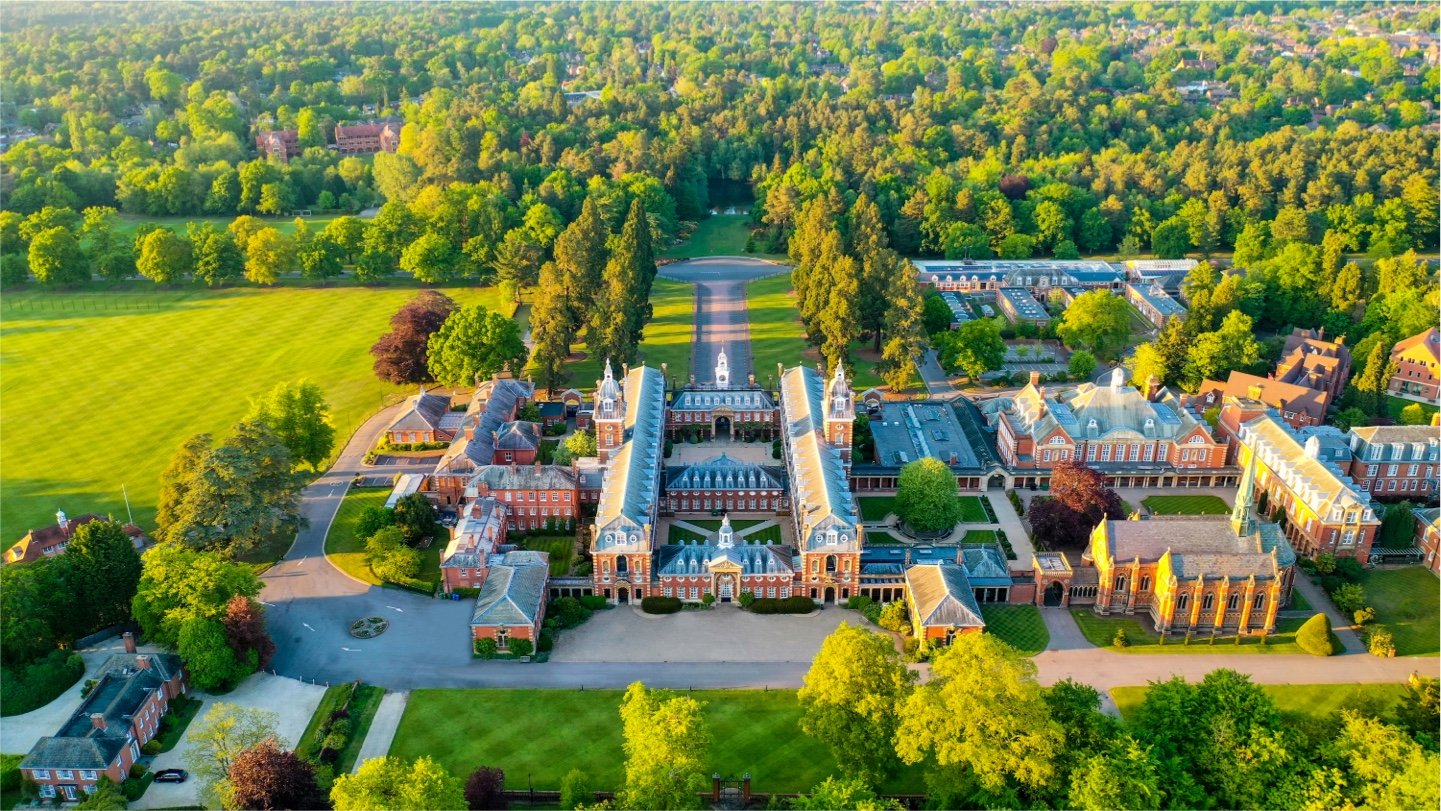
Cheltenham Ladies’ College has occupied its current location since 1873.
The College’s current heritage material notes that the site has connections with the original Cheltenham Spa and that the move formed an important part of the institution’s physical development.
The buildings themselves became part of the educational philosophy.
Dorothea Beale believed that surroundings could influence education and moral development.
This idea is reflected in some of the College’s historic architecture.
The Council Room and Marble Corridor are particularly associated with Beale’s period.
CLC describes these nineteenth-century spaces as examples of her belief that beautiful surroundings could influence pupils’ education, development and enrichment.
The architecture therefore became more than decoration.
It formed part of the educational environment.
7. The Importance of the College Buildings
Historic school buildings can tell us a great deal about educational philosophy.
At CLC, architecture reflected the idea that education should take place in an environment designed to encourage seriousness, confidence and intellectual development.
The Marble Corridor and Council Room became especially distinctive elements of the College.
Their design and history connect modern students with earlier generations.
Walking through these spaces today provides a direct link with the nineteenth-century institution.
The College’s historic buildings also demonstrate the growing confidence of girls’ education during the Victorian era.
A school established specifically for girls was developing facilities that expressed permanence and institutional ambition.
8. CLC and Women’s Higher Education
Dorothea Beale’s influence was not limited to Cheltenham.
She was a strong supporter of women’s access to higher education.
The College’s official history notes that its Principal founded St Hilda’s College at Oxford University, reflecting her commitment to higher education for women.
This connection is historically significant.
During the nineteenth century, universities were gradually becoming more accessible to women, although full equality remained a long way away.
Girls’ schools such as CLC helped prepare students for this changing world.
By providing a rigorous academic foundation, the College contributed to the development of generations of women who could pursue further education and professional careers.
The connection between school education and university access became increasingly important.
9. The Growth of the College in the Late Nineteenth Century
As the nineteenth century progressed, Cheltenham Ladies’ College continued to grow.
Its reputation attracted pupils from Britain and increasingly from overseas.
The College developed an academic culture based on intellectual curiosity and high expectations.
Teachers were expected to take academic subjects seriously.
Students were encouraged to develop independence and responsibility.
The institution’s reputation was strengthened by the achievements of its pupils and former pupils.
The growth of CLC also reflected the increasing public recognition that girls could benefit from rigorous education.
The College became part of a wider network of institutions contributing to the advancement of women’s education.
10. The Formation of the CLC Guild
An important development came in 1884, when Dorothea Beale established the Guild of former pupils.
Today, the organisation is known as the CLC Guild.
The Guild became an important part of the College community by connecting former students with one another and with the school.
According to the Guild’s official information, it was established in 1884 and now has more than 9,000 active members across 81 countries.
This international network demonstrates how far the original educational experiment eventually reached.
Former pupils entered many different professions and areas of public life.
The Guild continues to support networking, careers and community activities.
11. Women’s Education and Victorian Society
The success of CLC must also be understood within the wider women’s movement.
During the late nineteenth century, campaigners were challenging restrictions placed upon women.
Women sought better educational opportunities, access to professions, greater economic independence and eventually political rights.
Education was central to these movements.
Without access to strong academic preparation, women would struggle to enter universities or professions.
Schools such as CLC helped change this situation.
The education offered at CLC gave girls knowledge, confidence and intellectual preparation.
It also helped demonstrate to wider society that women were capable of serious scholarship.
12. CLC at the Beginning of the Twentieth Century
By the beginning of the twentieth century, Cheltenham Ladies’ College had become an established institution.
Its reputation was no longer based simply on its novelty.
It had developed a substantial educational tradition.
The College entered the twentieth century with a clear identity:
- academic ambition;
- strong teaching;
- broad curriculum;
- emphasis on character;
- encouragement of independence;
- opportunities beyond traditional female education.
These principles would be tested dramatically by the events of the twentieth century.
The First World War transformed British society, including schools.
CLC responded actively to the crisis.
13. Cheltenham Ladies’ College During the First World War
The First World War began in 1914.
Like many British communities, CLC became involved in the national war effort.
The College’s official history records that during the First World War, students ran a branch of the Red Cross and a Voluntary Aid Detachment hospital. Students also grew and harvested food on the College playing fields.
This was an extraordinary transformation of school life.
Education continued, but the war created new responsibilities.
Students were exposed to the realities of national crisis.
The school’s activities reflected the wider involvement of women in wartime Britain.
As men went to the front, women took on new responsibilities in hospitals, agriculture, administration and other areas.
CLC students participated in this wider effort.
The experience reinforced the idea that education should prepare girls not only for examinations but also for responsible citizenship.
14. The Impact of the First World War on Women
The First World War accelerated changes in women’s roles.
Millions of women entered occupations and responsibilities previously dominated by men.
Although many of these changes were temporary or incomplete, they demonstrated the capabilities of women in public life.
Schools like CLC helped prepare girls for a changing society.
Students learned that education could be connected with service.
The College’s wartime activities also became part of its institutional memory.
The war demonstrated the practical value of education, organisation and leadership.
15. The Interwar Years
The period between the First and Second World Wars was another important phase in CLC’s history.
British society changed rapidly.
Women gained the vote under expanding electoral reforms, universities became increasingly accessible, and more women entered professional occupations.
CLC continued to develop its academic reputation.
In the 1930s, the College achieved an important institutional milestone.
Its official history states that CLC became the first girls’ school to receive a Royal Charter in more than 200 years.
The Royal Charter represented recognition of the College’s status and importance.
It also demonstrated how far girls’ education had developed since 1853.
16. The Royal Charter
The Royal Charter is an important part of the College’s institutional history.
A Royal Charter provided formal recognition and helped establish the College’s legal and organisational status.
CLC continues to operate under a Royal Charter.
Its modern annual report states that the College operates under the terms of a Royal Charter granted in 1935, followed by supplemental charters in 1955 and 1991 and later amendments.
The 1935 Charter therefore marked an important stage in the institutional development of CLC.
17. Cheltenham Ladies’ College During the Second World War
The Second World War created another enormous challenge.
When war began in 1939, schools across Britain had to adapt.
CLC was determined to continue educating girls.
The College’s historical account describes an extraordinary situation during the war: with other buildings being used for the war effort, the swimming pool was boarded over and changing cubicles were transformed into study spaces.
This illustrates the determination to maintain education despite difficult circumstances.
The College also contributed to the wider wartime effort.
CLC’s history records that female pioneers associated with the school went to Bletchley Park during the Second World War.
Bletchley Park became one of the most important centres of British wartime codebreaking.
Women’s participation in this work is now recognised as an important part of the history of the Second World War.
18. Education During Wartime
Continuing education during wartime was not easy.
Buildings, staff, transport and resources were affected.
There were concerns about air raids and disruption.
Yet CLC continued to provide an academic environment.
The decision to continue educating students reflected a broader belief that education remained important even during national emergencies.
In this sense, wartime CLC demonstrated resilience.
19. Post-War Britain and the Expansion of Opportunities
After 1945, Britain entered a new period of social change.
The education system expanded.
Scientific and technological development accelerated.
Women increasingly entered universities and professional careers.
CLC responded to these changes.
During the 1950s and 1960s, the College invested in a new science wing and introduced traditionally male-dominated sports including golf, archery, orienteering, sailing and canoeing.
These developments continued the school’s long tradition of challenging assumptions about what girls should study or do.
Science and sport became important parts of the College experience.
20. Breaking Traditional Boundaries
The introduction of sports such as sailing and canoeing was significant because physical education for girls had historically been shaped by social expectations.
CLC increasingly promoted a broader concept of education.
Girls could participate in academic study, sport, music, art, science and leadership.
This approach helped create a more comprehensive educational experience.
The College was not simply expanding its timetable.
It was expanding the definition of what girls could become.
21. CLC in the 1970s and 1980s
The 1970s and 1980s brought new technological and educational challenges.
CLC continued to modernise.
The College opened a new Sixth Form Block and introduced computer studies and car maintenance lessons, according to its official timeline.
The introduction of car maintenance was particularly interesting because it challenged conventional ideas about gender and practical skills.
Computer studies reflected another major transformation.
Computers were becoming increasingly important in education, business and science.
By introducing computing into the curriculum, CLC continued its tradition of preparing students for emerging areas of society.
22. The Importance of Technology
The history of CLC shows a recurring pattern.
Whenever society changed, the College attempted to adapt.
In the nineteenth century, this meant introducing science and mechanics.
In the twentieth century, it meant embracing computers.
In the twenty-first century, the same principle can be seen in areas such as engineering, technology and psychology.
The institution’s educational identity has therefore been based partly on innovation.
23. The 1990s: Heritage and Modernisation
The 1990s were another important period.
CLC continued to invest in facilities.
A new sports hall was developed, alongside an art wing, theatre and performing arts centre.
These developments reflected a broader understanding of education.
Academic success was important, but education also involved creativity, physical activity and performance.
The College’s historic reputation was therefore combined with modern facilities.
24. The 150th Anniversary
In the early 2000s, CLC celebrated its 150th anniversary.
The occasion was an opportunity to reflect on the College’s long history.
The official historical timeline notes that Queen Elizabeth II visited as part of the 150th anniversary celebrations.
The anniversary highlighted the extraordinary distance the institution had travelled since 1853.
A school established during the Victorian era had survived enormous social and technological change.
It had educated generations of girls and developed a global community of former pupils.
25. CLC in the Twenty-First Century
Since 2000, Cheltenham Ladies’ College has continued to develop.
The College has placed increasing emphasis on health, fitness and wellbeing.
It developed a modern Health & Fitness Centre and a dedicated wellbeing programme.
New academic areas have also been introduced.
These include:
- Engineering
- Enterprise
- Technology
- Psychology
The addition of these subjects reflects the changing demands of modern education.
Students today need more than traditional academic knowledge.
They need critical thinking, communication, creativity, technological awareness and the confidence to adapt.
26. Modern Educational Philosophy
CLC describes its modern mission in terms of developing “fearless” individuals.
The College says students should develop curiosity, courage and compassion.
This philosophy has connections with its historical tradition.
Although the language has changed, the underlying idea remains familiar.
Dorothea Beale believed girls should be intellectually developed and prepared to contribute meaningfully to society.
Modern CLC similarly emphasises independence, confidence and leadership.
The school therefore presents its future as an extension of its past rather than a complete departure from it.
27. Academic Education at CLC
Academic education remains central to Cheltenham Ladies’ College.
The school offers a broad curriculum across sciences, humanities, languages, mathematics, arts and other disciplines.
History continues to be a popular subject.
The modern History Department describes history as a discipline that encourages students to question, analyse and challenge accepted narratives.
Students also have opportunities to study history outside the classroom through societies, lectures and educational trips.
This illustrates the College’s continuing emphasis on independent thinking.
28. History Education at CLC
Interestingly, the College teaches students to examine history critically while also being surrounded by its own institutional history.
Students encounter historic buildings, archives, photographs and objects associated with earlier generations.
The History Department encourages students to explore how interpretations of the past change over time.
This approach is especially appropriate at a school with more than 170 years of history.
CLC itself is a historical case study.
Its development can be examined through questions about gender, education, social reform, technology, war and modernisation.
29. The CLC Archives
One of the most valuable resources for understanding the College’s past is its archive.
CLC states that its archive contains approximately 4,500 books, thousands of photographs and examples of clothing and teaching equipment from the nineteenth, twentieth and twenty-first centuries.
These materials provide evidence of everyday life at the College.
School histories can sometimes focus on famous principals, buildings and major events.
Archives allow historians to explore ordinary students as well.
Photographs, letters, school records, clothing and educational equipment help reconstruct what life was like for earlier generations.
30. The College Museum
The College also has a museum.
According to the College’s 2026 Archives Day information, the museum opened in 1996 and marked its 30th anniversary in 2026.
The museum includes historic objects such as Dorothea Beale’s writing desk and gown, boarding trunks, photographs and other material illustrating College life.
These objects make the school’s history tangible.
A historic school is not only a collection of dates.
It is also the experience of the people who lived and studied there.
31. The Role of Former Pupils
The history of CLC cannot be separated from its former pupils.
Generations of students have gone into universities, professions, public service, science, arts, business and many other fields.
The Guild provides an international network connecting former pupils.
Today, the organisation has more than 9,000 active members across 81 countries.
This global network represents one of the lasting effects of the College.
A pupil may spend only several years at CLC, but the relationships and educational experiences can remain influential for decades.
32. The Meaning of the CLC Guild
The Guild is more than an alumni directory.
It provides career support, networking and events.
Former students can help younger members of the community with university and career decisions.
This creates a cycle of support between generations.
The idea has historical roots in Dorothea Beale’s creation of the Guild in 1884.
More than a century later, that network remains active.
33. Cheltenham Ladies’ College and Women’s Leadership
Leadership has been a recurring theme throughout CLC’s history.
Dorothea Beale herself was a prominent educational leader.
The College’s educational philosophy encouraged students to become independent thinkers.
The school’s alumni network has also contributed to women’s participation in professional life.
The significance of this should not be underestimated.
For much of CLC’s history, women had to overcome institutional barriers in education and employment.
An education that developed confidence and intellectual independence could provide important preparation for such challenges.
34. CLC and the Changing Role of Women
When CLC was founded in 1853, the social position of women was very different from today.
Over the next 170 years, women gained greater access to universities, professions and public life.
CLC changed alongside these developments.
In the nineteenth century, its emphasis on science and serious academic study challenged assumptions about women’s intellectual abilities.
In the twentieth century, its students participated in wartime service, technology and professional life.
In the twenty-first century, the College emphasises leadership, technology, wellbeing and global opportunity.
The evolution is remarkable.
35. Boarding at Cheltenham Ladies’ College
Boarding has long been an important part of the CLC experience.
Historically, boarding allowed the College to educate students from outside Cheltenham.
This contributed to the development of a diverse community.
Today, CLC continues to welcome both day pupils and boarders.
The school states that it has a community of more than 820 students and welcomes around 150 new students each year.
The house system helps students develop relationships across age groups.
For many boarders, joining the College may be their first experience of living away from home for an extended period.
36. International Students
The international dimension of CLC has also become increasingly important.
Students from different backgrounds contribute to the school’s community.
The College’s historic reputation helped attract families looking for an academically ambitious girls’ school.
The international character of the student body also reflects the global role of modern education.
In today’s world, students are preparing for universities and careers that may take them across countries and continents.
37. The All-Girls Educational Model
CLC remains an all-girls school.
The institution argues that its single-sex environment allows students to develop confidence and resilience in a culture designed specifically around girls’ education.
The debate about single-sex versus co-educational education continues internationally.
CLC’s position is that education should put girls first and create an environment where they can explore opportunities without being limited by traditional gender expectations.
This philosophy connects strongly with the school’s historical origins.
38. Science and Engineering in Modern CLC
The nineteenth-century introduction of science was an important moment in CLC history.
Today, science remains central.
The College has expanded its focus to include engineering and technology.
This represents a continuation of an old principle: girls should have access to the subjects that shape the future.
From hydrostatics and mechanics in the nineteenth century to engineering and technology in the twenty-first century, CLC’s educational history shows a continuing interest in scientific and technical education.
39. Sport and Physical Education
Sport has also evolved significantly.
The College’s official timeline records the introduction of sports such as golf, archery, orienteering, sailing and canoeing during the 1950s and 1960s.
Today, physical activity forms part of a broader emphasis on health and wellbeing.
This reflects a modern understanding of education.
Academic achievement and physical health are not separate.
Students need physical confidence, teamwork, resilience and healthy habits.
40. Arts and Performance
CLC has also developed strong opportunities in the arts.
Its facilities include spaces for theatre, performing arts and art.
The development of a theatre and performing arts centre during the late twentieth century reflected the importance of creativity in education.
Students can therefore develop skills beyond traditional examinations.
Performance can build confidence, communication skills and collaboration.
Art can encourage observation, creativity and independent expression.
These opportunities complement academic study.
41. Wellbeing at CLC
In recent decades, wellbeing has become an increasingly important educational issue.
CLC has responded through investment in health and fitness facilities and a dedicated wellbeing programme.
The College’s historical timeline identifies the 2010–2020 period as a time of major investment in health and wellbeing.
This is another example of the institution adapting to changing educational priorities.
Modern schools increasingly recognise that academic achievement depends partly on students’ emotional, physical and social wellbeing.
42. Scholarships and Bursaries
Another important aspect of CLC’s modern development is financial support.
The College offers means-tested bursaries known as Beale Awards.
These awards are named after Dorothea Beale.
The College says Beale Awards can provide fully or partially funded day or boarding places, depending on circumstances.
This connects modern opportunity with Beale’s historic educational legacy.
The principle is that talented girls should have opportunities to benefit from education regardless of their family’s financial circumstances.
43. The Beale Legacy
Naming the bursary programme after Dorothea Beale is significant.
Her life’s work was connected with expanding educational opportunities for women.
The modern Beale Awards attempt to continue that principle by opening access to students who might otherwise be unable to attend.
In this way, CLC’s history is not only preserved through buildings and archives.
It also influences current educational policy.
44. CLC’s Educational Philosophy Today
The modern College describes its approach through several themes:
- curiosity;
- courage;
- compassion;
- independence;
- collaboration;
- leadership;
- academic excellence;
- wellbeing.
The school emphasises that education is about more than examination results.
Students are encouraged to question ideas and take intellectual risks.
This philosophy has a clear connection to CLC’s historical identity.
45. Academic Excellence and Modern Results
CLC continues to have a strong academic reputation.
The College’s current website reports very strong recent GCSE and A Level results, alongside high International Baccalaureate performance.
These results are part of the modern story of the institution.
However, the history of CLC suggests that examination results are only one part of its identity.
The College has historically measured success not only by academic performance but also by the achievements and contributions of its former pupils.
46. CLC and the International Baccalaureate
The International Baccalaureate has become another part of the College’s modern academic offering.
The IB provides an internationally recognised educational framework.
For a school with an increasingly global community, this can be particularly valuable.
Students can develop a broader international perspective while maintaining high academic standards.
CLC’s current website highlights its performance in the IB and its international educational reputation.
47. The Importance of Independent Thinking
Independent thinking has remained a central theme across CLC’s history.
Dorothea Beale’s educational philosophy challenged the assumption that girls needed only a limited education.
Modern CLC similarly encourages students to question and analyse.
This continuity is important.
Educational methods may change.
Technology changes.
Subjects change.
But the fundamental objective of helping students develop their own minds can remain constant.
48. CLC and the History of Girls’ Schools in Britain
CLC occupies an important position in the history of British girls’ schools.
During the nineteenth century, several institutions were established to improve girls’ education.
These schools challenged assumptions about women’s intellectual abilities.
CLC became one of the most prominent examples.
Its history demonstrates how educational reform can influence wider social change.
When girls receive rigorous education, they gain access to opportunities that were previously closed to them.
49. Why Dorothea Beale Remains Important
Dorothea Beale remains one of the defining figures in CLC’s history.
Her importance comes from several areas:
- She promoted serious academic education for girls.
- She supported women’s access to higher education.
- She encouraged scientific and mathematical study.
- She developed the College’s educational culture.
- She helped establish the Guild.
- Her architectural and environmental philosophy influenced the College.
- Her legacy continues through modern Beale Awards.
Her influence is therefore both historical and contemporary.
50. The College’s Architectural Heritage
The physical environment remains an important part of CLC’s identity.
Historic spaces such as the Council Room and Marble Corridor connect present students with earlier generations.
The College’s buildings represent more than architectural heritage.
They reflect ideas about how an educational institution should look and feel.
Dorothea Beale believed beautiful surroundings could contribute to education and moral development.
That belief continues to shape how the historic environment is understood.
51. CLC During Times of Crisis
A recurring theme in the history of Cheltenham Ladies’ College is resilience.
The institution survived:
- Victorian social change;
- debates about women’s education;
- the First World War;
- the interwar period;
- the Second World War;
- post-war transformation;
- technological change;
- changing educational expectations.
During both World Wars, the College adapted rather than simply stopping.
This resilience is one reason its history remains significant.
52. From Hydrostatics to Technology
Perhaps the most interesting historical comparison is between the nineteenth century and today.
In 1865, teaching science, mechanics and hydrostatics was controversial.
Today, engineering and technology are normal parts of the College’s educational offering.
The change demonstrates how society’s expectations have evolved.
What was once considered inappropriate for girls can become an essential part of modern education.
CLC’s history therefore illustrates the gradual breakdown of gender stereotypes.
53. The Evolution of Female Education
The story of CLC can be viewed as a timeline of changing ideas about women.
1853
Girls’ academic education is still limited.
1858
Dorothea Beale becomes Principal.
1865
Science, mechanics and hydrostatics are introduced.
1873
The College moves to its present site.
1884
The Guild is established.
1935
The College receives its Royal Charter.
1914–1918
CLC participates in wartime service.
1939–1945
The College adapts to the Second World War and contributes to the national effort.
1950s–1960s
Science facilities and traditionally male-dominated sports expand.
1970s–1980s
Computer studies and car maintenance are introduced.
1990s
Modern sports, art and performance facilities expand.
2000s
The College celebrates its 150th anniversary.
2010s
Health, fitness, wellbeing, engineering and technology receive increasing attention.
2020s
CLC continues developing an internationally focused, academically ambitious girls’ education.
54. CLC in the Twenty-First Century: A New Generation
Today, CLC is educating a new generation of students.
The College’s current community includes day pupils and boarders.
The school continues to combine historic traditions with modern facilities and academic programmes.
Its stated goal is to prepare students for the future.
This means developing not only knowledge but also confidence, resilience and the ability to adapt.
55. Environmental and Future Goals
Like many modern educational institutions, CLC is also considering its environmental responsibilities.
The College’s future plans include a commitment toward carbon net zero and continued investment in educational facilities.
This represents another stage in the institution’s long history of adapting to changing social priorities.
In the nineteenth century, innovation meant introducing science.
In the twentieth century, it meant computing and new facilities.
Today, innovation also involves sustainability, wellbeing and technology.
56. Why Cheltenham Ladies’ College Matters
Cheltenham Ladies’ College matters because its history reflects a major transformation in society.
When it was founded, women had fewer educational opportunities.
Today, women participate in universities, science, medicine, law, business, technology, politics, arts and countless other fields.
Education played an important role in making these changes possible.
CLC was one institution within this larger transformation, but its influence has been significant.
57. CLC as a Historical Institution
A school that has existed for more than 170 years accumulates a remarkable institutional memory.
Generations of students have passed through the same community.
Teachers have developed traditions.
Buildings have been altered and expanded.
Curricula have changed.
But the basic idea of providing ambitious education for girls has remained.
That continuity is one of the most important features of CLC’s history.
58. What Makes CLC Different Historically?
Several characteristics distinguish CLC.
First, it was founded specifically with the ambition of improving girls’ education.
Second, it developed a strong academic curriculum at a time when girls’ education was often narrower.
Third, Dorothea Beale gave the College a powerful intellectual identity.
Fourth, the institution repeatedly embraced subjects and activities that challenged gender stereotypes.
Fifth, its alumni network developed into an international community.
Sixth, the College has preserved extensive archives that allow its history to be studied in detail.
59. The Continuing Legacy of Dorothea Beale
More than a century after her death, Dorothea Beale’s name remains closely associated with CLC.
Her legacy can be seen in:
- the historic College buildings;
- the educational philosophy;
- the archives;
- the Guild;
- the Beale Awards;
- the continued emphasis on ambitious education for girls.
Her work demonstrates how one educational leader can influence generations.
60. The Future of Cheltenham Ladies’ College
The future of CLC will inevitably be different from its past.
Students will face challenges that could not have been imagined in 1853.
Artificial intelligence, climate change, biotechnology, cybersecurity, global politics and changing professional structures will shape the future.
Yet the College’s historical approach provides an interesting foundation.
CLC has repeatedly adapted to change.
It introduced science when science was controversial.
It embraced computing when computers were becoming important.
It expanded technology and engineering in the modern era.
The next stage will likely involve new forms of interdisciplinary education.
61. A School Built Around Change
The history of Cheltenham Ladies’ College is ultimately a history of change.
The College began as a response to the limitations of Victorian girls’ education.
It developed under Dorothea Beale into an institution known for academic ambition.
It survived two world wars.
It expanded science, sport, technology, arts and wellbeing.
It developed an international community.
And it continues to evolve.
This ability to change while maintaining a clear educational identity may be one of the main reasons the institution has remained influential for so long.
62. Frequently Asked Questions About Cheltenham Ladies’ College
When was Cheltenham Ladies’ College founded?
Cheltenham Ladies’ College was founded in 1853.
Who was Dorothea Beale?
Dorothea Beale was the second Principal of Cheltenham Ladies’ College and one of the most influential figures in the history of girls’ education in Britain.
When did Dorothea Beale become Principal?
Dorothea Beale became Principal in 1858.
When did CLC move to its current location?
Cheltenham Ladies’ College has been at its current location since 1873.
What subjects did CLC introduce in the nineteenth century?
Among its pioneering subjects were science, mechanics and hydrostatics, introduced in 1865 despite opposition to such subjects being considered unsuitable for girls.
When was the CLC Guild established?
The Guild was established in 1884 by Dorothea Beale.
When did CLC receive its Royal Charter?
The College’s current annual report states that its Royal Charter was granted in 1935.
What did CLC do during the First World War?
Students participated in wartime activities including running a Red Cross branch and a VAD hospital, as well as growing and harvesting food.
What happened to CLC during the Second World War?
The College continued educating students despite wartime disruption. Its buildings were adapted, including boarding over the swimming pool and using changing cubicles as study spaces. The school’s history also records links to female pioneers who went to Bletchley Park.
Is Cheltenham Ladies’ College a boarding school?
Yes. CLC provides both day and boarding education.
Is CLC an all-girls school?
Yes. Cheltenham Ladies’ College is an independent girls’ day and boarding school.
Does CLC have a museum?
Yes. The College Museum opened in 1996 and contains historic objects connected with the school’s past.
Does CLC provide bursaries?
Yes. The College offers means-tested Beale Awards that can provide partial or full financial support for eligible students.
Why is Cheltenham Ladies’ College historically important?
CLC is historically important because it helped demonstrate that girls could receive rigorous academic education and study subjects such as science and mathematics at a time when female education was often more limited.
Conclusion
The history of Cheltenham Ladies’ College is one of the most fascinating stories in the development of girls’ education in Britain.
Founded in 1853, the College emerged during a period when educational opportunities for women were still restricted. Under the influence of Dorothea Beale, it developed an ambitious approach to education that emphasised intellectual ability, character and independence.
The introduction of science, mechanics and hydrostatics in 1865 showed that the College was willing to challenge conventional assumptions about what girls should study. The move to its present site in 1873 provided a permanent home, while the establishment of the Guild in 1884 created a lasting community of former pupils.
During the twentieth century, CLC adapted to two world wars, participated in wartime service and continued educating girls despite enormous national challenges. Its Royal Charter in 1935 marked an important stage in its institutional development.
The post-war decades brought further change. Science facilities expanded, new sports were introduced, computing entered the curriculum, and facilities for art, theatre and performance developed.
In the twenty-first century, CLC has continued this tradition of innovation. Engineering, technology, psychology, enterprise, health, fitness and wellbeing have become part of a broader educational programme.
Yet the most important part of the College’s history may be the continuity of its central idea: girls deserve an ambitious education that prepares them to think independently and contribute confidently to society.
From the Victorian classroom to the modern world of technology and global education, Cheltenham Ladies’ College has repeatedly adapted to changing circumstances while maintaining its commitment to educational opportunity.
Its archives, historic buildings, museum, Guild and generations of former pupils preserve the story of that journey.
More than 170 years after its foundation, CLC remains a significant institution in the history of girls’ education—not simply because of its age, but because of the way it has repeatedly challenged assumptions about what education for girls could achieve.
The history that began in 1853 continues today.
And, as CLC looks toward the future, its long tradition of curiosity, courage, academic ambition and educational innovation remains at the centre of its identity.