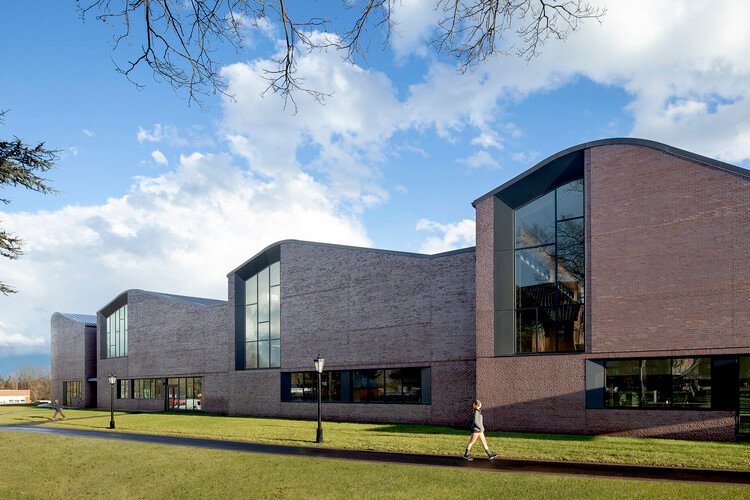
Introduction
The Lawrenceville School is one of the most distinguished private boarding schools in the United States. Located in Lawrenceville, New Jersey, the school has developed a remarkable reputation for academic excellence, intellectual curiosity, leadership, character development, athletics, arts, and community life. Founded in the nineteenth century, Lawrenceville has experienced significant changes over the decades while maintaining a strong connection to its historical traditions.
Known for its distinctive campus, influential graduates, demanding academic program, and commitment to discussion-based learning, The Lawrenceville School occupies an important place in American secondary education. Its educational philosophy emphasizes not only what students learn but also how they think, communicate, collaborate, and contribute to their communities.
For students and families exploring highly selective American boarding schools, Lawrenceville is particularly interesting because of its combination of rigorous academics, residential education, extracurricular opportunities, and a strong sense of community.
This article explores the complete history of The Lawrenceville School, its founding, development, educational philosophy, campus, traditions, academics, student life, athletics, arts, notable alumni, admissions, and continuing influence.
The Founding of The Lawrenceville School
The origins of The Lawrenceville School can be traced to the nineteenth century. The institution was established in 1810 as the Maidenhead Academy. At the time, American education was developing rapidly, and communities increasingly recognized the importance of organized schooling for young people.
The school eventually became associated with Lawrenceville, the New Jersey community where it developed into a major educational institution. Over time, its identity changed along with its curriculum, leadership, campus, and educational ambitions.
The nineteenth century was an important period for American independent schools. Many institutions founded during this era gradually moved from relatively traditional classical education toward broader academic programs that included mathematics, sciences, languages, literature, history, and practical subjects.
Lawrenceville followed this broader development while establishing its own distinctive identity.
From Academy to Lawrenceville School
During its early history, the school operated under different names and structures. The institution’s evolution reflected changing expectations about secondary education in America.
One of the most important periods in Lawrenceville’s development came under educator James Cameron Mackenzie, who became headmaster in the late nineteenth century. His leadership helped transform the institution into a more modern and influential preparatory school.
Mackenzie believed that education should develop the whole student. Academic preparation was important, but students also needed discipline, responsibility, physical activity, moral development, and opportunities to become leaders.
Under his influence, the school increasingly developed characteristics associated with the modern American boarding school.
James Cameron Mackenzie and Educational Reform
James Cameron Mackenzie played an important role in shaping Lawrenceville’s identity. During his tenure, the school adopted educational ideas that were innovative for their time.
Rather than relying entirely on traditional classroom lectures, Lawrenceville developed methods that encouraged students to participate actively in their education.
The school became particularly known for its use of small-group discussion and collaborative learning.
This philosophy eventually became associated with the famous Lawrenceville House System and the Harkness teaching method.
The goal was to create classrooms where students could discuss ideas rather than simply listen to teachers. Such an approach encouraged students to develop confidence, communication skills, critical thinking, and intellectual independence.
The Harkness Table and Discussion-Based Learning
One of the most recognizable features of Lawrenceville’s educational philosophy is the Harkness method.
The method is associated with Edward Harkness, a philanthropist who supported educational innovation in the early twentieth century. Harkness believed that students could learn effectively through discussion around a table rather than sitting in traditional rows.
At Lawrenceville, this idea became a defining part of classroom life.
Students gather around large oval tables with their teachers. Instead of simply receiving information, students are expected to read carefully, prepare questions, listen to classmates, present arguments, and respond thoughtfully.
The teacher serves as both instructor and discussion leader.
This method can create an active classroom environment in which students are expected to take responsibility for the quality of the conversation.
Why the Harkness Method Matters
The Harkness approach is more than simply changing the shape of a classroom table.
It encourages several important educational skills.
Critical Thinking
Students must analyze evidence and develop logical arguments. They cannot rely entirely on memorization.
Communication
Students learn how to explain ideas clearly and respond respectfully to different viewpoints.
Listening
Effective participation requires students to listen carefully to their classmates.
Collaboration
Learning becomes a shared experience rather than an individual activity.
Confidence
Students have regular opportunities to express their ideas in front of others.
Intellectual Independence
Students learn to form conclusions rather than simply repeat information provided by a teacher.
These principles have contributed significantly to Lawrenceville’s reputation.
The Lawrenceville House System
Another defining characteristic of the school is its House System.
The House System creates smaller communities within the larger school. Students live, study, eat, socialize, and participate in activities as members of Houses.
The system is designed to provide students with a strong sense of belonging.
Boarding schools can sometimes feel large or overwhelming, particularly for younger students. A House provides a smaller community where students can develop relationships with peers and faculty.
Faculty members often play important roles in House life, helping students with academic, personal, and community matters.
Residential Life at Lawrenceville
As a boarding school, Lawrenceville provides an educational experience that extends beyond classroom hours.
Students live on campus and participate in a wide range of activities throughout the day.
Residential education can encourage independence because students must learn how to manage schedules, responsibilities, friendships, academic commitments, and extracurricular activities.
Life on campus also provides opportunities for students from different backgrounds to interact regularly.
For many students, friendships developed in residence halls and Houses become one of the most memorable aspects of their school experience.
The Lawrenceville Campus
The Lawrenceville campus is one of the school’s most distinctive features.
Its architecture and landscape reflect the history of American independent education. The campus combines historic buildings with modern facilities designed to support contemporary academic, athletic, artistic, and residential programs.
The physical environment is an important part of the Lawrenceville experience.
Students do not simply attend classes and leave at the end of the day. They live within an educational community surrounded by classrooms, libraries, dining facilities, athletic fields, residences, performance spaces, and gathering areas.
Academic Life
Academic life at Lawrenceville is demanding and intellectually ambitious.
Students study a broad range of subjects, including:
- English
- Mathematics
- Science
- History
- Social sciences
- World languages
- Computer science
- Visual arts
- Performing arts
- Interdisciplinary subjects
The curriculum is designed to encourage students to explore different academic fields while developing strong analytical and communication skills.
Rather than focusing exclusively on examination performance, the school emphasizes deeper intellectual engagement.
English and Literature
English courses are central to a Lawrenceville education.
Students read literature from different periods and cultures while learning how authors use language, structure, characterization, symbolism, and narrative techniques.
Class discussions can encourage students to consider multiple interpretations of a text.
Writing is also an important component.
Students are expected to communicate ideas clearly through analytical essays, creative assignments, research projects, and other forms of written work.
Mathematics
Mathematics at Lawrenceville emphasizes conceptual understanding and problem-solving.
Students progress through courses appropriate to their preparation and interests.
Mathematical study can include subjects such as algebra, geometry, trigonometry, calculus, statistics, and more advanced areas.
The goal is not simply to memorize formulas.
Students are encouraged to understand why mathematical methods work and how they can be applied to unfamiliar problems.
Science Education
Science plays an important role in the Lawrenceville curriculum.
Students may study biology, chemistry, physics, environmental science, and other scientific disciplines.
Laboratory work provides opportunities to connect theoretical concepts with practical investigation.
Scientific education can also encourage students to ask questions, analyze evidence, design experiments, and evaluate conclusions.
History and Social Sciences
History courses help students understand political, cultural, economic, and social developments.
Students study American history as well as global civilizations and modern international issues.
The discussion-based approach can be especially valuable in history because many historical questions involve interpretation.
Students are encouraged to evaluate primary and secondary sources and consider different perspectives.
World Languages
Language study is another component of the Lawrenceville academic experience.
Learning another language can help students develop communication skills while also introducing them to different cultures and traditions.
Depending on available programs and individual interests, students can pursue multiple levels of language study.
Arts at Lawrenceville
The arts are an important part of life at the school.
Students can explore visual arts, music, theater, dance, and other creative disciplines.
Artistic education gives students opportunities to develop skills that are different from traditional academic abilities.
Creative work can strengthen observation, imagination, collaboration, discipline, and self-expression.
Performing Arts
The performing arts provide opportunities for students to participate in productions, concerts, ensembles, and other performances.
Theater can teach students teamwork and confidence.
Music allows students to develop technical skills while performing as individuals or members of ensembles.
Performances also contribute to campus culture by bringing students, faculty, families, and visitors together.
Athletics
Athletics are another major component of Lawrenceville life.
The school offers a variety of sports and encourages students to participate in physical activities.
Sports can teach students important lessons about:
- Teamwork
- Discipline
- Leadership
- Resilience
- Time management
- Competition
- Sportsmanship
For student-athletes, the school environment can provide opportunities to develop skills while balancing demanding academic responsibilities.
Teamwork and Leadership Through Sports
Athletic participation is not only about winning competitions.
Students learn how to work with teammates who have different personalities and strengths.
They also learn how to respond to success and failure.
Captains and experienced athletes can develop leadership skills by helping younger teammates and taking responsibility for team culture.
These lessons often complement the school’s broader emphasis on character development.
Student Clubs and Extracurricular Activities
Lawrenceville students can participate in a wide range of extracurricular activities.
Clubs may involve:
- Academic interests
- Debate
- Journalism
- Community service
- Cultural organizations
- Environmental initiatives
- Technology
- Entrepreneurship
- Arts
- Music
- Student publications
Extracurricular activities allow students to explore interests beyond formal coursework.
They can also provide opportunities for students to take leadership roles.
Community Service
Community engagement is an important part of independent-school education.
Students are encouraged to understand that education involves responsibility to others.
Community service can take many forms, including local volunteering, fundraising, educational programs, environmental activities, and service-oriented projects.
Such experiences can help students understand social issues and develop empathy.
Diversity and Community
Modern boarding schools serve students from a wide range of backgrounds.
Lawrenceville’s residential model creates an environment where students interact closely with classmates from different regions and cultures.
This diversity can contribute to classroom discussions because students bring different experiences and perspectives.
A diverse community also prepares students for environments they may encounter later at universities and in professional life.
The Lawrenceville Student Experience
Life at Lawrenceville can be challenging and rewarding.
Students typically balance academics with residential responsibilities, athletics, arts, clubs, friendships, and other commitments.
This environment requires organization.
Students must learn how to manage time effectively because the school day does not end when classes finish.
The residential model also means that students learn social skills through everyday interactions.
Faculty and Teaching
Faculty members are central to the Lawrenceville experience.
Teachers do more than deliver lessons. In a residential school, faculty may also serve as advisers, coaches, House leaders, mentors, and community members.
This creates opportunities for students to develop relationships with adults who know them in multiple contexts.
The Harkness method also changes the role of the teacher.
Instead of dominating classroom discussion, the teacher guides students toward deeper questions and more thoughtful analysis.
Mentorship and Advising
Advising is an important part of student development.
Students may receive guidance concerning academic choices, extracurricular activities, personal challenges, and future educational plans.
Effective advising can help students understand their strengths and identify areas where they need improvement.
It also helps students navigate the complexity of boarding-school life.
College Preparation
Lawrenceville has a long history of preparing students for selective colleges and universities.
The school’s rigorous curriculum is designed to develop strong academic foundations.
College counseling can help students understand application requirements, select appropriate institutions, prepare essays, and make decisions about higher education.
However, successful college preparation involves more than grades.
Students also develop writing ability, intellectual curiosity, leadership experience, extracurricular involvement, and personal maturity.
Notable Lawrenceville Alumni
The Lawrenceville community includes many graduates who have become influential in different fields.
Its alumni network includes people associated with:
- Government
- Business
- Science
- Literature
- Journalism
- Arts
- Technology
- Academia
- Public service
Notable alumni include figures such as Malcolm Forbes, James Merrill, John C. Whitehead, and others whose careers demonstrate the wide range of paths followed by Lawrenceville graduates.
The achievements of alumni contribute to the school’s historical reputation, although the value of an education cannot be measured only by famous graduates.
Lawrenceville and American Education
The school’s influence extends beyond its own campus.
The Harkness approach has attracted attention from educators interested in student-centered learning.
The idea that students can learn through structured discussion has become influential in many educational settings.
Lawrenceville therefore represents an important example of how private schools have experimented with teaching methods designed to promote participation and intellectual independence.
Tradition and Innovation
One of Lawrenceville’s most interesting characteristics is the combination of tradition and innovation.
The school has a long history, historic buildings, established customs, and generations of alumni.
At the same time, education continues to evolve.
Modern students encounter new technologies, changing social environments, emerging academic fields, and global challenges.
A successful school must preserve useful traditions while adapting to new circumstances.
Lawrenceville’s educational identity reflects this balance.
Technology and Modern Learning
Technology has transformed education dramatically.
Students today have access to digital resources that were unimaginable to earlier generations.
Modern independent schools can use technology for research, collaboration, presentations, creative projects, data analysis, and communication.
However, the Lawrenceville emphasis on discussion demonstrates that technology does not necessarily replace traditional human interaction.
A student can use sophisticated digital resources while still benefiting from face-to-face conversation around a table.
The Importance of Critical Thinking
Critical thinking is one of the most important skills developed through Lawrenceville’s educational model.
Students are encouraged to ask:
- What evidence supports this claim?
- Are there alternative explanations?
- What assumptions are being made?
- How reliable is the source?
- What are the consequences of this argument?
These questions are useful across academic disciplines.
They also become increasingly important in a world where students encounter enormous amounts of information online.
Preparing Students for a Changing World
The purpose of a modern secondary education extends beyond preparing students for examinations.
Students will enter universities, workplaces, and communities that continue to change.
They need adaptability, communication skills, collaboration, creativity, and intellectual independence.
Lawrenceville’s educational model attempts to develop these abilities through a combination of classroom discussion, residential life, extracurricular activities, athletics, arts, and leadership opportunities.
Admissions to The Lawrenceville School
Admission to Lawrenceville is highly selective.
Prospective students and families generally need to demonstrate strong academic preparation, intellectual curiosity, character, engagement, and potential contribution to the school community.
The admissions process can include academic records, teacher recommendations, interviews, standardized testing where applicable, essays, and other materials depending on the admission year and applicant circumstances.
Because admissions policies can change, families should always consult the school’s official admissions information for current requirements and deadlines.
What Makes Lawrenceville Different?
Several features distinguish Lawrenceville from many other schools.
1. Harkness Learning
Discussion-based teaching encourages active participation.
2. House System
The House structure creates smaller communities within the larger school.
3. Boarding Experience
Students live and learn in the same environment.
4. Academic Rigor
The curriculum challenges students to think deeply.
5. Strong Extracurricular Culture
Students can explore interests outside the classroom.
6. Historic Legacy
The school has existed for more than two centuries in different forms.
7. Community Focus
Students are encouraged to contribute to the broader school community.
Challenges of Attending a Highly Selective Boarding School
Although Lawrenceville offers many opportunities, the experience can also be demanding.
Students may face:
- Heavy academic workloads
- Competitive environments
- Extensive extracurricular commitments
- Separation from family
- Pressure to perform
- Complex social relationships
- The need for strong time-management skills
A successful boarding-school experience therefore requires more than academic ability.
Students need resilience, independence, adaptability, and willingness to seek help when needed.
The Importance of Student Well-Being
Modern education increasingly recognizes that academic success depends partly on student well-being.
Boarding schools have a special responsibility because students spend much of their lives on campus.
Support systems can include advisers, faculty members, counselors, health professionals, House communities, coaches, and trusted adults.
A healthy school environment should encourage students to seek support when they face academic, social, or personal difficulties.
The Lawrenceville Tradition
Traditions help create a sense of identity.
Students often develop strong connections to school customs, Houses, athletic teams, performances, ceremonies, and campus landmarks.
These traditions connect current students with generations of alumni.
At the same time, every generation adds something new to the institution.
This creates a continuing relationship between history and modern student life.
The Lawrenceville Alumni Network
Graduation does not necessarily mean the end of the Lawrenceville experience.
Alumni often remain connected through events, reunions, professional networks, school communications, and support for current students.
A strong alumni community can benefit both graduates and the school itself.
Former students can share professional experience, mentor younger members, support educational initiatives, and contribute to institutional development.
Lawrenceville’s Place Among American Boarding Schools
The Lawrenceville School is often discussed alongside other highly regarded American independent boarding schools.
Its distinctive identity comes from its combination of history, Harkness teaching, House life, residential education, academics, athletics, arts, and community traditions.
Every major boarding school has its own culture.
For some students, Lawrenceville’s discussion-centered approach and residential community can be particularly attractive.
Why Families Consider Lawrenceville
Families may consider Lawrenceville for several reasons.
The school offers a broad educational environment in which students can pursue academic and extracurricular interests simultaneously.
Its residential structure can provide independence and community.
The Harkness method can offer students an unusual classroom experience.
The school’s history and alumni network can also provide a strong institutional identity.
However, families should consider whether the school’s environment fits the individual student’s personality and learning style rather than focusing only on reputation.
Choosing the Right Boarding School
Choosing a boarding school is a major decision.
Families should consider:
- Academic programs
- Teaching style
- Boarding arrangements
- Student support
- Arts opportunities
- Athletic programs
- Campus environment
- Community culture
- Financial considerations
- College counseling
- Location
- Student interests
The best school is not necessarily the most famous school.
It is the school where a student can learn effectively, develop confidence, build relationships, and grow as an individual.
Lawrenceville’s Historical Legacy
The long history of The Lawrenceville School demonstrates how educational institutions can evolve.
From its beginnings as an academy to its development as a major American boarding school, Lawrenceville has experienced enormous changes in society, technology, education, and culture.
Yet certain principles have remained important: intellectual curiosity, community, responsibility, and personal development.
The school’s legacy is therefore not simply a collection of old buildings or famous graduates.
It is an educational tradition that continues to influence students.
The Future of The Lawrenceville School
Like every established educational institution, Lawrenceville faces the challenge of preparing students for a future that cannot be predicted completely.
Artificial intelligence, digital technology, globalization, climate change, changing labor markets, and new forms of communication are transforming the world.
Schools must determine which skills students need most.
Memorizing information will remain useful, but students increasingly need to know how to evaluate information, ask meaningful questions, collaborate, communicate, and adapt.
Lawrenceville’s emphasis on discussion and critical thinking can remain relevant in this environment.
Conclusion
The Lawrenceville School is an important institution in the history of American independent education.
Its development from a nineteenth-century academy into a modern boarding school reflects the changing nature of education in the United States.
The school’s distinctive identity has been shaped by influential educators, innovative teaching methods, residential life, the House System, academic rigor, athletics, arts, and a strong community tradition.
Perhaps the most recognizable aspect of Lawrenceville is its use of the Harkness method. By placing students at the center of classroom discussion, the school encourages them to think critically, communicate clearly, listen carefully, and engage with complex ideas.
Beyond academics, Lawrenceville provides students with opportunities to participate in athletics, arts, clubs, community service, leadership, and residential life.
Its long history and alumni network add to its reputation, while its continuing commitment to educational development keeps the institution connected to the modern world.
For students seeking a challenging boarding-school environment, The Lawrenceville School represents a distinctive model of education—one that combines tradition with innovation and academic achievement with personal development.
Ultimately, the legacy of Lawrenceville is best understood not simply through its buildings, programs, or famous alumni, but through its central educational idea: students learn most effectively when they are active participants in an intellectual community.
Frequently Asked Questions About The Lawrenceville School
What is The Lawrenceville School?
The Lawrenceville School is a private, coeducational boarding and day school in Lawrenceville, New Jersey, serving secondary-school students.
When was The Lawrenceville School founded?
The institution traces its origins to 1810, when it was established as the Maidenhead Academy.
Where is The Lawrenceville School located?
The school is located in Lawrenceville, New Jersey, United States.
Is Lawrenceville a boarding school?
Yes. Lawrenceville offers a residential boarding-school experience as well as opportunities for day students.
What is Lawrenceville famous for?
Lawrenceville is particularly known for its Harkness teaching method, House System, rigorous academics, historic campus, and strong boarding-school community.
What is the Harkness method?
The Harkness method is a discussion-based approach in which students and teachers gather around a large table and engage in collaborative academic conversation.
Does Lawrenceville offer athletics?
Yes. Athletics are an important part of student life, with students participating in a range of sports and physical activities.
Does Lawrenceville offer arts programs?
Yes. Students can participate in visual arts, music, theater, and other creative activities.
Is admission to Lawrenceville competitive?
Yes. Lawrenceville is a highly selective independent school, and admission decisions consider multiple aspects of an applicant’s academic and personal profile.
What makes Lawrenceville different from other boarding schools?
Its combination of Harkness discussion-based learning, House System, residential education, historic traditions, broad extracurricular opportunities, and academic rigor gives Lawrenceville a distinctive identity.
Does Lawrenceville prepare students for college?
Yes. The school’s rigorous academic program and college counseling support students as they prepare for higher education.
What should families consider before applying?
Families should consider the school’s academic environment, teaching philosophy, residential culture, extracurricular programs, student support, cost, location, and whether the school is a good fit for the student’s personality and goals.
SEO Keywords
Primary Keyword: The Lawrenceville School
Secondary Keywords:
The Lawrenceville School history, Lawrenceville School New Jersey, Lawrenceville boarding school, Lawrenceville School admissions, Lawrenceville School academics, Lawrenceville School Harkness method, Lawrenceville School House System, Lawrenceville School campus, Lawrenceville School alumni, Lawrenceville School education, best boarding schools in America, American private boarding schools, Lawrenceville School student life.
Suggested SEO Title
The Lawrenceville School: History, Academics, Campus, Admissions & Legacy
Suggested Meta Description
Discover The Lawrenceville School, including its history, Harkness teaching method, House System, academics, campus, athletics, arts, admissions, student life, and lasting legacy.
Suggested URL Slug
the-lawrenceville-school-history-academics-campus
Suggested Image Alt Text
The Lawrenceville School campus in New Jersey