Introduction
The Bishop Strachan School, commonly known as BSS, is one of Canada’s historic independent schools for girls and one of Toronto’s most recognized educational institutions. Founded in 1867, the same year that Canada became a Confederation, BSS has developed from a small Church school into a modern Junior Kindergarten to Grade 12 day and boarding school. Throughout its long history, the school has maintained a central commitment to educating girls, encouraging intellectual curiosity, developing character and preparing students to become confident leaders.
The history of The Bishop Strachan School is closely connected with the history of education for women in Canada. When the school opened its doors in 1867, opportunities for girls to receive an academically ambitious education were considerably more limited than they are today. The founders believed that girls deserved access to a serious curriculum and should be prepared intellectually for the changing world around them. The school’s original vision was therefore remarkably forward-looking.
According to the school’s official heritage account, Rev. John Langtry envisioned a Church school for girls whose curriculum would be “co-extensive with that of first-class schools” and accessible to families of moderate means. The first year began with 31 students.
More than 150 years later, BSS has become a large and sophisticated educational community. The school currently serves approximately 970 students from Junior Kindergarten through Grade 12, with a boarding program and students representing a range of Canadian and international backgrounds.
This article explores the complete development of The Bishop Strachan School, from its nineteenth-century origins to its role as a contemporary girls’ school. It examines its founders, early educational mission, changing campus, academic philosophy, leadership traditions, boarding program, student life, technology and STEAM education, university preparation, inclusion, and continuing commitment to girls’ leadership.
1. The Founding of The Bishop Strachan School
The story of The Bishop Strachan School begins in Toronto in 1867.
The year itself was historically significant. Canada was entering a new national era through Confederation, while Toronto was growing as an important urban and cultural centre. Education was also changing. Families increasingly recognized that education could play an important role in preparing young people for professional, civic and intellectual life.
For girls, however, educational opportunities were still significantly different from those available to boys.
The Bishop Strachan School was established in response to this situation. Its founders believed that girls should not receive an education designed merely for social accomplishments. Instead, they should receive a rigorous academic education that could prepare them for higher learning and meaningful participation in society.
Rev. John Langtry played an important role in the school’s foundation. He was the father of four daughters and imagined an institution that could give girls an education comparable with that available at leading schools. The school’s founding vision emphasized academic seriousness, moral development and accessibility.
The first year included 31 students.
That number may appear small compared with the school’s modern enrollment, but the significance of those first students was much greater than the number suggests. They became part of an educational experiment that would eventually grow into one of Canada’s best-known independent girls’ schools.
The school was established under the name of Bishop John Strachan, an important figure in early nineteenth-century Canadian religious and educational history. His influence on education and the Anglican community helped shape the identity of the institution.
From the beginning, BSS combined academic ambition with values-based education.
2. Education for Girls in the Nineteenth Century
To understand the importance of BSS, it is necessary to consider the educational environment in which it was created.
During the nineteenth century, expectations surrounding women’s education were changing. Girls could receive schooling, but the purpose and depth of that schooling often differed from the education offered to boys. Traditional expectations emphasized domestic knowledge, social manners, music and other accomplishments.
The founders of BSS believed that girls could and should be educated more broadly.
Academic subjects mattered.
Intellectual independence mattered.
Leadership mattered.
Character mattered.
The school’s early philosophy was therefore connected to a larger movement toward expanding educational opportunities for women.
The importance of this mission became particularly clear because Canadian universities were also changing. The University of Toronto did not admit women until 1884. BSS’s curriculum, however, had already been preparing students for academic excellence before women were admitted to that university.
This fact illustrates one of the defining characteristics of BSS: the school did not simply respond to educational opportunities after they became available. It attempted to prepare girls for opportunities that society had not yet fully opened to them.
3. The Early Years
The earliest years of BSS were characterized by growth, experimentation and the gradual development of a distinctive school culture.
The school moved through several locations as Toronto developed. Its early history included a location at College and Yonge and later a site associated with Wykeham Hall. The school’s official heritage collection includes historical photographs documenting its earlier locations and student life.
These moves were not merely physical changes. They reflected the growth of the school itself.
As enrollment increased, the institution needed better facilities, additional classrooms and spaces for activities beyond traditional academic lessons.
Over time, BSS developed traditions that helped create a strong sense of institutional identity.
School communities depend on more than buildings and curricula. They also depend on relationships, memories, rituals and generations of students who contribute to the character of the institution.
At BSS, generations of students became connected through the shared experience of attending the school.
4. A Tradition of Academic Ambition
One of the most important themes in the history of The Bishop Strachan School is academic ambition.
From its founding, the school emphasized a curriculum that would challenge girls intellectually. This was significant because the idea that girls should receive the same level of academic preparation as boys was not universally accepted in nineteenth-century society.
BSS developed a culture in which students were encouraged to take intellectual work seriously.
This included preparation in traditional academic disciplines as well as broader areas of learning.
Over the decades, the meaning of academic excellence changed. In the nineteenth century, academic achievement could mean mastery of classical subjects and preparation for university examinations. In the twentieth century, science, mathematics, languages and social sciences became increasingly important. In the twenty-first century, academic excellence also includes digital literacy, interdisciplinary thinking, research, design and problem solving.
BSS has continued to adapt its educational program as the meaning of learning has changed.
5. The Role of Women and Leadership
The history of BSS cannot be separated from the history of women’s leadership.
The school’s founding purpose was connected to educating girls, but its long-term mission developed beyond simply providing access to education.
BSS has increasingly emphasized leadership as a central part of its identity.
The school’s current mission describes its purpose in terms of inspiring girls to be fearless and educating them to be leaders.
Leadership at BSS is not limited to holding a formal position.
It can mean asking difficult questions.
It can mean speaking confidently.
It can mean supporting classmates.
It can mean leading a team.
It can mean creating a community project.
It can mean developing a new idea.
It can mean challenging an assumption.
This broader understanding of leadership reflects changes in society. Modern organizations need people who can collaborate as well as command. They need individuals who can listen, communicate, analyze information and make thoughtful decisions.
BSS therefore places leadership within the wider context of character and intellectual development.
6. The School’s Development Through the Twentieth Century
The twentieth century brought major changes to Toronto, Canada and the world.
BSS changed alongside them.
The school expanded its programs, facilities and student opportunities. The educational environment became more diverse, while new subjects and extracurricular activities became increasingly important.
Historical photographs from the school demonstrate that student life included performances, classroom learning, artistic activities and community traditions. The BSS heritage collection includes photographs from the 1920s and 1930s, illustrating how the institution continued to develop through the early twentieth century.
The twentieth century also transformed the position of women in Canadian society.
Women gained expanded access to universities and professions. They entered fields that had previously been dominated by men. They participated more actively in politics, science, business, medicine, education and public life.
These developments reinforced the importance of BSS’s founding mission.
The school had been established at a time when academic opportunities for girls were restricted. By the middle and later decades of the twentieth century, its graduates were entering a society in which women had substantially greater educational and professional opportunities.
The challenge for the school was no longer simply opening doors.
It was preparing students to walk through them confidently.
7. The Modern BSS Campus
Today, The Bishop Strachan School is located at 298 Lonsdale Road in Toronto.
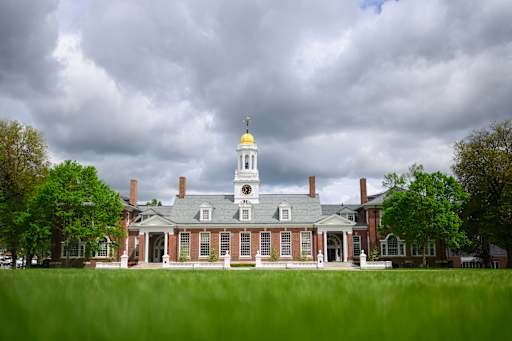
The modern campus combines historic architectural elements with contemporary learning spaces. According to the school’s official campus description, the campus includes a more than century-old building characterized by stained glass and leaded windows, alongside newer open spaces and modern educational facilities.
This combination of old and new reflects the character of BSS itself.
The school has a long institutional memory, but it is not frozen in the past.
Historic buildings can remind students of the generations who attended before them. Modern classrooms, technology spaces and collaborative environments represent the future.
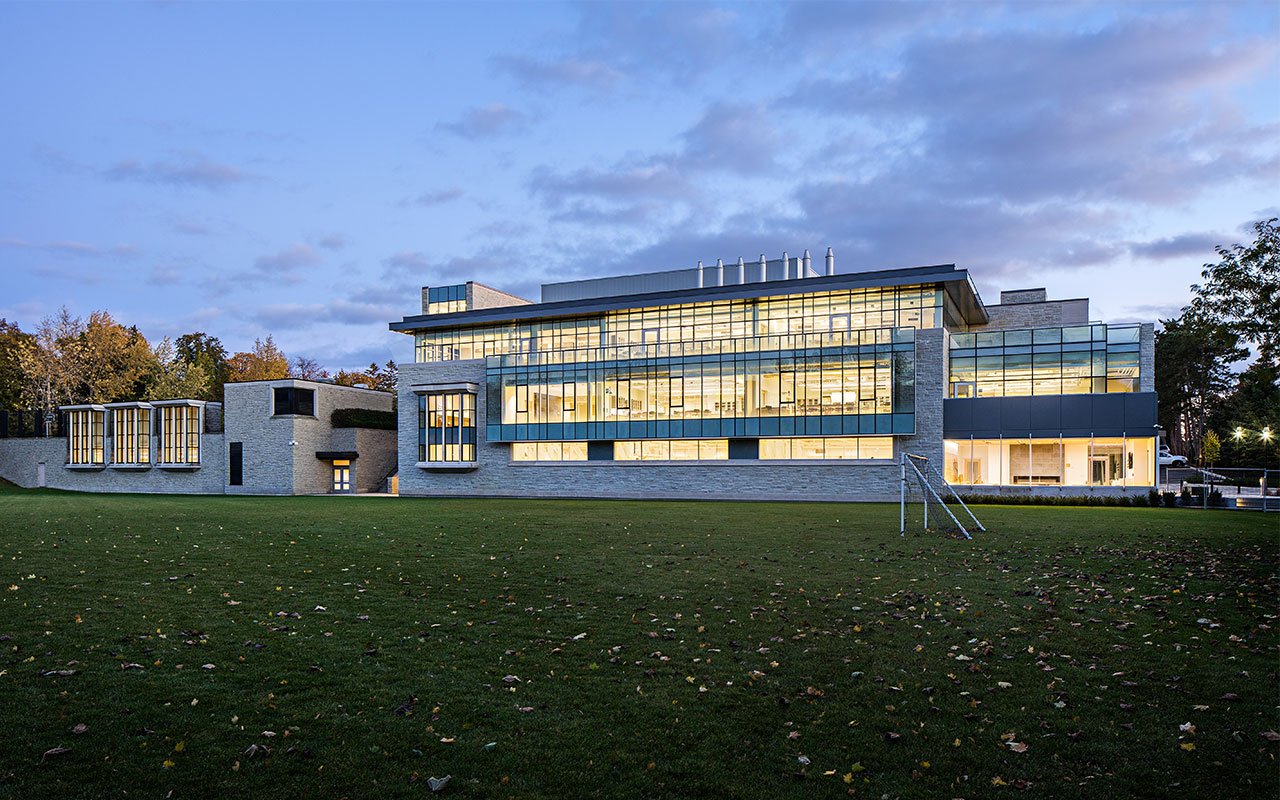
One of the school’s significant modern developments has been its STEAM complex.
STEAM stands for science, technology, engineering, arts and mathematics.
The addition of arts to the traditional STEM model reflects the school’s belief that innovation is not limited to technical knowledge. Creativity, communication and design can be just as important as scientific and mathematical skills.
8. Celebrating 150 Years
In 2017, The Bishop Strachan School celebrated its 150th anniversary.
The anniversary represented an important milestone.
Few schools can trace their institutional history across a century and a half. BSS used the occasion not only to celebrate its past but also to look toward the future.
The school opened a new STEAM wing as part of its 150th anniversary celebrations.
The development reflected a broader change in education.
Students increasingly need to understand how different disciplines connect.
A scientific problem may require design thinking.
A technological solution may require artistic creativity.
A social challenge may require data analysis.
A business idea may depend on communication.
STEAM education attempts to bring these forms of thinking together.
For BSS, this represented continuity with its original educational philosophy: give girls the knowledge and confidence necessary to participate fully in the changing world.
9. Junior School Education
Today, BSS begins educating students at the Junior Kindergarten level.
The Junior School is designed around curiosity, exploration and development.
The school’s current program extends the Ontario curriculum through research-based approaches, including inspiration from the Reggio Emilia Approach.
The educational philosophy emphasizes that young children are capable learners.
Instead of viewing students simply as recipients of information, teachers encourage them to ask questions, investigate ideas and participate actively in learning.
In Kindergarten, learning can involve stories, play, mathematics, science, social studies, French, music, visual arts and physical activity.
The approach is designed to recognize children’s natural curiosity.
A young student might ask why something happens.
Rather than simply providing an answer, the teacher can encourage investigation.
This creates an early foundation for inquiry-based learning.
10. Inquiry-Based Learning
Inquiry is an important concept in contemporary BSS education.
Inquiry-based learning begins with questions.
Students are encouraged to investigate problems rather than simply memorize information.
This approach can be used across many subjects.
In science, students can develop questions about the natural world.
In history, they can investigate primary sources.
In literature, they can examine different interpretations.
In mathematics, they can explore patterns and problem-solving strategies.
In art, they can experiment with different forms of expression.
BSS’s approach to history provides a particularly interesting example.
The school’s Grade 8 social studies program includes a project in which students examine family history through primary sources such as photographs, documents and other materials. Students learn to analyze evidence and draw conclusions about the past.
This demonstrates how academic learning can become personal and meaningful.
11. Middle School Education
The Middle School years represent an important stage of development.
Students are becoming more independent and are beginning to think more critically about themselves and the world.
BSS uses inquiry and project-based learning in Grades 7 and 8.
At this stage, students can work across disciplines and develop stronger research skills.
The goal is not simply to prepare students for examinations.
It is to prepare them to think.
A student should learn how to evaluate evidence, communicate ideas, collaborate with others and make informed decisions.
These skills become increasingly important as students move into Senior School.
12. Senior School and University Preparation
Grades 9 through 12 represent another important stage in the BSS experience.
Students take greater responsibility for their learning and begin making choices that can influence their future academic paths.
The school offers a broad curriculum that includes subjects such as English, French, mathematics, chemistry, business, technology, visual arts and media arts.
Advanced Placement courses provide opportunities for students to study university-level material while still in secondary school.
BSS has offered AP opportunities in areas including English and calculus, with students also having the opportunity to pursue the AP Capstone Diploma.
University preparation therefore involves more than grades.
Students develop research skills, communication abilities, critical thinking and independence.
The school’s university counselling program helps students understand post-secondary options and prepare for the transition beyond high school.
13. The Importance of Co-Curricular Activities
Education at BSS extends beyond the classroom.
Students participate in clubs, athletics, arts, leadership activities, community service and other programs.
The school currently reports more than 80 clubs, teams and affinity groups.
These activities give students opportunities to discover interests that may not emerge through traditional academic courses.
A student who enjoys mathematics may discover an interest in robotics.
Another student may discover a passion for theatre.
Someone else may develop leadership skills through athletics or community service.
This variety is important because adolescence is a period of exploration.
Schools can provide students with the space to discover who they are.
14. Athletics and Physical Development
Physical education is another component of a balanced education.
Athletics can teach discipline, teamwork, perseverance and resilience.
A student participating in a team learns that success depends not only on individual performance but also on cooperation.
Sports can also provide lessons about failure.
Not every competition results in victory.
Learning how to respond to setbacks is an important part of personal development.
BSS’s broader educational philosophy emphasizes helping students become resilient and confident.
Athletics can contribute significantly to that goal.
15. Arts and Creativity
The arts have long played a role in school life.
Music, visual arts, theatre and creative projects allow students to develop forms of expression that are different from conventional academic work.
Creativity is increasingly recognized as an important skill in education.
Modern workplaces require people who can generate ideas, communicate visually and verbally, understand audiences and approach problems from different perspectives.
BSS’s inclusion of arts within its STEAM approach reflects this broader understanding.
Science and technology can create new possibilities, but creativity helps determine how those possibilities are used.
16. Technology and STEAM Education
The modern world requires students to understand technology.
However, technological education is not simply about learning how to operate devices.
Students need to understand how technology affects society.
They need to know how to research information, evaluate sources, protect privacy and think critically about digital content.
BSS has incorporated technology, coding and design into its educational development.
The school’s current curriculum renewal work has included coding among the areas examined through research and external expertise.
The STEAM facilities provide physical spaces for experimentation and collaboration.
Students can design, build, test and revise.
This process teaches an important lesson: failure can be part of innovation.
A first attempt does not need to be perfect.
It needs to provide information that helps improve the next attempt.
17. Boarding at BSS
Boarding has been part of The Bishop Strachan School since its founding in 1867.
This is an important part of the school’s history.
Boarding provides opportunities for students who live outside Toronto or internationally to become part of the BSS community.
The current boarding program serves students in Grades 8 through 12.
Boarding is more than accommodation.
It is intended to support students’ personal development.
Students learn how to manage schedules, share responsibilities, participate in community activities and develop greater independence.
The school describes boarding as a supportive environment where students can grow in confidence, self-awareness and leadership.
18. A Global Student Community
Modern BSS has a strong international dimension.
Boarding students come from different countries and bring varied cultural experiences to the school.
In 2024, the school reported that its boarding students represented 17 different countries.
This diversity creates opportunities for students to learn from one another.
A classroom discussion can include perspectives shaped by different cultures and national experiences.
Students can develop a better understanding of the fact that there is rarely only one way to see a problem.
Global education is therefore not simply about travelling.
It can also happen through daily interactions with classmates.
19. Inclusion, Equity and Belonging
As Canadian society has become more diverse, BSS has continued to develop its approach to inclusion.
The school’s current Inclusive Excellence program emphasizes belonging, different perspectives and broader access to education.
The school states that it aims to create an environment in which students, families, employees and leaders from different backgrounds feel seen, heard and valued.
This represents an evolution of the school’s original mission.
The nineteenth-century founders were focused on creating stronger educational opportunities for girls.
The modern school continues that mission while recognizing that students themselves come from increasingly diverse backgrounds.
20. Financial Assistance and Access
Independent education can be expensive, making financial assistance an important part of accessibility.
BSS currently states that it provides significant financial assistance and that its support begins as early as Grade 6.
The school also reports allocating more than $2 million annually to financial assistance.
This reflects the principle that educational opportunity should not be limited entirely by a family’s financial circumstances.
Access has therefore become part of the modern interpretation of the school’s historic mission.
21. Well-Being and Student Development
Academic success is only one part of education.
Students also need to develop social and emotional skills.
BSS has incorporated a research-based Well-Being Framework into its current strategic development. The school describes this framework as drawing on the science of well-being and positive psychology and addressing academic, social, emotional and spiritual dimensions of student life.
This approach reflects a major change in how schools think about education.
Students cannot be reduced to test scores.
A successful student also needs resilience, self-awareness, healthy relationships and the ability to manage challenges.
Well-being and academic achievement can therefore support one another.
22. Information Literacy in the Digital Age
Another modern challenge is the enormous amount of information available online.
Students today can find information almost instantly.
But finding information is not the same as understanding it.
Students need to determine whether a source is reliable, whether evidence supports a claim and whether information has been presented in a misleading way.
BSS has recently highlighted information literacy as an important area of learning. Its Learning Commons has supported initiatives designed to help students navigate the digital environment and think critically about information.
This is particularly important for future leaders.
Leadership requires good judgment.
Good judgment requires reliable information.
23. Learning Through Real-World Problems
Modern BSS education increasingly connects classroom learning with real-world questions.
The school’s Learning in Action publication highlights projects involving subjects such as ethical housing, music, technology, history, literacy and STEM.
These projects demonstrate how learning can become interdisciplinary.
For example, an engineering project may involve science, mathematics, design and ethics.
A history project may involve research, writing, visual arts and identity.
A technology project may require programming as well as communication.
This approach encourages students to see knowledge as interconnected rather than divided into isolated subjects.
24. The Importance of History at BSS
An institution that has existed for more than 150 years naturally has a strong relationship with history.
BSS’s heritage is not simply a collection of old photographs.
It provides context for understanding how education has changed.
Students today have opportunities that students in 1867 did not.
They have access to modern science laboratories, digital tools, global networks and expanded university opportunities.
Yet some educational principles remain surprisingly similar.
Curiosity remains important.
Hard work remains important.
Character remains important.
Leadership remains important.
The school therefore presents its history as a foundation for future development.
25. Tradition and Innovation
One of the most interesting aspects of BSS is the combination of tradition and innovation.
The school’s campus includes historic architecture alongside modern facilities.
Its educational philosophy combines long-standing values with contemporary research.
Its heritage reaches back to 1867, while its current programs include coding, STEAM education and modern approaches to well-being.
This balance can help students understand that progress does not require abandoning history.
Instead, history can provide the context needed to make thoughtful decisions about the future.
26. Alumnae and the BSS Community
A school’s influence continues after students graduate.
BSS has thousands of alumnae around the world. The school currently reports approximately 6,620 alumnae.
The alumnae community represents generations of women who experienced different eras of Canadian history.
Some graduated when women’s professional opportunities were still expanding.
Others entered university and careers in a highly digital global economy.
The continuing relationship between graduates and the school helps preserve institutional memory.
Alumnae can also serve as examples for current students.
Their careers demonstrate the many different paths available after graduation.
27. Preparing Students for University
University preparation is an important part of Senior School education.
BSS aims to ensure that students are not simply accepted into university but are prepared to succeed once they arrive.
The school emphasizes research, analytical thinking, communication and independence as part of its university preparation.
Students may also build their experience through AP courses, leadership activities, community involvement and extracurricular programs.
This creates a more comprehensive university profile.
University success depends on more than academic marks.
Students need to manage time, communicate effectively, solve problems and advocate for themselves.
These skills are developed gradually throughout the BSS experience.
28. The BSS Approach to Leadership
Leadership remains central to the school’s identity.
The school reports that approximately 85 percent of its Grade 9 to 12 students participate in leadership roles.
This suggests that leadership is intended to be widely accessible rather than reserved for a small group of elected student representatives.
Students can develop leadership through clubs, teams, service projects, classroom responsibilities and community activities.
The underlying philosophy is important.
Leadership is not necessarily about being the loudest person in the room.
A strong leader can be a thoughtful listener.
A strong leader can recognize another person’s talent.
A strong leader can change their mind when evidence changes.
A strong leader can accept responsibility.
These qualities are increasingly important in a complex world.
29. Girls’ Education in the Twenty-First Century
The case for girls’ education has evolved significantly since 1867.
In the nineteenth century, the central challenge was access.
In the twenty-first century, access has expanded dramatically, but new challenges remain.
Girls and women continue to face questions about representation, leadership, confidence, opportunity and participation in fields such as STEM.
BSS’s current strategic plan identifies the continued need for female leadership and emphasizes preparing girls to navigate the world with intellectual curiosity, agility and compassion.
The school’s mission therefore remains connected to its founding purpose while responding to contemporary realities.
30. Why the BSS Story Matters
The history of The Bishop Strachan School matters because it illustrates how education can evolve while maintaining a strong sense of purpose.
In 1867, the school was founded with 31 students.
Today, it serves a much larger community.
The physical campus has changed.
Teaching methods have changed.
Technology has changed.
Society has changed.
The university system has changed.
The role of women has changed.
Yet the basic idea that girls deserve a rigorous, ambitious education remains at the heart of the institution.
This continuity is one of the most important features of BSS.
31. The School Today
Today, The Bishop Strachan School describes itself as an independent Junior Kindergarten to Grade 12 day and boarding school for girls in Toronto.
The school combines:
- Junior School education
- Middle School learning
- Senior School academics
- Advanced Placement opportunities
- Boarding
- Athletics
- Arts
- STEAM education
- Leadership
- Service learning
- Global learning
- University counselling
- Student well-being
- Clubs and affinity groups
- Financial assistance
This broad range of opportunities reflects the modern understanding of education as a whole-person experience.
32. The Future of The Bishop Strachan School
The future of BSS will likely involve continued adaptation.
Education is changing rapidly.
Artificial intelligence, digital information, climate change, global interconnectedness and evolving careers are creating new challenges for schools.
Students will need to learn how to work with technologies that do not yet exist.
They will need to distinguish reliable information from misinformation.
They will need to collaborate across cultures.
They will need to understand ethical questions surrounding technology.
They will need creativity and adaptability.
BSS’s current strategic direction emphasizes curriculum renewal, well-being, leadership and broader educational access.
These priorities suggest that the school is attempting to prepare students not simply for the present but for a future that is difficult to predict.
33. A Legacy of More Than 150 Years
Few educational institutions can claim a history stretching back to the birth of modern Canada.
BSS can.
Since 1867, generations of girls have passed through its classrooms.
Each generation entered a different world.
The students of the nineteenth century faced restrictions on women’s education.
The students of the twentieth century experienced major changes in women’s rights and professional opportunities.
The students of the twenty-first century face a global and digital environment unlike anything their predecessors experienced.
Yet all of these students became part of the same institutional story.
That is the power of a long educational tradition.
34. Conclusion
The Bishop Strachan School is more than an old school in Toronto.
It is an institution whose history reflects the changing role of girls and women in Canadian society.
Founded in 1867 with 31 students, BSS began with a clear ambition: girls should have access to a rigorous education capable of preparing them for intellectual and civic life.
That founding idea helped shape the school’s development for more than 150 years.
Over time, BSS expanded its curriculum, moved through different locations, developed new facilities and responded to changing educational expectations. It evolved from a nineteenth-century Church school into a modern independent girls’ school serving students from Junior Kindergarten through Grade 12, including boarding students from Canada and around the world.
Its modern educational philosophy emphasizes inquiry, leadership, creativity, technology, well-being, inclusion and academic excellence.
The campus itself reflects this evolution. Historic buildings stand alongside modern learning environments, including contemporary STEAM facilities.
The school’s approach to learning also demonstrates a balance between tradition and innovation. Students study established academic disciplines while participating in projects that involve research, technology, design, creativity and real-world problem solving.
Perhaps the most important part of the BSS story is its continuing focus on girls’ education.
The founders believed that girls deserved ambitious academic opportunities at a time when society had not yet fully accepted that principle. More than a century and a half later, the school continues to emphasize the development of confident, educated and capable young women.
The world has changed dramatically since 1867.
The challenges facing students have changed.
The technologies available to them have changed.
The careers they may pursue have changed.
But the need for curiosity, courage, knowledge, compassion and thoughtful leadership has not disappeared.
That is why the history of The Bishop Strachan School remains relevant.
Its story is ultimately a story about education and possibility: the belief that when girls are given rigorous academic opportunities, supportive communities and the confidence to use their voices, they can contribute meaningfully to their families, communities, professions and the wider world.
From its first class of 31 students to its modern community of nearly a thousand learners, BSS has continued to develop while maintaining a connection to its founding purpose.
Its past provides the foundation.
Its students represent the present.
And its emphasis on leadership, inquiry, innovation and global citizenship points toward the future.
Frequently Asked Questions About The Bishop Strachan School
When was The Bishop Strachan School founded?
The Bishop Strachan School was founded in 1867 in Toronto, Ontario. Its first year included 31 students.
Who founded The Bishop Strachan School?
Rev. John Langtry was an important founder of the school. He envisioned a Church school for girls offering a rigorous curriculum comparable with leading schools of the period.
Why was The Bishop Strachan School established?
The school was established to provide girls with a rigorous and academically ambitious education. Its founding vision emphasized preparing girls for intellectual achievement and future opportunities.
Where is The Bishop Strachan School located?
The Bishop Strachan School is located at 298 Lonsdale Road in Toronto, Ontario, Canada.
Is The Bishop Strachan School a girls’ school?
Yes. BSS is an independent school serving girls from Junior Kindergarten through Grade 12.
Does BSS offer boarding?
Yes. Boarding has been part of BSS since its founding in 1867. The current boarding program serves students in Grades 8 through 12.
Does BSS accept international students?
Yes. The boarding community includes students from Canada and other countries. The school has reported boarding students representing 17 different countries.
What grades does BSS offer?
The school serves students from Junior Kindergarten through Grade 12.
Does BSS offer Advanced Placement courses?
Yes. BSS offers Advanced Placement opportunities, including courses such as English and calculus, and provides the opportunity for students to pursue the AP Capstone Diploma.
What is BSS known for?
BSS is known for girls’ education, academic excellence, leadership development, inquiry-based learning, STEAM education, arts, athletics, boarding and preparation for university and future careers.
Does BSS provide financial assistance?
Yes. BSS provides financial assistance and states that it allocates more than $2 million annually to financial assistance.
How old is The Bishop Strachan School?
BSS was founded in 1867 and has therefore been operating for more than 150 years. The school celebrated its 150th anniversary in 2017.
What makes BSS historically significant?
BSS is historically significant because it was established at a time when girls had fewer opportunities for advanced academic education. Its founders sought to provide girls with a rigorous curriculum and prepare them for educational opportunities that were not yet equally available to women.
Final Thoughts
The Bishop Strachan School represents a remarkable educational journey from nineteenth-century Toronto to the modern global city.
Its history began with a small group of students and an ambitious idea.
That idea was simple but powerful: girls deserve an education that challenges them intellectually and prepares them to lead.
More than 150 years later, that principle continues to influence the school’s academic programs, student life, leadership opportunities, boarding community, STEAM initiatives and approach to well-being.
BSS’s history demonstrates that successful educational institutions are not defined only by how long they survive. They are defined by how effectively they adapt while preserving the values that give them purpose.
For The Bishop Strachan School, the connection between history and future remains particularly strong.
The school remembers where it came from while preparing students for where the world is going.
That balance between heritage and innovation is one of the defining characteristics of The Bishop Strachan School.