Introduction
Sydney Grammar School is one of Australia’s most historic and influential independent schools. Located in Sydney, New South Wales, the school has played an important role in the educational, cultural, intellectual, and social development of the city for well over a century and a half. Its long history is closely connected with the development of modern education in colonial and later Australian society.
Known commonly as SGS, Sydney Grammar School has traditionally placed strong emphasis on academic achievement, classical education, intellectual independence, character development, sport, public speaking, and participation in community life. Over generations, its graduates have entered universities, professions, public service, business, science, law, politics, literature, medicine, and many other areas.
The history of Sydney Grammar School is particularly interesting because it reflects the broader story of Australian education. The institution emerged during a period when Sydney was transforming from a colonial settlement into a growing city. As the population expanded and society became more established, there was increasing demand for schools capable of providing advanced education to young people.
Sydney Grammar School developed from these circumstances and eventually became one of the country’s best-known independent boys’ schools. Its traditions have evolved over time, but many elements of its original educational philosophy remain important today.
This article explores the history and development of Sydney Grammar School, its educational philosophy, campus, traditions, academic culture, extracurricular activities, sporting life, notable alumni, and continuing influence.
The Historical Background of Sydney Grammar School
To understand Sydney Grammar School, it is necessary to understand the educational environment of early colonial Sydney.
During the nineteenth century, education in New South Wales was undergoing significant change. Early schooling was often connected with religious institutions, private teachers, or small local schools. As Sydney expanded economically and socially, however, many families wanted access to a more structured and academically ambitious education.
The nineteenth century also saw the growing influence of British educational traditions. Classical subjects such as Latin and Greek were regarded as important parts of an advanced education. Mathematics, history, literature, languages, science, and public speaking were increasingly incorporated into formal schooling.
The founders and supporters of Sydney Grammar School believed that education should do more than provide basic literacy. They wanted to create an institution capable of preparing young men for university, professional careers, public responsibilities, and leadership.
This philosophy became an important foundation of the school.
Foundation and Early Development
Sydney Grammar School’s history is closely associated with the establishment of the University of Sydney and the development of higher education in New South Wales.
The school was established in the nineteenth century and grew from earlier educational initiatives associated with Sydney College. The establishment of the school was part of a broader effort to create a high-quality academic institution that could prepare students for university and professional life.
The Sydney Grammar School Act of 1854 played a significant role in establishing the institution in its modern form. The school officially opened in 1857.
This period was important in the history of Australian education because institutions were beginning to develop structures based on established British educational models while also responding to the unique circumstances of Australian society.
From its early years, Sydney Grammar School sought to combine rigorous academic education with the development of discipline and character.
The Importance of Sydney College
Before the modern Sydney Grammar School was established, Sydney College had already provided an important educational foundation.
Sydney College was founded in the 1830s and was intended to provide advanced education in the colony. It became an important part of Sydney’s intellectual life.
The later development of Sydney Grammar School was connected with this earlier institution. When the school was reorganised under the Sydney Grammar School Act, it inherited elements of the educational tradition that had developed at Sydney College.
This continuity helped establish a strong institutional identity.
Sydney Grammar School therefore did not emerge suddenly as an entirely new school. Instead, it developed from earlier educational efforts and gradually established its own distinctive character.
The School’s Opening in 1857
Sydney Grammar School opened its doors in 1857.
The opening represented an important moment in the educational history of New South Wales. The school was intended to provide an academically demanding education and to prepare students for university and professional careers.
Its location in central Sydney also reflected its connection with the intellectual life of the city.
From the beginning, the school was associated with ambitious educational standards. Students were expected to work seriously and participate in a disciplined academic environment.
The school gradually attracted families who valued classical education, scholarship, and preparation for higher education.
Edmund Blacket and the School’s Historic Architecture
One of the most recognizable aspects of Sydney Grammar School is its historic architecture.
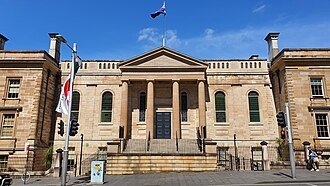
The school’s main building was designed by the prominent Australian architect Edmund Blacket. Blacket was responsible for many important nineteenth-century buildings in New South Wales, and his work became closely associated with the architectural character of Sydney.
The Sydney Grammar School building reflects the architectural traditions of the nineteenth century. Its design gives the school a distinctive historic appearance and contributes to the atmosphere of the campus.
The architecture is more than simply decorative. It represents the period in which the school was founded and reminds students and visitors of the institution’s long educational history.
Over time, the school has expanded and modernised its facilities, but the historic character of its original buildings remains an important part of its identity.
Sydney Grammar School and Classical Education
Classical education has traditionally played a major role at Sydney Grammar School.
In the nineteenth century, Latin and Greek were considered essential subjects for an educated person. They were connected with literature, philosophy, history, law, theology, and the intellectual traditions of Europe.
Sydney Grammar School maintained this tradition while gradually expanding its curriculum.
Classical studies can encourage students to examine language carefully, understand historical contexts, and engage with influential works of literature and philosophy. Even as modern subjects became increasingly important, the school’s commitment to traditional academic disciplines remained visible.
The modern curriculum is considerably broader than the curriculum of the nineteenth century. Nevertheless, the idea that education should cultivate intellectual curiosity and rigorous thinking remains central to the school’s identity.
Academic Philosophy
Sydney Grammar School has developed a reputation for academic seriousness.
The school’s educational philosophy places importance on knowledge, critical thinking, independent study, communication, and intellectual curiosity.
Students are encouraged to engage deeply with their subjects rather than simply memorise information. Teachers play an important role in guiding students through challenging material and encouraging discussion.
The academic environment is designed to prepare students for demanding university courses and future professional responsibilities.
Subjects can include English, mathematics, science, history, geography, languages, economics, technology, visual arts, music, and other areas.
The exact curriculum changes over time, but the overall goal remains consistent: to provide students with a broad and rigorous education.
English and Literature
English has traditionally been an important part of education at Sydney Grammar School.
Literature provides students with opportunities to study major works, examine language, develop arguments, and communicate ideas.
Students may encounter Australian literature alongside major works from British and international literary traditions.
Writing is also important. Strong written communication is valuable not only in school but throughout university and professional life.
The study of literature can help students understand different perspectives, historical periods, cultures, and human experiences.
Mathematics and Science
Modern education requires strong foundations in mathematics and science, and these subjects occupy an important place in the school’s curriculum.
Mathematics develops logical reasoning, problem-solving, numerical understanding, and analytical skills.
Science allows students to explore the natural world through observation, experimentation, evidence, and theoretical understanding.
Students interested in science may continue their studies into areas such as physics, chemistry, biology, environmental science, and related disciplines.
The combination of traditional humanities and modern scientific education reflects the broad academic approach associated with the school.
History and the Humanities
History is another important field of study.
Understanding history enables students to examine how societies develop, how political systems change, and how individuals and communities respond to major events.
Sydney Grammar School’s location in one of Australia’s oldest major cities provides an interesting environment for studying Australian history.
Students can examine Australia’s colonial history, federation, political development, international relationships, wars, immigration, social change, and modern Australian society.
The humanities also encourage students to consider ethical and philosophical questions.
Languages and International Understanding
Language education has historically been associated with Sydney Grammar School’s academic tradition.
Classical languages such as Latin and Greek have long held an important place in the school’s history. Modern language education also provides students with opportunities to engage with cultures beyond Australia.
Learning another language can strengthen communication skills and introduce students to different ways of thinking.
In an increasingly interconnected world, international awareness is an important part of education.
The Role of Teachers
Teachers have always been central to the identity of Sydney Grammar School.
A strong school depends not only on buildings and curriculum but also on the quality of its teachers.
Teachers at a school such as Sydney Grammar are expected to combine subject expertise with the ability to encourage students intellectually.
The relationship between teachers and students can be especially important in academically demanding environments. Students benefit when teachers challenge them while also helping them develop confidence and independence.
The traditions of the school have therefore depended heavily on generations of educators.
Student Life
Student life at Sydney Grammar School extends beyond classroom lessons.
Students participate in academic societies, sporting activities, music, debating, drama, clubs, competitions, and other activities.
These opportunities help students develop skills that cannot be learned entirely through textbooks.
Public speaking, teamwork, leadership, organisation, creativity, and confidence can all develop through extracurricular participation.
The school environment also encourages students to build friendships and become part of a wider community.
Sport at Sydney Grammar School
Sport has long been an important part of school life.
Traditional school sports can provide students with opportunities to develop physical fitness, teamwork, discipline, and resilience.
Sydney Grammar School has participated in a wide range of sporting activities, including rowing, cricket, rugby, athletics, swimming, tennis, football, and other sports.
Rowing has a particularly significant place in the history of many Australian independent schools, including Sydney Grammar.
Competitive sport can teach students how to deal with success and disappointment. It also creates strong bonds between teammates and contributes to school spirit.
Rowing and the School’s Sporting Tradition
Rowing is one of the most historically significant sports associated with Sydney Grammar School.
The sport became increasingly popular among Australian schools during the nineteenth century, influenced by British educational traditions.
School rowing involves not only physical strength but also timing, cooperation, endurance, and discipline.
The crew must work together as one unit. Every athlete’s performance affects the entire boat.
This makes rowing especially compatible with educational ideals involving teamwork and responsibility.
Music and the Arts
Although Sydney Grammar School is often associated with academic achievement and traditional education, music and the arts also contribute to school life.
Music can provide students with opportunities to perform, compose, collaborate, and develop creativity.
School performances can include choirs, orchestras, ensembles, concerts, and other musical events.
Drama and visual arts can similarly encourage imagination and communication.
A broad education does not focus exclusively on examination results. It also aims to develop students as well-rounded individuals.
Debating and Public Speaking
Debating has traditionally been an important activity in academically oriented schools.
Sydney Grammar School’s emphasis on communication and intellectual development makes debating a natural part of extracurricular life.
Debating requires students to research topics, construct arguments, respond to opposing views, and speak clearly under pressure.
These skills are useful in many careers.
Public speaking can also increase confidence and teach students how to communicate complex ideas to an audience.
Leadership and Character Development
Education at Sydney Grammar School is not limited to academic knowledge.
Leadership and character development are also important aspects of school life.
Students may take responsibility through school prefect systems, clubs, sporting teams, societies, and other activities.
Leadership opportunities allow students to practise decision-making and learn how their actions affect other people.
The traditional idea of educating future leaders has been part of the school’s identity since its foundation.
School Traditions
Long-established schools often possess traditions that help connect current students with previous generations.
Sydney Grammar School has developed traditions involving ceremonies, sporting events, academic activities, school publications, alumni relationships, and community events.
Traditions can create a sense of continuity.
A student entering the school becomes part of a community that existed before him and will continue after he graduates.
This sense of institutional history is one of the distinctive characteristics of old schools.
The School Community
The Sydney Grammar community includes students, teachers, families, former students, staff, and supporters.
The alumni network is particularly important.
Graduates often remain connected with the school through reunions, events, professional relationships, and other activities.
This creates a long-term sense of belonging.
For an institution with such a long history, alumni connections also provide an important link between different generations.
Notable Alumni
One of the most interesting aspects of Sydney Grammar School’s history is the large number of graduates who have contributed to Australian public life.
Former students have entered fields including politics, law, medicine, science, business, education, journalism, literature, architecture, the military, and the arts.
Among the school’s notable alumni are individuals who have held important public offices and made significant contributions to Australian society.
The achievements of alumni have helped build the reputation of the institution, although a school’s value should never be measured only by the fame of its graduates.
More importantly, alumni demonstrate the wide range of careers and contributions that can emerge from a strong educational foundation.
Sydney Grammar and Australian Public Life
The school’s history has been closely connected with Australia’s development.
During the nineteenth and twentieth centuries, Australia experienced enormous political, economic, scientific, and social changes.
Students educated at Sydney Grammar entered this changing society and participated in many areas of national life.
Some became politicians and public servants. Others became doctors, lawyers, academics, writers, business leaders, scientists, and community figures.
This relationship between school education and public life is an important part of the institution’s historical significance.
The School During the Twentieth Century
The twentieth century brought major changes to Australian education.
The two World Wars, economic changes, technological development, immigration, social reform, and expansion of higher education all affected schools.
Sydney Grammar School adapted to these changing circumstances while maintaining many of its traditional characteristics.
Science and technology became increasingly important. Modern teaching methods developed alongside traditional classroom approaches.
The role of universities also expanded, making academic preparation increasingly important for students seeking professional careers.
Throughout the century, Sydney Grammar continued to evolve while preserving a strong sense of historical continuity.
Education During the World Wars
Like many Australian educational institutions, Sydney Grammar School was affected by the First and Second World Wars.
Former students and members of the broader school community served in the armed forces.
The wars affected families, communities, and institutions across Australia.
Memorials and commemorative traditions in schools help preserve the memory of those who served and died.
The experience of wartime also influenced generations of students and contributed to the historical culture of the school.
Modernisation and Educational Change
By the late twentieth and early twenty-first centuries, education had changed significantly.
Computers, digital communication, modern science, new teaching methods, and changing university requirements all influenced schools.
Sydney Grammar School has responded to these developments while continuing to maintain traditional academic values.
Modern students have access to educational resources that would have been unimaginable to students in the nineteenth century.
At the same time, the fundamental educational goals remain familiar: learning, thinking, communication, discipline, curiosity, and personal development.
Technology in Education
Technology is now an important part of modern schooling.
Digital tools can provide access to information, educational software, research resources, collaborative projects, and communication platforms.
However, technology is most effective when used as a tool rather than as a replacement for thinking.
A school with a strong traditional academic culture can combine technology with established methods such as reading, writing, discussion, laboratory work, and face-to-face teaching.
This balance is important in modern education.
Sydney Grammar School and University Preparation
University preparation has historically been one of the school’s central purposes.
Students are encouraged to develop the academic skills required for higher education.
These include research, essay writing, mathematical reasoning, scientific investigation, critical analysis, time management, and independent study.
Graduates have attended leading universities in Australia and overseas.
The transition from school to university is an important stage in a student’s development, and a strong academic foundation can help students adapt to university-level expectations.
The Importance of Independent Thinking
One of the most valuable educational outcomes is the ability to think independently.
Independent thinking means being able to evaluate information, question assumptions, consider evidence, and reach reasoned conclusions.
Sydney Grammar School’s academic tradition places considerable emphasis on intellectual engagement.
Students are encouraged to ask questions and explore ideas.
In the modern information environment, this skill is particularly valuable because students encounter enormous quantities of information every day.
The ability to distinguish evidence from unsupported claims is essential.
Discipline and Responsibility
Academic success requires discipline.
Students must learn how to manage their time, complete assignments, prepare for examinations, and balance academic work with extracurricular activities.
Responsibility also involves understanding the impact of personal choices.
School life provides opportunities for students to practise these skills before entering university and professional life.
Traditional school structures can therefore serve a developmental purpose when they are combined with appropriate guidance and support.
The Importance of Friendship
School is also a social environment.
Friendships formed during adolescence can become some of the most lasting relationships in a person’s life.
Shared classes, sporting teams, musical groups, clubs, school trips, and other activities create opportunities for students to build relationships.
For a historic school, these friendships also become part of the institution’s living history.
Graduates may return years later and remember teachers, classmates, competitions, performances, and everyday experiences.
Campus and Location
Sydney Grammar School’s location is one of its distinctive characteristics.
Being situated in Sydney gives students access to a major Australian city with cultural institutions, universities, museums, libraries, sporting facilities, businesses, and historical sites.
The school itself combines historic architecture with modern educational facilities.
This mixture of old and new reflects the institution’s broader identity.
Its historic buildings connect students with the past, while contemporary facilities support the needs of modern education.
The Importance of Heritage
Heritage is an important part of Sydney Grammar School’s identity.
A school with more than a century and a half of history possesses traditions that newer institutions cannot easily reproduce.
Historic buildings, archives, photographs, publications, trophies, uniforms, and alumni stories all contribute to institutional memory.
Heritage can help students understand that education is part of a longer story.
At the same time, heritage should not prevent educational innovation.
Successful historic institutions must find ways to preserve their identity while responding to the needs of contemporary students.
Diversity and the Modern School
Modern Australian society is considerably more diverse than nineteenth-century colonial society.
Schools today operate within a multicultural and globally connected environment.
Students increasingly interact with people from different backgrounds and cultures.
Education therefore involves not only academic knowledge but also the ability to communicate respectfully with people who have different experiences.
For historic institutions, adapting to a changing society is an ongoing process.
Challenges Facing Traditional Schools
Traditional independent schools face several challenges in the modern era.
One challenge is maintaining academic standards while responding to changing educational expectations.
Another is ensuring that students develop modern skills such as digital literacy, collaboration, creativity, and adaptability.
Schools must also consider questions involving wellbeing, inclusion, technology use, and changing career pathways.
The educational world is very different from the environment in which Sydney Grammar School was founded.
The institution’s continuing success depends on its ability to preserve valuable traditions without becoming disconnected from contemporary society.
The Future of Sydney Grammar School
The future of Sydney Grammar School will likely involve a combination of tradition and innovation.
Academic excellence will remain important, but education will continue to evolve.
Technology, artificial intelligence, scientific advances, environmental challenges, and globalisation are changing the skills students need.
Future students may enter professions that do not yet exist.
Schools therefore need to teach adaptable skills such as problem-solving, communication, research, creativity, collaboration, and critical thinking.
Sydney Grammar’s long history demonstrates that institutions can survive major social changes when they retain a clear educational purpose while adapting to new circumstances.
Why Sydney Grammar School Remains Historically Important
Sydney Grammar School is historically important for several reasons.
First, it is one of Australia’s oldest major educational institutions.
Second, its history is connected with the development of higher education and professional education in New South Wales.
Third, generations of graduates have contributed to Australian public life.
Fourth, its historic buildings and traditions form an important part of Sydney’s educational heritage.
Finally, the school’s development reflects the broader evolution of Australian society.
Studying Sydney Grammar School is therefore not simply studying one school. It is also a way of examining changing ideas about education, leadership, social responsibility, and Australian identity.
Sydney Grammar School’s Educational Legacy
The legacy of Sydney Grammar School can be seen in several areas.
Its academic tradition has influenced generations of students.
Its alumni have contributed to numerous professions.
Its teachers have helped develop intellectual and cultural life.
Its sporting and extracurricular traditions have provided students with experiences beyond the classroom.
Its historic buildings remain visible reminders of nineteenth-century Sydney.
Most importantly, the school has demonstrated the continuing value of education as a means of developing knowledge, character, communication, and responsibility.
Conclusion
Sydney Grammar School occupies a distinctive place in the history of Australian education.
Founded during the nineteenth century and officially opened in 1857, the school developed during a period when Sydney was transforming rapidly. From its connections with Sydney College and the emerging University of Sydney to its modern role as a leading independent school, the institution has experienced enormous changes while maintaining a strong sense of continuity.
Its history includes classical education, academic scholarship, sporting traditions, music, debating, public speaking, leadership, community life, and the achievements of generations of graduates.
The historic architecture associated with Edmund Blacket gives the school a visible connection with nineteenth-century Sydney, while modern facilities and contemporary educational practices connect it with the present.
The enduring strength of Sydney Grammar School lies not simply in its age or reputation but in its educational culture. The institution has consistently placed value on intellectual curiosity, academic discipline, communication, independent thought, and personal responsibility.
As education continues to change in the twenty-first century, schools must prepare students for a world shaped by technology, globalisation, scientific development, and rapidly changing careers. Sydney Grammar School’s challenge is to continue adapting while preserving the principles that have shaped its identity.
Its long history provides a remarkable example of educational continuity. Generations of students have entered its classrooms, participated in its activities, competed on its sporting fields, performed in its musical and cultural programs, and eventually graduated to enter universities, professions, and wider society.
For these reasons, Sydney Grammar School remains an important institution in Australian educational history and a significant part of the cultural heritage of Sydney.
Frequently Asked Questions About Sydney Grammar School
1. When was Sydney Grammar School founded?
Sydney Grammar School was established in the nineteenth century and officially opened in 1857.
2. Where is Sydney Grammar School located?
Sydney Grammar School is located in Sydney, New South Wales, Australia.
3. What type of school is Sydney Grammar School?
Sydney Grammar School is an independent boys’ school with a long-established academic tradition.
4. Why is Sydney Grammar School historically important?
It is one of Australia’s oldest major schools and has played an important role in the educational and intellectual history of New South Wales.
5. Who designed the historic Sydney Grammar School building?
The school’s historic main building was designed by prominent Australian architect Edmund Blacket.
6. What subjects are taught at Sydney Grammar School?
Students study a broad range of subjects, including English, mathematics, sciences, history, languages, humanities, arts, and other academic disciplines.
7. Does Sydney Grammar School have a strong sporting tradition?
Yes. Sport has historically been an important part of student life, with activities including rowing, cricket, rugby, athletics, swimming, tennis, and other sports.
8. Is Sydney Grammar School connected with the history of Sydney?
Yes. Its history is closely connected with the educational and social development of Sydney from the nineteenth century to the present.
9. Does the school have notable alumni?
Yes. Over its long history, Sydney Grammar School has educated graduates who have contributed to Australian politics, law, medicine, science, business, literature, education, and other fields.
10. What makes Sydney Grammar School distinctive?
Its combination of historical heritage, rigorous academics, classical educational traditions, extracurricular activities, sporting culture, and long-standing alumni community makes it distinctive.
Final Thoughts
Sydney Grammar School represents more than a historic school building or a list of famous graduates. It represents a continuing educational tradition that has developed alongside Sydney and Australia itself.
From the nineteenth-century classroom to the modern educational environment, the school has remained focused on the development of educated, capable, thoughtful, and responsible young people.
Its story illustrates how educational institutions can preserve their heritage while continuing to evolve. For students, families, historians, and anyone interested in Australian education, Sydney Grammar School provides a fascinating example of how more than a century and a half of tradition can continue to influence modern schooling.