Tanglin Trust School is one of Singapore’s best-known international schools and has a remarkable history stretching back to 1925. Established by Anne Griffith-Jones OBE, the school began with only five pupils at the Tanglin Club and was created to provide British-style education to children of expatriate families living in Singapore. Over the course of a century, Tanglin developed from a small local school into a large international educational institution serving students from early childhood through the end of secondary education. (Tanglin Trust School)
Today, Tanglin Trust School provides a British-based education with an international perspective for students from approximately 3 to 18 years old. Its educational structure includes the Infant School, Junior School, Middle School, Upper School and Sixth Form. The school is also distinctive in Singapore because its Sixth Form offers students a choice between A Levels and the International Baccalaureate Diploma Programme (IBDP). (Tanglin Trust School)
This long history, combined with a modern curriculum and internationally focused community, makes Tanglin Trust School an interesting institution to examine. Its story is not simply about buildings and academic qualifications. It is also a story about how international education in Singapore has changed over generations.
1. Introduction to Tanglin Trust School
Tanglin Trust School is a British international school located on Portsdown Road in Singapore. The school has built its identity around British education, international outlook, personal development and a strong sense of community.
Unlike a traditional national school serving primarily one country’s population, an international school such as Tanglin has to respond to a highly diverse community. Students may come from many different countries and cultural backgrounds, and families may move between countries because of employment, diplomatic assignments or other international commitments.
Tanglin’s educational philosophy therefore combines the structure and traditions of British education with the realities of an international environment.
The school’s official description emphasizes the importance of helping students become confident, curious and community-minded individuals. Its education is intended to extend beyond examination performance and include personal, creative, physical and social development. (Tanglin Trust School)
The school is also notable for its longevity. Founded in 1925, it has experienced enormous changes in Singapore and the wider world. It has survived war, occupation, political transformation, changing educational expectations and the growth of Singapore into a major international city.
2. The Foundation of Tanglin School in 1925
The origins of Tanglin Trust School can be traced to Anne Griffith-Jones, an important figure in the school’s history.
Anne Griffith-Jones arrived in Singapore in 1923. She had originally planned a short visit but eventually decided to remain in Singapore. Her interest in education led her to establish Tanglin School in 1925. (TTS Alumni)
The school opened in two huts located within the grounds of the Tanglin Club. It had only five pupils at the beginning.
Although the school was tiny compared with today’s institution, its founding purpose was significant.
During the 1920s, expatriate families living in Singapore and Malaya often faced a difficult decision about their children’s education. British-style boarding schools were available in Britain, but sending young children thousands of miles away was a major undertaking.
Travel was much slower and more difficult than it is today. Families could be separated from their children for long periods, and international air travel was not yet a normal part of life.
Griffith-Jones saw an opportunity to provide quality British education locally.
Her school gave expatriate families another option: children could receive an education in Singapore rather than immediately being sent to Britain.
This practical purpose was one of the foundations of Tanglin’s identity.
3. The Vision of Anne Griffith-Jones
Anne Griffith-Jones was more than simply the founder of a school. She helped establish an educational institution designed around the needs of an international community.
According to Tanglin’s historical records, her aim was to provide high-quality British education to expatriate children. (Tanglin Trust School)
The early school was modest. However, it quickly developed a reputation among families in the expatriate community.
The school’s early growth demonstrated that there was a real demand for education of this type.
Griffith-Jones eventually became closely associated with Tanglin itself. By the 1950s, the school had grown considerably. Historical material from Tanglin records that by 1957 she had helped develop the school from its original five pupils to around 300 pupils and 20 teachers. (TTS Alumni)
That transformation illustrates the scale of change that took place during the school’s first three decades.
4. Expansion to the Cameron Highlands
Tanglin’s development did not remain limited to Singapore.
In 1934, Tanglin opened a boarding section in the Cameron Highlands, then part of Malaya. The cooler climate offered an attractive environment for students, while the boarding school provided another option for expatriate families in the region. (Tanglin Trust School)
The Cameron Highlands school became an important part of Tanglin’s early history.
It allowed students to continue receiving British-style education in Southeast Asia while remaining relatively close to their families.
The school continued developing through the 1930s. Historical records describe the Cameron Highlands campus as having purpose-built facilities and growing enrolment.
This period demonstrated an important characteristic of Tanglin: adaptability.
The school responded to the needs of the community it served, creating educational opportunities that were appropriate to the circumstances of the time.
5. Tanglin During the Second World War
The Second World War was one of the most difficult periods in Tanglin’s history.
In 1941, the Cameron Highlands boarding school closed following a polio outbreak. The school then remained closed during the Japanese occupation of Southeast Asia. (Tanglin Trust School)
In 1942, Tanglin School in Singapore was also forced to close because of the Japanese occupation.
Anne Griffith-Jones was interned in Changi Prison by Japanese forces in 1943. (Tanglin Trust School)
The war interrupted education, separated families and transformed Singapore’s social environment.
For Tanglin, this was more than an interruption to normal school operations. It represented a fundamental threat to the school’s existence.
Nevertheless, after the war, schools reopened.
Tanglin and its associated educational activities gradually returned.
The post-war period became the beginning of another chapter in the institution’s history.
6. Rebuilding After the War
After the Japanese occupation ended, educational institutions in Singapore began rebuilding.
Tanglin’s schools reopened during 1946–47, according to the school’s historical timeline. (Tanglin Trust School)
The post-war environment was very different from that of the 1920s.
Singapore was changing socially, economically and politically.
The British Empire was gradually transforming, and Singapore’s path toward self-government and eventual independence was beginning to emerge.
Tanglin continued to serve an international and expatriate community during these years.
In 1954, Raeburn Park School opened, becoming another important part of the educational history that eventually contributed to the modern Tanglin Trust School.
7. The Formation of Tanglin Trust
A major institutional change occurred in 1958.
The British European Association acquired Tanglin School, and Tanglin Trust Ltd was formed. (Tanglin Trust School)
This development helped establish a more structured institutional future for the school.
Anne Griffith-Jones retired around this period.
Her retirement was important because Tanglin had been closely associated with her personality and leadership since its creation.
However, the transition ensured that the school could continue beyond its founder.
This was an important step in transforming Tanglin from a school founded by one individual into a more permanent educational institution.
8. Tanglin Preparatory School and New Campuses
During the 1960s and 1970s, Tanglin continued to evolve.
In 1960–61, Tanglin School moved to Matheran on Tanglin Road and became known as Tanglin Preparatory School. (Tanglin Trust School)
The school also faced increasing demand.
In 1971, Weyhill Preparatory School was opened on Portsdown Road because of long waiting lists. Raeburn Park later moved to Portsdown Road as well. (Tanglin Trust School)
The expansion illustrates how Singapore’s international population and demand for international education were increasing.
Tanglin was no longer simply a small school for a limited group of expatriate children.
It was becoming part of a larger educational network.
9. The Creation of Tanglin Infant and Junior Schools
A particularly important milestone came in 1981.
Tanglin Preparatory, Raeburn Park and Weyhill were brought together to form Tanglin Infant School and Tanglin Junior School on Portsdown Road. (Tanglin Trust School)
This consolidation helped create the foundation of the modern Tanglin campus.
In 1987, the schools came together under one headteacher, further strengthening their institutional identity.
The process of bringing the different schools together helped create a more coherent educational structure.
It also established Portsdown Road as an increasingly important location for Tanglin.
10. The Birth of Tanglin Trust School
In 1996, a dedicated nursery unit opened on the Portsdown Road site, and the school was renamed Tanglin Trust School.
The same year also saw the first intake into the Senior School. (Tanglin Trust School)
This was a major turning point.
Previously, Tanglin’s educational identity had been strongly associated with younger children and preparatory education.
The development of the Senior School meant students could now continue their education within the same broader institution.
Tanglin was becoming a school capable of educating children through a much larger portion of their childhood and adolescence.
11. Development of the Senior School
The expansion into secondary education significantly changed Tanglin.
In 2001, Tanglin welcomed its first Sixth Form intake. (Tanglin Trust School)
Two years later, the first group of 20 A Level students graduated.
This established a pathway for students to complete their secondary education and prepare for university without leaving the school.
For an international school, this is particularly valuable.
Families who move internationally often prefer continuity.
A student entering Tanglin at a young age can potentially remain in the same educational community through primary and secondary education and eventually graduate from Sixth Form.
12. The Introduction of the IB Diploma
One of Tanglin’s most important modern educational developments occurred in 2009.
The Sixth Form introduced the International Baccalaureate Diploma Programme, alongside A Levels. The first Tanglin IB students graduated in 2011. (Tanglin Trust School)
This created a dual pathway.
Students could choose between:
- A Levels
- International Baccalaureate Diploma
The availability of both programmes gives students different ways to approach advanced study.
A Levels traditionally involve specialization in selected subjects, while the IB Diploma is structured around a broader international curriculum.
Offering both allows Tanglin to serve students with different academic interests, university ambitions and learning preferences.
The school describes itself as the only school in Singapore offering both A Levels and the IB Diploma in Sixth Form. (Tanglin Trust School)
13. Tanglin’s Educational Philosophy
Tanglin Trust School’s philosophy goes beyond academic examinations.
The school emphasizes several major themes, including:
- Curiosity
- Confidence
- Community
- Personal development
- Global awareness
- Academic achievement
- Creativity
- Wellbeing
- Service
The school’s educational approach aims to develop students as individuals rather than treating them simply as examination candidates.
This is particularly important in an international school environment.
Students need to learn how to communicate across cultures, adapt to new environments and understand perspectives different from their own.
14. The Importance of British Education
British education remains central to Tanglin’s identity.
The school provides British-based learning while incorporating an international perspective. (Tanglin Trust School)
The British educational tradition is visible through the school’s curriculum structure, examination pathways and academic organization.
However, Tanglin’s location in Singapore gives its education an international dimension.
Students do not simply learn British history, literature, mathematics or science in isolation.
They participate in a multicultural environment where classmates may have very different national and cultural backgrounds.
This creates an educational experience that combines British academic traditions with global citizenship.
15. Infant School
The Infant School is designed for children approximately 3 to 7 years old.
At this stage, the focus is on creating a strong foundation for future learning.
Young children learn through exploration, communication, play, creativity and structured educational experiences.
Tanglin describes its Infant School as the first stage of primary education. The school also states that it is the first school in Asia to achieve Curiosity Approach accreditation. (Tanglin Trust School)
The emphasis on curiosity is particularly appropriate for young children.
Instead of simply giving students information, early education can encourage children to ask questions, explore ideas and develop confidence in learning.
16. Junior School
The Junior School serves students approximately 7 to 11 years old, covering Years 3 to 6.
Tanglin describes its Junior School curriculum as a bespoke programme designed to challenge and engage young learners. (Tanglin Trust School)
Core academic skills remain important, but students are also encouraged to apply those skills in different contexts.
The curriculum emphasizes:
- Self-awareness
- Personal development
- Global awareness
- Community
- Academic knowledge
- Creativity
- Physical development
The school also uses activities beyond the classroom, including trips, residential experiences and service learning. (Tanglin Trust School)
This approach helps students understand that education is not limited to textbooks and examinations.
17. Middle School
Middle School represents the beginning of secondary education.
Students around 11 to 14 years old begin to encounter greater academic specialization and responsibility.
According to Tanglin, Middle School focuses on developing students’ understanding of the school’s core values of curiosity, confidence and community while helping them develop their ability to learn independently. (Tanglin Trust School)
This period is important because students are moving from childhood into adolescence.
A successful middle-school education needs to support academic progress while also addressing confidence, relationships, identity and independence.
18. Upper School
Upper School generally covers ages 14 to 16.
This is the stage at which students prepare for important external examinations.
Tanglin offers a broad range of (I)GCSE subjects using multiple examination boards, according to its current school information. (Tanglin Trust School)
The Upper School therefore combines breadth with academic rigor.
Students can study traditional academic disciplines while also pursuing creative, technological and practical subjects depending on the options available.
The goal is to prepare students for Sixth Form and, ultimately, university or other post-secondary pathways.
19. Sixth Form
Sixth Form represents the final stage of Tanglin’s secondary education.
Students aged approximately 16 to 18 can follow either the A Level or IB Diploma pathway. (Tanglin Trust School)
This is one of the school’s most distinctive characteristics.
A Levels
A Levels are widely recognized qualifications and allow students to specialize in selected subjects.
This can be useful for students who already have strong interests in particular academic areas.
International Baccalaureate Diploma
The IB Diploma offers a broader programme that combines multiple academic disciplines with elements such as theory of knowledge, an extended essay and creativity, activity and service.
The choice between these two pathways gives students greater flexibility.
20. Academic Excellence
Academic achievement is an important part of Tanglin’s reputation.
The school aims to provide rigorous education while supporting individual students.
Its current website highlights strong examination outcomes, including recent IB results. (Tanglin Trust School)
However, academic excellence at a school should not be measured only through examination statistics.
A successful educational institution also needs to help students develop:
- Critical thinking
- Communication
- Independence
- Creativity
- Collaboration
- Resilience
- Leadership
- Cultural awareness
Tanglin’s educational philosophy attempts to combine these areas.
21. International Community
One of the most attractive features of Tanglin Trust School is its international environment.
Students from different countries and cultural backgrounds learn together.
This diversity can provide educational benefits that are difficult to reproduce in a more homogeneous environment.
A student may work on a project with classmates who have lived in several different countries.
They may encounter different languages, traditions, perspectives and experiences.
This can develop cultural understanding and communication skills.
In an increasingly interconnected world, these abilities are valuable.
22. Student Life at Tanglin
Student life extends beyond academic lessons.
Tanglin provides opportunities in areas such as:
- Sports
- Performing arts
- Music
- Outdoor education
- Service learning
- Clubs
- Leadership
- Creative activities
These opportunities allow students to discover interests outside traditional classroom subjects.
For example, a student who may not be particularly interested in mathematics could discover a passion for theatre.
Another student might find confidence through sport.
Another might develop leadership skills through community service.
This is why extracurricular activities can play an important role in a modern school.
23. Sports and Physical Education
Sport is an important part of student development.
Participation in sport can help students develop:
- Fitness
- Teamwork
- Discipline
- Leadership
- Resilience
- Communication
International schools also provide opportunities for students to compete against other schools.
For students who enjoy competitive sport, these experiences can become an important part of school life.
Even for students who are not highly competitive, physical activity can support wellbeing and healthy habits.
24. Arts and Creativity
The arts are another important component of a holistic education.
Music, drama, visual arts and performance can help students develop confidence and creative expression.
Tanglin’s long-term development has included dedicated facilities and programmes designed to support artistic activities.
The school also announced Tanglin Centenary Music Scholarships in 2024, demonstrating the continued importance of music within its educational programme. (Tanglin Trust School)
Creative education is valuable because it teaches students to experiment, communicate ideas and accept constructive feedback.
25. Outdoor Education
Outdoor education is another feature of Tanglin’s educational philosophy.
In 2021, the school launched an onsite Forest School programme to strengthen outdoor education in the Infant School. (Tanglin Trust School)
Outdoor learning gives younger students opportunities to explore nature and develop independence.
It can also support teamwork, problem-solving and physical confidence.
For children growing up in an urban environment such as Singapore, structured opportunities to interact with outdoor environments can be particularly valuable.
26. Service Learning
Tanglin also places emphasis on community involvement.
Service learning allows students to connect academic learning with real-world needs.
Instead of learning about social issues only through books, students may participate in activities designed to support communities or causes.
This can develop empathy and responsibility.
It also reinforces the idea that education is not only about personal achievement.
Students can use their knowledge and abilities to contribute to other people.
27. The House System
Tanglin introduced a new school-wide House system in 2021, connecting students from Nursery through Year 13. (Tanglin Trust School)
A House system can strengthen relationships across age groups.
Younger students can feel connected to older students, while older students have opportunities to demonstrate leadership.
It can also create a stronger sense of belonging.
School communities are often strongest when students feel that they are part of something larger than their individual class.
28. Tanglin’s Response to COVID-19
The COVID-19 pandemic created extraordinary challenges for schools worldwide.
Tanglin was also affected.
During 2020, the school moved to remote learning during periods when Singapore’s pandemic restrictions required significant changes to normal education. (Tanglin Trust School)
The Tanglin Foundation also organized a complimentary academic summer programme for more than 1,800 Tanglin students during the pandemic period. (Tanglin Trust School)
This period demonstrated how international schools had to adapt rapidly.
Teachers had to use technology more extensively.
Students had to develop new learning habits.
Parents became more directly involved in their children’s education.
The experience also reinforced the importance of flexibility and resilience.
29. Tanglin’s Centenary
Tanglin reached a major milestone in 2025, marking 100 years since its foundation.
Few schools have such a long history.
From five pupils in 1925 to a large international school in modern Singapore, the transformation has been remarkable.
The centenary provided an opportunity to reflect on Tanglin’s past while considering its future.
The school has described its history as a succession of generations, emphasizing the continuity between former students and today’s community.
30. Modern Campus Development
Modern education requires modern facilities.
Tanglin has invested in its physical infrastructure over the years.
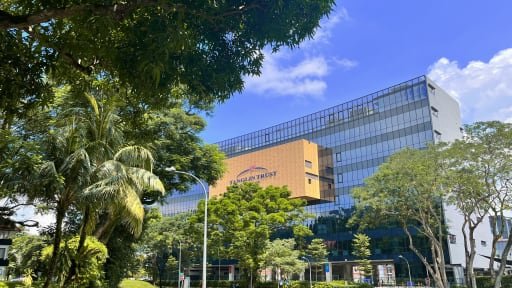
The Nixon Building opened in 2016, while the Tanglin Centenary Building was officially unveiled in January 2023. (Tanglin Trust School)
The Centenary Building is an 11-storey development with modern facilities.
The school is also developing a broader master plan for its Portsdown Road campus. Its current website says the school’s home at Portsdown Road is secured until 2056, providing a long-term basis for future development. (Tanglin Trust School)
31. The Tanglin Institute
In 2022, Tanglin established the Institute as a forum intended to promote excellence, thought leadership and discussion about issues relevant to future generations. (Tanglin Trust School)
This reflects the school’s ambition to contribute to education beyond its own classrooms.
Modern schools increasingly see themselves as communities of ideas.
Education involves discussion about technology, artificial intelligence, sustainability, leadership, global citizenship and the future of work.
Institutions such as the Tanglin Institute can help create space for these conversations.
32. Reputation and Recognition
Tanglin Trust School has received significant recognition in the international education sector.
In January 2023, the school was named International School of the Year 2023 by ISC Research, according to Tanglin’s historical record. (Tanglin Trust School)
The school also highlights its British Schools Overseas inspection results.
According to Tanglin’s current website, it received an Outstanding rating in every category in its 2025 BSO inspection, describing this as the only school in Singapore to achieve that distinction consecutively across the categories. (Tanglin Trust School)
Such recognition contributes to the school’s international reputation, although families considering a school should always evaluate whether its educational model is appropriate for their individual children.
33. Why Families Choose Tanglin Trust School
There are several reasons why families may consider Tanglin.
Long history
A century of operation provides substantial institutional experience.
British curriculum
Families seeking British-style education may find Tanglin attractive.
International environment
Students interact with peers from diverse backgrounds.
Multiple secondary pathways
The availability of A Levels and IB gives students flexibility.
Broad extracurricular programme
Students can develop interests beyond academic subjects.
Continuity
Children can potentially remain within the same school community from early years through Sixth Form.
Singapore location
Singapore is a major international city with excellent transport, infrastructure and a strong reputation for education.
34. Potential Challenges
No school is perfect for every family.
Parents considering Tanglin should also think carefully about practical issues.
International schools can be expensive compared with many state-school options.
Admission can also be competitive.
Families may need to plan well in advance because places can be limited.
The British curriculum may also not be ideal for every student.
Some families may prefer an American, Australian, Singaporean or another national curriculum.
The best choice depends on the student’s educational goals, future university plans, learning style and family circumstances.
35. Admissions and Planning
Families interested in Tanglin should research admissions requirements directly through the school.
Because international school admissions can change according to year group, availability and demand, parents should not rely on old information found on third-party websites.
Tanglin’s current website provides information about admissions and also refers to its Waitpool system. (Tanglin Trust School)
Families planning an international move should therefore consider applying early.
This is particularly important for popular year groups.
36. Preparing Students for University
One of the most important purposes of Sixth Form is preparation for university.
Tanglin’s A Level and IB pathways can support applications to universities in different countries.
Students may eventually attend institutions in:
- The United Kingdom
- United States
- Canada
- Australia
- Singapore
- Europe
- Other parts of Asia
An international education can be particularly helpful for students whose families expect to move between countries.
The ability to study internationally recognized qualifications can simplify transitions between education systems.
37. Tanglin and Global Citizenship
Global citizenship is an increasingly important concept in education.
A global citizen understands that local decisions can have international consequences.
Students today may face issues such as:
- Climate change
- Artificial intelligence
- International conflict
- Global health
- Migration
- Economic inequality
- Sustainable development
- Digital communication
Schools therefore have a responsibility to prepare students for a world that is more connected than ever.
Tanglin’s international community provides a natural environment for developing these perspectives.
38. The Role of Technology
Technology has become a central part of modern education.
Students use digital tools for research, communication, creativity and collaboration.
The COVID-19 pandemic accelerated the importance of digital learning.
At the same time, technology creates new challenges.
Schools must teach students how to evaluate information, protect privacy, communicate responsibly and use artificial intelligence ethically.
Tanglin’s modern educational environment therefore exists within a broader technological transformation.
The school’s historical timeline itself notes the rapid development and adoption of AI technologies in the 2020s. (Tanglin Trust School)
39. The Importance of Wellbeing
Academic success is only one part of education.
Students also need emotional and social support.
A healthy school environment should help children feel:
- Safe
- Respected
- Included
- Supported
- Challenged
- Confident
Tanglin’s educational messaging emphasizes knowing students as individuals and supporting their changing needs. (Tanglin Trust School)
This is particularly important in an international school because students may experience frequent transitions.
Moving countries can be exciting, but it can also be difficult.
A strong school community can help students build friendships and establish a sense of belonging.
40. Tanglin’s Place in Singapore’s Educational History
Tanglin Trust School is also part of Singapore’s broader educational history.
When it opened in 1925, Singapore was very different from the modern city-state.
The school began during the colonial period.
It later experienced World War II and Japanese occupation.
It continued through Singapore’s transition toward self-government and independence.
It survived the rapid economic and social development of the second half of the twentieth century.
Finally, it entered the twenty-first century as a major international school.
Few educational institutions can provide such a continuous window into Singapore’s transformation.
41. From Five Students to a Global School
Perhaps the most striking aspect of Tanglin’s history is the scale of its growth.
In 1925:
Five pupils.
In modern times:
A large international community spanning early years, primary and secondary education.
The contrast is remarkable.
The original school operated in simple huts.
Today, Tanglin operates a sophisticated educational campus with modern buildings, specialist facilities and a curriculum extending to internationally recognized qualifications.
Yet the central idea remains surprisingly similar:
Provide children with an education that allows them to learn successfully while living in an international environment.
42. The Meaning of “Tanglin”
The school’s name comes from its original location at the Tanglin Club.
Although the institution has evolved dramatically, the name preserves a connection with its origins.
Names can be important in educational institutions because they create continuity between generations.
A former student who attended Tanglin decades ago can still identify with the same institution that educates students today.
This sense of continuity contributes to the school’s alumni culture.
43. Alumni and Legacy
A school that has existed for 100 years naturally has a substantial alumni community.
Former students represent many different generations.
They have experienced very different versions of Singapore and very different educational environments.
Some students may have attended Tanglin when it was much smaller.
Others attended during the period when the Senior School and Sixth Form were developing.
Modern alumni experienced an internationally oriented curriculum with digital technology and global connections.
The alumni network therefore forms an important part of Tanglin’s historical identity.
44. Leadership and Institutional Continuity
Schools require stable leadership to survive for generations.
Tanglin’s history demonstrates several major leadership transitions.
The most important was perhaps the transition from founder Anne Griffith-Jones to institutional management under the British European Association and later Tanglin Trust structures.
This transition ensured that the school could continue after its founder retired.
Modern Tanglin continues to operate as a non-profit organization and registered charity, according to its current website. The school says tuition fees are reinvested into the institution. (Tanglin Trust School)
45. Tanglin as a Non-Profit School
Tanglin describes itself as a non-profit organization.
This is an important distinction from purely commercial education providers.
According to the school, tuition fees are reinvested into facilities and staffing. (Tanglin Trust School)
The non-profit structure supports the school’s long-term institutional approach.
Instead of focusing primarily on distributing profits, the organization can prioritize educational development, facilities, staff and student experiences.
46. A Century of Adaptation
The history of Tanglin Trust School can be understood as a story of adaptation.
The school adapted to:
- Changes in Singapore
- War
- Political transformation
- Expanding expatriate communities
- New educational expectations
- International curricula
- Technology
- The COVID-19 pandemic
- New approaches to teaching and learning
Its survival for a century demonstrates the importance of flexibility.
A school cannot remain successful by simply repeating what it did decades ago.
It must preserve its identity while responding to new realities.
47. What Makes Tanglin Different?
Tanglin’s combination of features makes it distinctive.
It combines:
Historic British educational traditions
with
Singapore’s international environment
and
modern global education.
It also combines:
academic rigor
with
personal development.
And it combines:
A Levels
with
the International Baccalaureate Diploma.
This combination gives the school a distinctive place within Singapore’s international-school sector.
48. The Future of Tanglin Trust School
The next chapter of Tanglin’s history is likely to focus on innovation, technology, sustainability and continued campus development.
The school’s current master planning reflects its long-term commitment to Portsdown Road.
Its Centenary Building already represents a modern stage in that development.
Future generations of students will likely experience an educational environment very different from the one experienced by the original five pupils.
However, the school’s core values can continue to provide continuity.
The challenge will be balancing heritage with innovation.
49. Tanglin Trust School in the 21st Century
The modern world demands more from schools than examination preparation.
Students need to become adaptable lifelong learners.
They need to understand technology while remaining capable of independent thinking.
They need to work with people from different cultures.
They need communication and leadership skills.
They need resilience.
Tanglin’s international model is designed around many of these needs.
Its British curriculum provides academic structure, while its international community provides cultural diversity.
Its extracurricular activities provide opportunities for creativity, sport and leadership.
Its Sixth Form pathways provide preparation for university.
50. Frequently Asked Questions About Tanglin Trust School
When was Tanglin Trust School founded?
Tanglin School was founded in 1925 by Anne Griffith-Jones OBE with five pupils at the Tanglin Club in Singapore. (Tanglin Trust School)
Where is Tanglin Trust School located?
The school’s main campus is at 95 Portsdown Road, Singapore 139299. (TTS Alumni)
What ages does Tanglin Trust School educate?
The school provides education from approximately age 3 through age 18, covering Infant School, Junior School, Middle School, Upper School and Sixth Form. (Tanglin Trust School)
Is Tanglin a British school?
Yes. Tanglin provides British-based education with an international perspective. (Tanglin Trust School)
Does Tanglin offer A Levels?
Yes. A Levels are offered in Sixth Form.
Does Tanglin offer the IB Diploma?
Yes. Tanglin introduced the IB Diploma alongside A Levels in 2009. (Tanglin Trust School)
When did Tanglin introduce its Senior School?
The first Senior School intake took place in 1996. (Tanglin Trust School)
When did Tanglin start Sixth Form?
The first Sixth Form intake took place in 2001. (Tanglin Trust School)
Is Tanglin a non-profit school?
Yes. Tanglin states that it is a non-profit organization and registered charity, with tuition fees reinvested into the school. (Tanglin Trust School)
Why is Tanglin historically important?
Tanglin began in 1925 with five pupils and became one of Southeast Asia’s longest-established British international schools. Its history covers Singapore’s colonial era, World War II, independence and the development of modern Singapore.
What is Tanglin known for?
Tanglin is particularly known for its long history, British-based curriculum, international community, holistic education and Sixth Form choice between A Levels and the IB Diploma.
Conclusion
Tanglin Trust School is much more than a modern international school in Singapore. Its history represents a century of educational development.
Founded in 1925 by Anne Griffith-Jones, the school began with only five pupils in the grounds of the Tanglin Club. Its original purpose was to provide British education locally to expatriate families who otherwise might have had to send their children to boarding schools in Britain. (Tanglin Trust School)
Over the following decades, Tanglin experienced war, occupation, institutional changes, mergers, campus relocations and the transformation of Singapore itself.
The creation of the Senior School in 1996 and Sixth Form in 2001 expanded its educational scope significantly. The introduction of the IB Diploma alongside A Levels in 2009 created a distinctive dual-pathway model for older students. (Tanglin Trust School)
Today, Tanglin combines British-based education with an international perspective. Its students can progress from the early years through Sixth Form while participating in academic, sporting, artistic, outdoor and community activities.
Its modern identity is therefore built upon two ideas: heritage and innovation.
The heritage comes from a century of education and the vision of Anne Griffith-Jones.
The innovation comes from modern facilities, international qualifications, evolving teaching approaches and preparation for a rapidly changing world.
For families seeking a British international education in Singapore, Tanglin Trust School represents a distinctive combination of history, academic opportunity, international community and holistic student development.
After 100 years, the original five-pupil school has become a major international educational institution. Yet the fundamental principle established in 1925 remains relevant: children benefit from an education that prepares them not only for examinations, but also for life in a changing and interconnected world. (Tanglin Trust School)
SEO Title
Tanglin Trust School: Complete History, Curriculum, Admissions, Fees, Campus & Education Guide
Meta Description
Learn everything about Tanglin Trust School in Singapore, including its 1925 history, British curriculum, IB and A Level pathways, student life, facilities, admissions and international reputation.
Suggested SEO Keywords
- Tanglin Trust School
- Tanglin Trust School Singapore
- Tanglin School history
- Tanglin Trust School curriculum
- Tanglin Trust School admissions
- Tanglin Trust School fees
- Tanglin Trust School IB
- Tanglin Trust School A Levels
- British international schools in Singapore
- best international schools in Singapore
- Tanglin Trust School history and education