Introduction
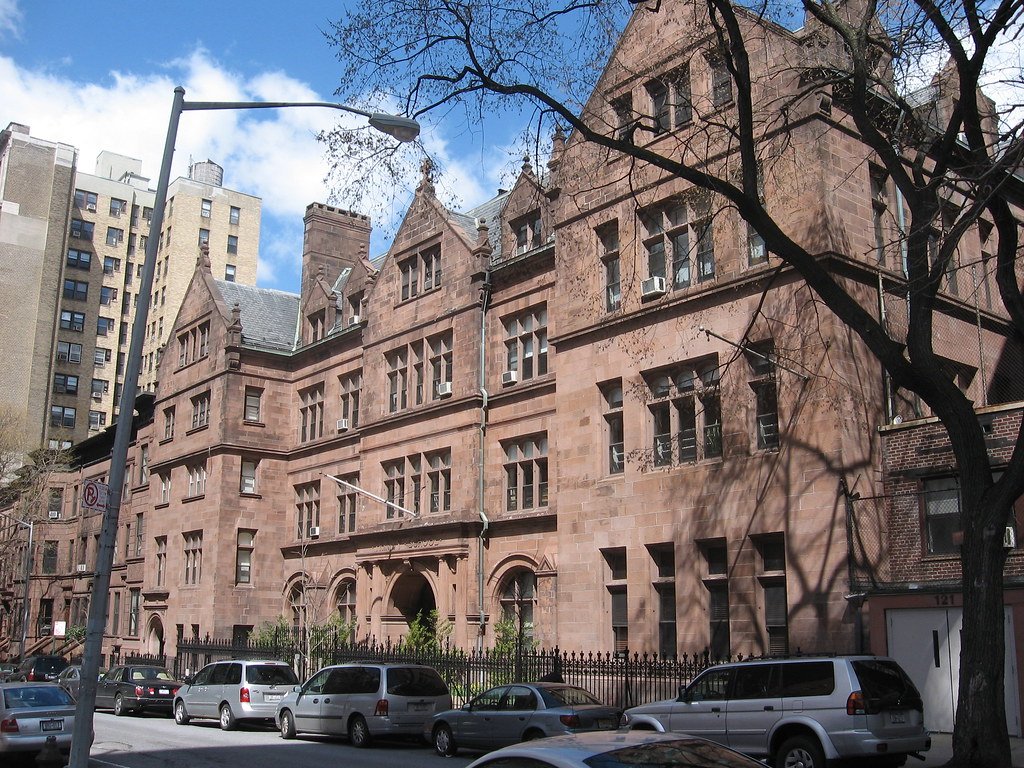
Trinity School in New York City is one of the most historic and respected independent schools in the United States. Located on the Upper West Side of Manhattan, Trinity has developed a remarkable educational tradition that combines a long history with a modern approach to learning. The school is known for its challenging academic programs, strong sense of community, commitment to the arts and athletics, and emphasis on developing students who can think independently and contribute meaningfully to society.
The history of Trinity School is closely connected with the development of New York City itself. Founded in the eighteenth century, the institution has experienced enormous changes in American society, education, technology, culture, and urban life. From its early beginnings associated with Trinity Church to its modern identity as a leading independent school, Trinity has continuously adapted while preserving important traditions.
For families researching the best private schools in New York City, Trinity School is often an institution of particular interest. Its reputation is based not simply on academic achievement but also on its educational philosophy, faculty, extracurricular opportunities, traditions, and long-standing place in the history of Manhattan.
This article explores the history of Trinity School, its educational philosophy, academic curriculum, campus, student experience, admissions process, extracurricular activities, traditions, notable alumni, and continuing influence.
1. What Is Trinity School?
Trinity School is an independent, coeducational day school in Manhattan, New York City. It serves students from the early grades through high school and provides a broad liberal-arts-oriented education.
The school emphasizes intellectual curiosity, academic discipline, communication skills, creativity, ethical development, and participation in a community. Students are encouraged to study a wide range of subjects rather than focusing exclusively on one academic specialization.
Trinity’s location in Manhattan also contributes significantly to the educational experience. New York City itself can function as an extended classroom, offering museums, libraries, theaters, universities, cultural institutions, public spaces, businesses, scientific organizations, and historical landmarks.
The combination of a demanding academic environment and access to the cultural resources of New York City makes Trinity distinctive among independent schools.
2. The Early History of Trinity School
The origins of Trinity School can be traced back to the eighteenth century. It emerged in connection with Trinity Church, one of the historic Episcopal institutions of New York.
During colonial New York, education was closely connected with churches and religious organizations. Schools often served several purposes at once: providing basic education, teaching classical subjects, and developing moral and religious character.
Trinity School developed within this historical environment.
Its early existence reflected the educational needs of a growing colonial city. New York was becoming increasingly important as a commercial and political center, and educated citizens were needed for religious, professional, governmental, and commercial life.
The school therefore became part of a broader tradition of education that valued literacy, classical learning, discipline, and character.
3. Trinity School and Colonial New York
Understanding Trinity’s history requires understanding eighteenth-century New York.
Colonial Manhattan was very different from the modern metropolis. The population was much smaller, transportation was limited, and educational opportunities were not nearly as extensive as they are today.
Schools were generally smaller institutions. Teachers had fewer educational resources, and many lessons centered on reading, writing, arithmetic, classical languages, religious instruction, and moral education.
Trinity School existed during a period when the American colonies were undergoing major political and cultural changes. The American Revolution dramatically transformed New York and the wider country.
The school’s survival through such historical changes demonstrates the durability of its educational mission.
4. The American Revolution and Trinity School
The American Revolution created enormous disruption throughout New York City.
The city became an important military and political center during the conflict. Buildings were damaged, institutions were disrupted, and ordinary life changed significantly.
Educational institutions were not isolated from these events.
Trinity School’s history unfolded during this period of uncertainty and transformation. Like other New York institutions, it had to operate within a city experiencing political instability and wartime pressures.
The years surrounding the Revolution became an important chapter in the history of New York’s educational institutions because they marked the transition from colonial society to the new United States.
5. Growth During the Nineteenth Century
During the nineteenth century, New York City experienced tremendous growth.
Population increased rapidly, immigration transformed the city’s culture, transportation improved, commerce expanded, and Manhattan developed into one of America’s major urban centers.
Education also changed.
Schools increasingly developed more structured curricula, professional teaching methods, and broader academic programs.
Trinity School evolved alongside these developments.
The nineteenth century was particularly important because education in the United States was becoming increasingly connected with preparation for colleges, universities, professions, and civic life.
Classical education remained important, but schools gradually expanded their programs to include mathematics, science, modern languages, history, literature, and other fields.
6. The Development of a Classical Educational Tradition
Trinity has historically been associated with a strong academic tradition.
Classical education traditionally emphasized subjects such as Latin, Greek, literature, history, philosophy, mathematics, and rhetoric. These disciplines were intended to develop students’ ability to reason, communicate, analyze texts, and understand civilization.
Although modern Trinity School is far broader than a traditional classical academy, the influence of this intellectual tradition remains important.
Students are expected to engage seriously with complex ideas.
Rather than treating education simply as preparation for examinations, the school has historically emphasized learning as a process of intellectual development.
This philosophy can be seen in the importance placed on reading, writing, discussion, research, languages, mathematics, science, arts, and independent thinking.
7. Trinity School in Modern New York City
As New York City developed into a global metropolis during the twentieth century, Trinity School continued to evolve.
The modern city brought new educational opportunities and new challenges.
Students increasingly needed preparation for a world shaped by technology, scientific discoveries, international relationships, changing cultural identities, and rapid economic development.
Trinity responded by broadening its educational programs while preserving its emphasis on rigorous learning.
The school became increasingly diverse in its academic offerings and extracurricular opportunities.
Modern education at Trinity is therefore the result of centuries of development rather than a single educational philosophy introduced at one point in time.
8. Academic Philosophy at Trinity School
One of Trinity School’s central characteristics is its emphasis on rigorous academics.
Students are expected to work hard, ask questions, read carefully, write effectively, and participate actively in classroom discussions.
Academic achievement is important, but education involves more than grades.
A strong independent-school education should help students become capable of thinking for themselves.
At Trinity, students encounter subjects from multiple academic disciplines. The goal is to develop intellectual flexibility.
A student studying history, for example, may learn how to evaluate evidence and interpret competing perspectives. A student studying science learns how to formulate hypotheses and analyze evidence. A literature student learns how language can communicate complex human experiences.
These skills can complement one another.
9. Humanities Education
The humanities have traditionally played a major role in independent-school education.
At Trinity, students encounter subjects such as English, history, languages, philosophy, and related disciplines.
Humanities education can help students understand people, societies, cultures, historical events, and competing ideas.
Literature is particularly valuable because it introduces students to experiences outside their own lives.
Through novels, poetry, drama, essays, and other forms of writing, students can explore questions about identity, morality, relationships, politics, culture, and human behavior.
History provides another important perspective.
Instead of simply memorizing dates, students can learn how historical events developed, why people made particular decisions, and how those decisions influenced later generations.
10. Mathematics and Science
Trinity’s academic environment also gives substantial importance to mathematics and science.
Mathematics develops logical reasoning, problem-solving, quantitative thinking, and analytical skills.
Science introduces students to systematic observation, experimentation, evidence, and the methods used to understand the natural world.
A strong science education is especially important in a modern society shaped by biotechnology, medicine, computing, engineering, environmental research, and artificial intelligence.
Students can develop an appreciation for scientific inquiry rather than simply memorizing scientific facts.
11. Language Learning
Language education has long been an important part of academically rigorous schools.
Learning another language provides more than vocabulary and grammar.
It introduces students to different cultures and ways of communicating.
Language study can also strengthen awareness of how communication works.
Trinity’s educational tradition has included classical and modern languages, reflecting the school’s broader liberal-arts approach.
Students who study languages may gain greater cultural awareness and a broader perspective on international society.
12. The Arts at Trinity School
Education at Trinity is not limited to traditional academic subjects.
The arts provide students with opportunities to develop creativity, confidence, discipline, collaboration, and self-expression.
Visual arts can teach students to observe carefully and communicate ideas through images.
Music requires practice, listening, technical skill, and collaboration.
Theater combines literature, performance, communication, movement, design, and teamwork.
Arts education can therefore complement academic study.
A student who participates in a school production, concert, art exhibition, or other creative project learns skills that may be difficult to develop through textbooks alone.
13. Music and Performance
Music can play an important role in school life.
Students may have opportunities to participate in ensembles, performances, concerts, and other musical activities depending on grade level and program availability.
Performing in front of an audience teaches students how to manage pressure.
It also develops preparation habits.
Musicians must practice consistently, listen carefully, respond to others, and accept constructive criticism.
These habits can support success in many areas of life.
14. Theater and Drama
Theater is another important form of student expression.
A school theater production requires cooperation among performers, directors, designers, stage managers, musicians, technicians, and many other participants.
Students involved in theater can develop public-speaking skills and confidence.
They also learn that successful performances depend on teamwork.
Theater encourages students to understand characters and perspectives that may be very different from their own.
This makes drama both an artistic and educational experience.
15. Athletics and Physical Education
Physical education and athletics contribute to a balanced school experience.
Sports can teach students teamwork, discipline, perseverance, leadership, communication, and resilience.
Winning is not the only purpose of school athletics.
Students also learn how to respond to disappointment, support teammates, practice consistently, and compete respectfully.
For many students, athletics becomes an important part of school identity and community life.
16. Student Life at Trinity
Student life at an independent school is shaped by much more than the classroom.
Students develop friendships, participate in clubs, join athletic teams, attend performances, work on projects, and take part in school traditions.
These activities create a sense of belonging.
The school environment can also encourage students to develop relationships with teachers and classmates across different grade levels.
Such relationships are often an important part of the independent-school experience.
17. Clubs and Extracurricular Activities
Extracurricular activities allow students to explore interests that may not fit into regular academic courses.
Possible areas of student involvement can include:
- Student publications
- Debate and public speaking
- Community service
- Performing arts
- Music
- Visual arts
- Athletics
- Academic clubs
- Cultural organizations
- Technology-related activities
- Student leadership
- Special-interest groups
The exact list of organizations can change over time as student interests evolve.
This flexibility is important because schools should provide opportunities for students to create and develop new activities.
18. Community Service
Community engagement is an important part of education.
A school can help students understand that education carries responsibilities as well as privileges.
Community service provides opportunities to work with organizations and people outside the immediate school environment.
Students may learn about social needs, civic responsibility, inequality, environmental issues, education, and other community concerns.
Service can therefore connect classroom ideas with real-world experiences.
19. Leadership Development
Leadership is another important component of student development.
School leadership does not necessarily mean holding a formal title.
A student can demonstrate leadership by organizing an activity, supporting classmates, helping a team, leading a project, speaking publicly, or taking responsibility for a community initiative.
The best educational environments encourage students to understand leadership as service rather than simply authority.
20. Teachers and Faculty
Teachers are central to any school’s educational quality.
At a school with a long academic tradition, teachers are expected to do more than deliver information.
They serve as mentors, discussion leaders, researchers, coaches, advisors, and role models.
Strong teacher-student relationships can make challenging academic work more meaningful.
Students benefit when teachers encourage questions rather than simply providing answers.
Independent schools often place particular emphasis on classroom discussion and close interaction between teachers and students.
21. The Role of Critical Thinking
Critical thinking is increasingly important in the modern world.
Students have access to enormous amounts of information through the internet, social media, artificial intelligence, and digital media.
The challenge is no longer simply finding information.
Students must determine whether information is reliable.
They must compare evidence, identify assumptions, recognize bias, distinguish opinion from fact, and construct logical arguments.
A rigorous liberal-arts education can help develop these abilities.
22. Writing at Trinity
Writing is one of the most transferable academic skills.
Students use writing to explain ideas, construct arguments, analyze evidence, communicate research, and express creativity.
Strong writing requires more than correct grammar.
It requires organization, clarity, evidence, style, and awareness of the intended audience.
A demanding writing program can prepare students for university and professional life.
23. Reading and Intellectual Curiosity
Reading remains at the heart of a strong academic education.
Students encounter works from different historical periods and cultures.
Reading complex material requires patience.
Students may need to read a passage several times, discuss it with classmates, and reconsider their initial interpretation.
That process encourages intellectual humility.
Students learn that difficult questions do not always have simple answers.
24. Technology and Modern Education
Although Trinity has deep historical roots, modern education cannot ignore technology.
Today’s students interact with computers, digital research tools, online resources, collaborative platforms, and increasingly sophisticated artificial-intelligence systems.
Technology can make learning more efficient, but it also creates new challenges.
Students need to understand digital citizenship, information quality, privacy, responsible technology use, and academic integrity.
The goal is not simply to use technology but to use it intelligently.
25. New York City as an Educational Resource
One of Trinity School’s greatest advantages is its location.
New York City contains some of the world’s most important cultural, educational, artistic, financial, scientific, and historical institutions.
Students can potentially benefit from proximity to:
- Museums
- Libraries
- Universities
- Theaters
- Concert halls
- Historical sites
- Scientific institutions
- Public parks
- Cultural organizations
- Government institutions
The city provides opportunities for experiential learning.
A history lesson can be connected to a museum visit.
An art course can be enhanced by visiting galleries.
A theater class can benefit from Broadway and off-Broadway productions.
This connection between school and city can make learning more tangible.
26. Trinity School’s Manhattan Location
Trinity’s Manhattan location also contributes to its identity.
Manhattan is one of the world’s most diverse urban environments.
Students encounter different cultures, languages, professions, neighborhoods, and perspectives.
This environment can encourage curiosity.
Living and studying in a global city also exposes students to the complexity of modern society.
Education therefore takes place both inside the school and within the larger urban environment.
27. Admissions to Trinity School
Admission to Trinity School is highly competitive.
Families interested in applying generally need to follow the school’s current admissions procedures and requirements.
Because admission policies, application deadlines, testing requirements, interviews, and available places can change, prospective families should consult Trinity’s official admissions information for the most current details.
Competitive independent-school admissions typically consider several factors rather than one single measure.
These may include:
- Academic preparation
- School records
- Teacher recommendations
- Student interests
- Interviews or conversations
- Assessments
- Family-school fit
- Character and community participation
Applicants should therefore approach the process thoughtfully.
28. Preparing for a Trinity School Application
Families considering Trinity should begin preparation well in advance.
The first step is to understand the school’s educational philosophy.
Parents should ask whether the school’s academic environment matches their child’s learning style and interests.
Students should also think about what they enjoy learning.
A strong applicant is not necessarily someone who appears perfect.
Authenticity matters.
Students who demonstrate curiosity, commitment, intellectual engagement, and willingness to participate in a community may be better prepared for a demanding independent-school environment.
29. What Makes Trinity School Competitive?
Several characteristics contribute to Trinity’s reputation.
Its historical significance is one factor.
Academic rigor is another.
Its location in New York City adds opportunities for cultural and intellectual enrichment.
The school’s long institutional history also contributes to a strong alumni network and traditions.
However, families should remember that prestige alone does not determine whether a school is appropriate for a particular student.
The best school is one where the student’s academic, social, emotional, and extracurricular needs can be supported.
30. School Traditions
Long-established schools often develop traditions that create a sense of continuity.
Traditions connect current students with previous generations.
They can include ceremonies, performances, athletic events, community gatherings, publications, special events, and other activities.
The value of tradition is not simply nostalgia.
Traditions can help students understand that they are part of something larger than themselves.
At the same time, traditions must evolve as the school community changes.
31. Alumni and the Trinity Legacy
A major part of Trinity School’s historical importance is its alumni community.
Over generations, students educated at Trinity have gone on to pursue careers in fields such as:
- Politics
- Law
- Business
- Journalism
- Literature
- Science
- Medicine
- Academia
- Arts
- Entertainment
- Public service
The accomplishments of alumni contribute to the school’s reputation.
More importantly, alumni provide evidence of how a school education can influence students over many decades.
32. Trinity and Higher Education
Preparation for college and university is naturally an important part of upper-school education.
Students at academically rigorous independent schools often develop skills that are valuable in higher education.
These include:
- Independent research
- Analytical reading
- Academic writing
- Time management
- Discussion
- Presentation
- Collaboration
- Problem-solving
However, the purpose of secondary education should not be reduced entirely to college admission.
Students should also develop the intellectual and personal foundations needed for lifelong learning.
33. The Importance of a Liberal Arts Education
The liberal arts remain relevant because modern careers frequently change.
A student may enter a university intending to study one field and eventually work in a completely different area.
A broad education can provide transferable skills.
Literature develops interpretation.
History develops contextual thinking.
Mathematics develops quantitative reasoning.
Science develops evidence-based inquiry.
Languages develop communication and cultural awareness.
Arts develop creativity.
Together, these subjects can provide a strong intellectual foundation.
34. Diversity and Community
Modern independent schools increasingly recognize the importance of building inclusive communities.
Students come from different backgrounds, families, experiences, and perspectives.
A diverse community can make classroom discussions richer.
Students can learn how to disagree respectfully and understand perspectives different from their own.
Creating a healthy community requires continuous work.
Schools must consider curriculum, student life, faculty development, accessibility, family engagement, and institutional culture.
35. The Importance of Character Education
Academic ability is only one component of personal development.
Schools also influence how students think about responsibility, honesty, empathy, cooperation, and respect.
Character education can occur through formal lessons, but it also develops through daily experience.
Students learn from how teachers behave.
They learn from how classmates treat one another.
They learn from how teams respond to victory and defeat.
They learn from how the community responds to disagreement.
36. Trinity School and Intellectual Independence
One of the most valuable outcomes of education is intellectual independence.
An educated person should eventually be capable of evaluating ideas without relying entirely on authority.
That does not mean rejecting teachers or experts.
It means learning how to ask good questions.
Students should be able to say:
Why is this claim being made?
What evidence supports it?
Are there alternative explanations?
What assumptions are being used?
What evidence would change the conclusion?
These habits are essential in university, professional life, and citizenship.
37. Challenges of Attending a Highly Academic School
A rigorous school can offer enormous opportunities, but it can also present challenges.
Students may face substantial homework, demanding assessments, extracurricular commitments, and high expectations.
Time management becomes extremely important.
Students need to balance academics with sleep, friendships, family life, athletics, arts, and personal interests.
A healthy school environment should encourage achievement without making students believe that their entire identity depends on grades.
38. The Importance of Balance
Successful education requires balance.
A student who spends every available hour studying may not have enough time for physical activity, creativity, social development, or rest.
Likewise, a student who focuses exclusively on extracurricular activities may struggle academically.
Balance allows students to develop multiple dimensions of their personality.
Trinity’s broad educational environment provides opportunities across academics, arts, athletics, service, and community participation.
39. Why Families Consider Trinity School
Families researching private schools in New York City may consider Trinity for several reasons.
Its historic legacy is attractive to families interested in established institutions.
Its academic reputation appeals to students who enjoy challenging coursework.
Its Manhattan location provides access to cultural and educational resources.
Its broad extracurricular environment can support students with varied interests.
Its long-standing community creates connections across generations.
Ultimately, however, the decision should be based on the individual student.
40. How Trinity Has Changed Over Time
Perhaps the most interesting aspect of Trinity’s history is the relationship between continuity and change.
The school has preserved an identity rooted in history while responding to changes in society.
Educational priorities that were important centuries ago remain relevant today in modified forms.
Reading remains important.
Writing remains important.
Mathematical reasoning remains important.
Language learning remains valuable.
Ethical development remains important.
At the same time, students today require knowledge and skills that earlier generations could not have anticipated.
Technology, global communication, modern science, digital information, and rapidly changing careers have transformed education.
41. Trinity School in the Twenty-First Century
The twenty-first century has created new questions for schools.
How should students prepare for careers that do not yet exist?
How should schools teach responsible artificial-intelligence use?
How can students distinguish reliable information from misinformation?
How should schools balance academic rigor with student well-being?
How can schools prepare students for a diverse and interconnected world?
Institutions with long histories must answer these questions while maintaining their educational identity.
Trinity’s future will depend on how effectively it combines tradition with innovation.
42. The Role of Parents
Parents are important partners in education.
A successful school-family relationship involves communication and realistic expectations.
Parents can support students by encouraging good study habits, reading, curiosity, independence, and healthy routines.
They can also help children understand that mistakes are part of learning.
The goal should not be to eliminate every academic difficulty.
Students need opportunities to solve problems independently.
43. The Student Experience
Every student’s experience at Trinity will be different.
One student may become deeply involved in theater.
Another may focus on science.
Another may discover a passion for languages.
Another may become a dedicated athlete.
Another may find a community through student publications or service activities.
The strength of a broad school is that students can explore multiple identities.
They do not have to define themselves by one academic subject.
44. The Value of School Community
School community is especially important during adolescence.
Students spend many years learning alongside the same group of peers.
Friendships can become an important source of support.
Teachers and advisors can also provide guidance.
A strong community helps students feel that they belong.
Belonging can improve confidence and encourage students to take intellectual and creative risks.
45. Trinity School’s Historical Significance
Trinity School is significant not only because of its modern educational reputation but also because of its historical longevity.
Few educational institutions can claim such a deep connection with the history of New York City.
Its story intersects with colonial America, the American Revolution, the growth of Manhattan, the development of modern education, and the transformation of New York into a global city.
This history gives Trinity an unusual institutional identity.
Students attending the school today become part of a story that extends across centuries.
46. Trinity School and New York’s Cultural Heritage
New York City is famous for its cultural institutions.
For students, this creates an educational environment unlike many other locations.
The city contains historic neighborhoods, architectural landmarks, museums, theaters, universities, public libraries, scientific institutions, and cultural organizations.
Students can connect classroom lessons with real-world experiences.
This is particularly valuable in subjects such as history, art, literature, politics, economics, and theater.
47. Preparing Students for a Global World
Modern graduates increasingly enter a global society.
Businesses operate across borders.
Scientific research is international.
Technology connects people around the world.
Universities attract students from many countries.
Problems such as climate change, public health, migration, cybersecurity, and economic development cross national boundaries.
A school education must therefore prepare students to understand cultures and perspectives beyond their immediate community.
48. Communication Skills
Communication is one of the most important skills students can develop.
Students need to communicate through:
- Essays
- Presentations
- Discussions
- Research
- Digital media
- Collaborative projects
- Creative work
Clear communication allows people to share ideas effectively.
It also helps students participate in democratic and professional life.
49. Research Skills
Research teaches students how to investigate questions.
Good research involves:
- Defining a question.
- Finding credible sources.
- Evaluating evidence.
- Comparing information.
- Developing an argument.
- Citing sources appropriately.
- Presenting conclusions clearly.
These skills are useful far beyond school.
50. The Future of Trinity School
Trinity School’s future will be shaped by both its history and the changing needs of students.
The school will continue to operate within a world characterized by rapid technological development, changing social expectations, new scientific discoveries, and increasingly global connections.
Its long history provides stability.
Its educational mission provides direction.
Its location in New York City provides opportunity.
The challenge will be maintaining the qualities that have defined the institution while remaining responsive to the needs of future generations.
Conclusion
Trinity School in New York City represents a remarkable combination of history, academic ambition, tradition, and modern education.
From its eighteenth-century origins to its modern role as an independent school in Manhattan, Trinity has existed through enormous changes in American society. New York transformed from a colonial city into a global metropolis, while education evolved from traditional classical instruction into a broad curriculum incorporating humanities, science, mathematics, languages, arts, athletics, technology, and experiential learning.
The school’s historical legacy is one of its defining characteristics. At the same time, its relevance in the modern world depends on its ability to prepare students for challenges that previous generations could never have imagined.
For students, Trinity can provide opportunities to develop academic knowledge, critical thinking, communication skills, creativity, leadership, teamwork, and intellectual independence. Its Manhattan location further expands the educational environment by placing students near some of the world’s most important cultural and educational resources.
For families considering independent education in New York City, Trinity School is an institution worth understanding not simply because of its reputation but because of its educational philosophy and long history.
Ultimately, the story of Trinity School is a story of continuity and adaptation. Its traditions connect students with generations of learners who came before them, while its modern educational programs prepare students for the future.
That combination of historical depth and forward-looking education explains why Trinity School remains an important part of the educational landscape of New York City.
Frequently Asked Questions About Trinity School New York City
1. Where is Trinity School located?
Trinity School is located in Manhattan, New York City, on the Upper West Side.
2. When was Trinity School founded?
Trinity School traces its origins to the eighteenth century and is one of the oldest educational institutions in New York City.
3. Is Trinity School a private school?
Yes. Trinity School is an independent school in New York City.
4. What type of education does Trinity School provide?
Trinity provides a broad college-preparatory education emphasizing academics, humanities, sciences, languages, arts, athletics, and student development.
5. Is Trinity School academically challenging?
Yes. The school is widely recognized for its rigorous academic environment and high expectations for students.
6. Does Trinity School offer arts programs?
Yes. Arts education is an important part of the school’s broader educational experience, including opportunities in areas such as visual arts, music, and theater.
7. Does Trinity School have athletics?
Yes. Athletics and physical education are part of the school’s student experience.
8. Why is Trinity School historically important?
Its long history connects the school with the development of New York City and American education over several centuries.
9. Is admission to Trinity School competitive?
Admission is competitive, and families should review the school’s current admissions requirements and procedures directly because policies and deadlines can change.
10. What makes Trinity School different from other New York private schools?
Its combination of historic legacy, rigorous academics, Manhattan location, liberal-arts tradition, extracurricular opportunities, and long-standing community contributes to its distinctive identity.
11. Does Trinity prepare students for college?
College preparation is an important part of the upper-school experience, with students developing academic and personal skills needed for higher education.
12. Is Trinity School suitable for every student?
No school is ideal for every student. Families should consider academic expectations, teaching style, extracurricular opportunities, community culture, location, and the individual student’s needs before applying.
SEO Information
SEO Title: Trinity School New York City: History, Academics, Admissions & Legacy
Meta Description: Discover Trinity School New York City, including its long history, academic programs, student life, admissions, arts, athletics, traditions, and educational legacy.
Focus Keyword: Trinity School New York City
Secondary Keywords:
- Trinity School NYC
- Trinity School New York
- Trinity School history
- Trinity School admissions
- Trinity School academics
- Trinity School Manhattan
- Trinity School private school
- best private schools in New York City
- Trinity School students
- Trinity School education
Suggested URL Slug:trinity-school-new-york-city
Suggested H1:
Trinity School New York City: Complete History, Academics, Admissions and Legacy
Suggested Featured Image Alt Text:
Trinity School New York City campus and historic educational legacy