Introduction
Dubai College is one of the most well-known British-curriculum secondary schools in the United Arab Emirates. Located in Dubai, the school has developed a strong reputation for academic achievement, extracurricular opportunities, student leadership, and preparation for higher education. Over the decades, Dubai College has grown alongside the city itself, evolving from a relatively small educational institution into a prominent school serving families from Dubai and the wider international community.
The story of Dubai College is closely connected with the development of modern Dubai. As the emirate expanded economically and socially, the need for high-quality schools offering internationally recognized education also increased. Dubai College became an important part of this educational landscape, providing students with a British-style education while operating within the distinctive cultural and social environment of the United Arab Emirates.
The school is particularly associated with a broad secondary education, strong academic expectations, sport, music, drama, debating, community involvement, leadership, and university preparation. Its educational approach seeks to develop students beyond examination results, encouraging them to become confident, responsible, independent, and engaged members of society.
This article explores the history and development of Dubai College, its educational philosophy, academic structure, campus environment, student life, extracurricular activities, admissions considerations, and continuing role in Dubai’s education sector.
1. History of Dubai College
Dubai College was established in the twentieth century during a period when Dubai was beginning to transform rapidly. The city was moving from a traditional trading economy toward becoming a major international business and commercial center.
The establishment of a high-quality British-oriented school reflected the changing needs of the expatriate and local communities. Families working in Dubai increasingly wanted access to an education based on internationally recognized British academic traditions.
From its early years, Dubai College developed an identity focused on academic standards and a broad educational experience. Rather than treating education simply as preparation for examinations, the school emphasized intellectual development, communication, sport, culture, creativity, and personal responsibility.
As Dubai expanded, the school also developed. Its facilities, teaching resources, curriculum, extracurricular programs, and student opportunities became increasingly sophisticated.
The history of Dubai College therefore cannot be separated from the wider history of Dubai. Both have experienced significant growth and internationalization.
2. Dubai College and the Development of Modern Dubai
Dubai has changed dramatically over the last several decades. The city has become an international center for business, tourism, aviation, finance, technology, and education.
This transformation created a diverse population representing many different nationalities. International schools became particularly important because families arriving from other countries often wanted their children to continue studying within familiar educational systems.
British-curriculum schools have played an important role in this development. Dubai College became one of the institutions associated with this tradition.
The school’s environment reflects the international character of Dubai. Students may come from a wide range of cultural and national backgrounds, creating opportunities for young people to interact with classmates whose experiences are different from their own.
This diversity can contribute significantly to education. Students learn not only through textbooks and teachers but also through conversations, friendships, competitions, teamwork, and community activities.
3. Educational Philosophy
A successful school needs to provide more than academic instruction. Dubai College’s educational tradition emphasizes the development of the whole student.
A strong education can involve several interconnected areas:
- Academic knowledge
- Critical thinking
- Communication
- Creativity
- Leadership
- Teamwork
- Physical fitness
- Cultural awareness
- Personal responsibility
- Community service
Students are encouraged to become independent learners. This means that education does not end when a lesson finishes. Students are expected to read, investigate, question, practice, discuss, and develop their own ideas.
This approach is especially important for older students preparing for university and adult life.
4. British Curriculum at Dubai College
Dubai College follows a British-style educational framework. British education is internationally recognized for its structured progression and emphasis on academic qualifications.
For secondary students, the curriculum typically includes subjects from areas such as:
- English
- Mathematics
- Sciences
- Humanities
- Modern languages
- Computing
- Art
- Music
- Physical education
- Business-related subjects
- Social sciences
Students normally progress through different academic stages before completing internationally recognized qualifications.
The exact subjects and qualification pathways available can change over time, so prospective families should consult the school’s current official information before making decisions.
5. Academic Excellence
Academic performance is one of the most important aspects of Dubai College’s reputation.
Students are expected to work consistently and develop effective study habits. Teachers play an important role in helping students understand difficult concepts, prepare for examinations, improve their writing, and develop analytical skills.
Academic excellence does not necessarily mean that every student studies in exactly the same way. Different learners have different strengths.
Some students may excel in mathematics and science, while others may demonstrate exceptional ability in literature, languages, history, art, music, or sport.
A broad curriculum allows students to explore these different interests.
6. English and Literature
English is an important part of a British-style education.
Students study language, literature, writing, analysis, communication, and interpretation. Literature can expose students to different historical periods, cultures, ideas, and human experiences.
Strong communication skills are valuable regardless of a student’s future career.
Whether a student eventually becomes a scientist, engineer, lawyer, entrepreneur, doctor, designer, journalist, or researcher, the ability to communicate ideas clearly is essential.
7. Mathematics Education
Mathematics provides students with analytical and problem-solving skills.
At Dubai College, mathematics education can help students develop logical reasoning, numerical confidence, and the ability to approach complex problems systematically.
Mathematics is also particularly important for students interested in careers such as:
- Engineering
- Computer science
- Economics
- Finance
- Architecture
- Data science
- Medicine
- Scientific research
Strong mathematical foundations can therefore support many different university pathways.
8. Science Education
Science is another major part of secondary education.
Students may study disciplines such as biology, chemistry, and physics. Practical work can help students understand scientific principles beyond theoretical classroom learning.
Science education teaches students to:
- Ask questions.
- Form hypotheses.
- Conduct investigations.
- Analyze evidence.
- Evaluate results.
- Communicate conclusions.
These skills are useful not only for future scientists but for anyone who needs to make decisions based on evidence.
9. Humanities
Humanities subjects provide students with an opportunity to understand people, societies, cultures, governments, and historical developments.
History can help students understand how modern societies developed. Geography can introduce students to physical environments, populations, economies, and global challenges.
Subjects such as these encourage students to look beyond their immediate surroundings.
For students living in an international city like Dubai, this global perspective can be particularly valuable.
10. Languages and Cultural Understanding
Learning another language can improve communication and cultural awareness.
Dubai is one of the world’s most international cities, with communities from many countries. Language education can therefore have practical and cultural importance.
Students who study languages can develop:
- Communication skills
- Cultural understanding
- Confidence
- Memory
- Listening skills
- International awareness
Language learning can also support future university applications and international careers.
11. Art and Creativity
Academic achievement is only one component of education.
Creative subjects allow students to experiment, design, interpret, and communicate ideas visually.
Art can develop patience, observation, imagination, and attention to detail.
Creative education is increasingly important in a world where innovation and original thinking are valuable skills.
12. Music at Dubai College
Music provides students with another opportunity for creative expression.
Students can participate in musical activities, performances, ensembles, and other opportunities depending on the programs available during their school years.
Music education can teach discipline and teamwork. A successful performance often requires students to practice consistently and coordinate with others.
It can also build confidence because students learn to perform in front of an audience.
13. Drama and Performing Arts
Drama gives students opportunities to explore communication, storytelling, performance, and teamwork.
Students involved in productions learn how to:
- Rehearse
- Memorize material
- Work with directors
- Cooperate with performers
- Manage stage responsibilities
- Speak confidently
- Respond creatively to challenges
Performing arts can therefore contribute to personal development as well as artistic education.
14. Sport and Physical Education
Sport has traditionally been an important component of school life.
Physical activity supports fitness, discipline, teamwork, resilience, and healthy habits.
School sport can include activities such as:
- Football
- Rugby
- Cricket
- Athletics
- Swimming
- Tennis
- Basketball
- Volleyball
- Other competitive and recreational activities
The exact sporting program may vary according to season, facilities, age group, and school activities.
15. Competitive Sport
Competitive sport provides students with experiences that are different from ordinary classroom learning.
Winning can be rewarding, but competition also teaches students how to respond to setbacks.
Students learn that improvement often requires:
- Practice
- Patience
- Discipline
- Cooperation
- Strategic thinking
- Resilience
These qualities can be transferred into academic and professional life.
16. Student Leadership
Leadership is an important part of developing responsible young adults.
Students may have opportunities to take leadership roles through school organizations, student councils, clubs, sports teams, societies, events, and community activities.
Leadership is not simply about having authority.
A good leader needs to listen to others, communicate effectively, accept responsibility, make decisions, and understand the consequences of those decisions.
17. Student Societies and Clubs
School societies allow students to explore interests outside the compulsory curriculum.
Depending on the year and school program, students may participate in clubs connected with:
- Science
- Mathematics
- Debate
- Public speaking
- Literature
- Politics
- Business
- Technology
- Art
- Music
- Drama
- Sport
- Community service
Clubs can be particularly valuable for students who want to develop specialist interests.
18. Debate and Public Speaking
Debating can help students develop confidence and analytical thinking.
A student participating in a debate must understand an issue, consider different viewpoints, build arguments, respond to opposing ideas, and communicate clearly.
These skills are useful for university and professional life.
Public speaking also teaches students how to organize information and present it effectively.
19. Community Service
Education can also involve service to others.
Community service gives students opportunities to understand social responsibility and contribute to causes beyond the school environment.
Students may participate in charitable activities, fundraising, volunteering, awareness campaigns, or community projects.
Such experiences can help students understand that education also carries responsibilities.
20. The Importance of Student Well-Being
Academic pressure can be challenging for secondary school students.
A good school environment needs to recognize that students are individuals with emotional, social, physical, and academic needs.
Student well-being can involve:
- Pastoral support
- Teacher guidance
- Peer relationships
- Counselling support
- Healthy routines
- Sport
- Creative activities
- Communication with families
A supportive environment can help students manage challenges while maintaining high expectations.
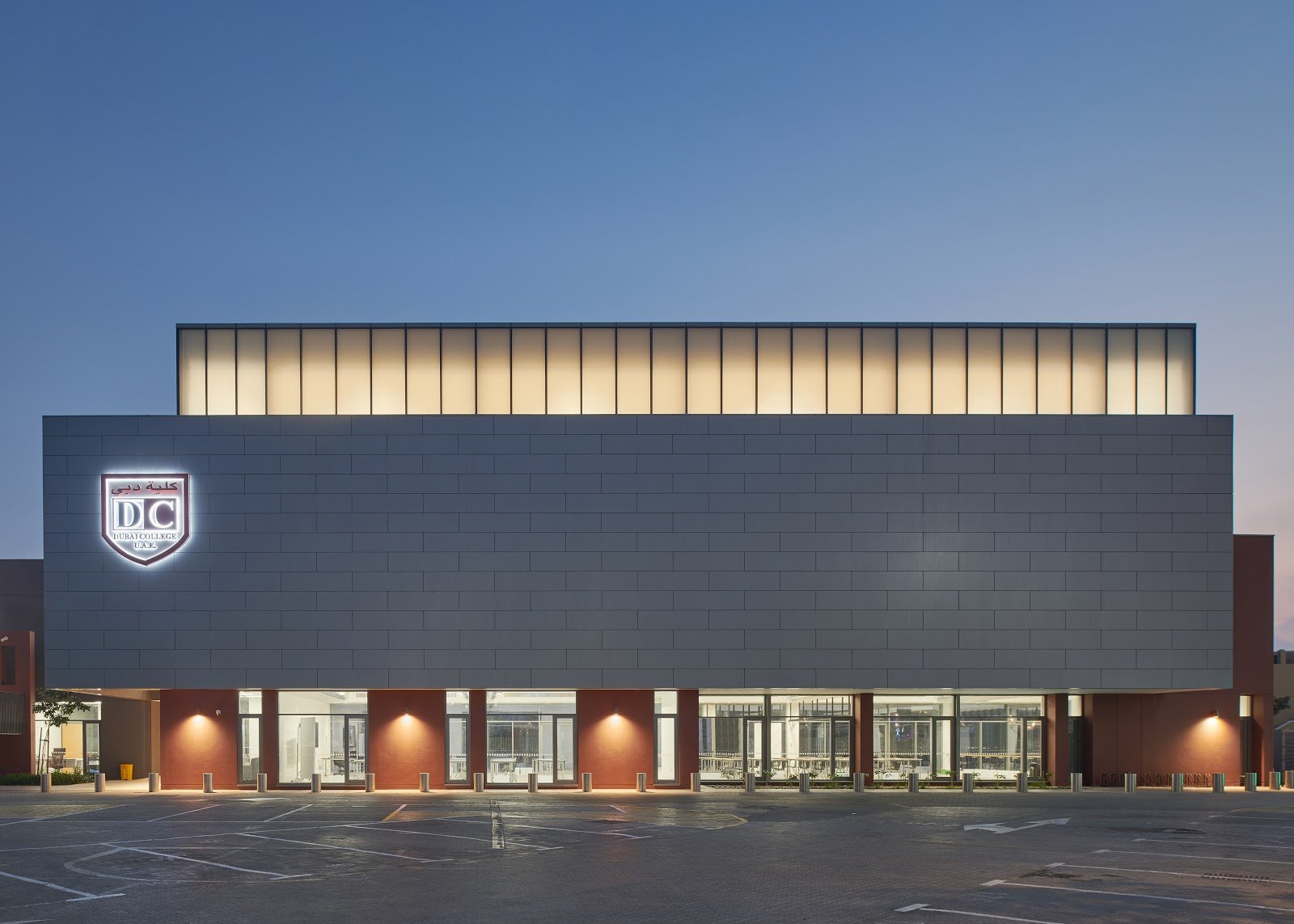
21. The Dubai College Campus
The physical environment of a school influences student life.
A modern school campus may include classrooms, laboratories, libraries, sports areas, performance spaces, technology facilities, and areas for social interaction.
Facilities are particularly important in a school offering a broad curriculum because different subjects require different learning environments.
Science requires laboratories.
Sport requires appropriate playing and training spaces.
Music and drama require specialized environments.
Technology education requires digital resources.
22. Libraries and Independent Learning
Libraries remain valuable even in the digital age.
A good school library provides students with access to books, reference materials, research resources, and quiet study spaces.
Independent reading can strengthen vocabulary, comprehension, imagination, and critical thinking.
Students preparing for university also need to develop the ability to research topics independently.
23. Technology in Education
Modern education increasingly uses technology.
Digital tools can support:
- Research
- Presentations
- Collaboration
- Data analysis
- Programming
- Communication
- Online learning
- Creative projects
However, technology is most useful when it supports good teaching rather than replacing it.
Students also need to learn responsible digital behavior, including evaluating online information and protecting personal data.
24. Teachers and the Learning Environment
Teachers are central to any school’s success.
A strong teacher does more than deliver information. Teachers encourage questions, identify misunderstandings, provide feedback, and motivate students to improve.
The relationship between teacher and student can strongly influence educational outcomes.
Students often remember teachers who encouraged them to believe in their abilities or introduced them to subjects that later became important parts of their lives.
25. Admissions to Dubai College
Admission to a highly regarded school can be competitive.
Families considering Dubai College should carefully review the school’s current admission requirements, entry points, application procedures, deadlines, and available places.
Admissions policies can change, so information from older articles should not be treated as definitive.
Parents should use the school’s current official admissions information for the most accurate details.
26. Preparing for Admission
Families can prepare by organizing school records and understanding the requirements for the relevant year group.
Students should continue to perform consistently in their current school.
Preparation should not focus entirely on examination performance.
Schools may also value:
- Academic curiosity
- Communication
- Character
- Participation
- Independence
- Interests
- Personal development
The best preparation is usually a long-term approach rather than last-minute studying.
27. University Preparation
One of the important goals of secondary education is preparing students for higher education.
Students may eventually apply to universities in the United Kingdom, United States, Canada, Australia, Europe, Asia, the Middle East, or elsewhere.
University preparation can include:
- Academic qualifications
- Subject selection
- Independent study
- Research
- Personal development
- Leadership
- Extracurricular activities
- Application planning
Students interested in highly competitive universities generally need to think about their academic and extracurricular development well before their final school years.
28. Preparing Students for Global Careers
Dubai’s international environment gives students exposure to a wide variety of cultures and professional backgrounds.
This can help young people understand that their future careers may cross national boundaries.
A student educated in Dubai may eventually study or work in another country.
International awareness is therefore increasingly important.
29. Diversity at Dubai College
Dubai is home to a highly diverse population.
An international school environment can provide students with opportunities to interact with people from different backgrounds.
This diversity can encourage:
- Respect
- Cultural understanding
- Communication
- Adaptability
- Global awareness
These qualities are particularly useful in multinational workplaces.
30. Parent and School Partnership
Parents play an important role in education.
The strongest outcomes often occur when schools and families communicate effectively.
Parents can support students by:
- Encouraging regular study
- Supporting healthy routines
- Attending school events
- Communicating with teachers
- Encouraging reading
- Supporting extracurricular interests
- Helping students manage time
At the same time, students need increasing independence as they become older.
31. Time Management for Students
Secondary education requires students to balance many responsibilities.
A student may have:
- Homework
- Revision
- Sports
- Music
- Clubs
- Social activities
- Family responsibilities
Time management therefore becomes an important skill.
Students can benefit from planning their week, prioritizing important tasks, avoiding unnecessary distractions, and creating realistic study schedules.
32. Developing Independent Learners
Independent learning is especially important during the later years of school.
University students cannot depend on teachers for every piece of information.
They need to know how to:
- Find reliable sources
- Take notes
- Plan assignments
- Read critically
- Manage deadlines
- Ask for help
- Evaluate information
Schools can help students develop these habits before university.
33. Character Education
Academic qualifications are important, but character also matters.
Schools have an opportunity to develop values such as:
- Honesty
- Respect
- Responsibility
- Kindness
- Perseverance
- Fairness
- Courage
These qualities influence how students behave when they are not being directly supervised.
34. Resilience and Learning from Failure
Students will not succeed at everything.
Failure can become an important part of learning when students are encouraged to understand what went wrong and how they can improve.
This is particularly relevant in sport, examinations, performances, competitions, and leadership.
Resilience means continuing to work toward improvement despite setbacks.
35. Dubai College in the Context of International Education
Dubai has become one of the world’s major international education hubs.
The city contains schools following different educational systems, including British, American, International Baccalaureate, Indian, and other curricula.
Dubai College represents the British educational tradition within this diverse environment.
Its identity is therefore both British-influenced and distinctly connected to Dubai.
36. Why Families Consider Dubai College
Families may consider Dubai College for several reasons.
Strong academic reputation
Academic standards are an important attraction for families seeking rigorous secondary education.
British curriculum
The British curriculum provides a structured pathway toward internationally recognized qualifications.
Extracurricular opportunities
Students can develop interests beyond traditional classroom subjects.
International environment
Dubai’s multicultural population creates a diverse school community.
University preparation
The school’s secondary education can provide a strong foundation for higher education.
37. Challenges of Studying at a High-Achieving School
A high-achieving environment can also present challenges.
Students may experience academic pressure and competition.
Managing expectations is important.
Students should understand that their value is not determined solely by examination results.
A healthy approach combines ambition with realistic goals, rest, relationships, and personal interests.
38. Balancing Academics and Extracurricular Activities
Students sometimes try to participate in too many activities.
Quality is usually more important than quantity.
A student who commits seriously to a few meaningful activities may gain more from the experience than someone who joins many clubs without meaningful involvement.
Balance is essential.
39. The Role of Sport in Character Development
Sport can teach students lessons that classrooms cannot always provide.
A team sport can teach cooperation.
Individual sport can teach self-discipline.
Competition can teach students how to deal with pressure.
Losing can teach humility.
Winning can teach responsibility.
Regular physical activity can also support overall well-being.
40. The Role of Arts in Education
Arts education provides another form of intelligence and expression.
Students can communicate ideas through:
- Painting
- Design
- Music
- Theatre
- Writing
- Performance
Creative activities can also help students develop confidence and originality.
41. Preparing for Life Beyond School
The ultimate purpose of education is not simply to complete examinations.
Students eventually enter universities, workplaces, communities, and families where they must make independent decisions.
A good school prepares young people to:
- Think independently
- Communicate clearly
- Work with others
- Solve problems
- Manage responsibilities
- Adapt to change
- Respect different perspectives
These skills remain valuable throughout life.
42. Dubai College Alumni
Like many established schools, Dubai College has a network of former students who have gone into different areas of higher education and professional life.
Alumni networks can contribute to school culture by providing examples of possible career pathways.
Former students may work in fields such as:
- Medicine
- Law
- Business
- Engineering
- Finance
- Technology
- Media
- Education
- Government
- Creative industries
- Entrepreneurship
The achievements of alumni can demonstrate the range of opportunities available after secondary education.
43. Dubai College and Future Skills
The modern world is changing rapidly.
Artificial intelligence, automation, digital communication, climate challenges, global business, and technological innovation are changing the skills employers need.
Schools therefore need to prepare students not only for existing careers but also for jobs that may develop in the future.
Critical thinking, creativity, communication, collaboration, adaptability, and digital literacy are increasingly important.
44. Critical Thinking
Critical thinking means more than memorizing facts.
Students need to ask:
- Is this information reliable?
- What evidence supports this claim?
- Are there alternative explanations?
- What assumptions are being made?
- What are the consequences?
These questions help students become thoughtful decision-makers.
45. Creativity and Innovation
Creativity is increasingly important in education and employment.
Students should have opportunities to develop original ideas and experiment with solutions.
Innovation often begins when someone asks a simple question:
Can this be done differently?
Schools can encourage this mindset through science, technology, arts, entrepreneurship, design, writing, and problem-solving.
46. Communication Skills
Strong communication is essential in almost every profession.
Students need to communicate through:
- Writing
- Speaking
- Presentations
- Group discussions
- Digital communication
A student who understands a complex idea but cannot explain it clearly may struggle to communicate its value.
47. Teamwork
Modern workplaces often involve teams.
School activities provide practical opportunities for students to learn how to collaborate.
Teamwork requires students to listen, compromise, divide responsibilities, solve disagreements, and work toward shared objectives.
These skills can become valuable professional strengths.
48. A Typical Student Experience
There is no single experience that describes every Dubai College student.
One student might spend much of their time focused on science and sport.
Another might be interested in literature, music, and debate.
Another might combine mathematics with entrepreneurship and technology.
The broad nature of school life allows students to create different educational journeys.
49. Why Dubai Is an Interesting Educational Location
Dubai offers a unique setting for education.
Students live in a city where traditional culture exists alongside modern architecture, international business, technology, tourism, and global commerce.
The city’s international population can give students exposure to many perspectives.
This environment can support a broad understanding of the world.
50. Looking Toward the Future
Dubai College continues to operate within an educational landscape that is constantly changing.
Future schools will need to respond to developments in technology, artificial intelligence, global communication, sustainability, and changing university and employment requirements.
At the same time, traditional educational values remain important.
Students still need knowledge.
They still need teachers.
They still need discipline.
They still need relationships.
And they still need opportunities to discover their interests.
The challenge for modern education is combining these traditional foundations with new technologies and new ways of learning.
Frequently Asked Questions About Dubai College
What is Dubai College?
Dubai College is a well-established secondary school in Dubai, United Arab Emirates, known for its British-style education and broad academic and extracurricular programs.
Where is Dubai College located?
Dubai College is located in Dubai, United Arab Emirates.
What curriculum does Dubai College follow?
The school follows a British-oriented curriculum leading toward internationally recognized secondary qualifications.
Is Dubai College an international school?
It serves an internationally diverse community and operates within Dubai’s international education sector.
Does Dubai College offer extracurricular activities?
Yes. Students can participate in a range of activities involving sport, arts, music, drama, societies, leadership, and community activities, with offerings varying by year.
Is admission to Dubai College competitive?
Places at established high-demand schools can be competitive. Families should check the school’s current admission information for entry requirements and availability.
Does Dubai College prepare students for university?
Yes. Secondary education provides students with academic qualifications and skills that can support applications to universities in the UK and other countries.
What makes Dubai College different?
Its combination of British-style secondary education, academic expectations, extracurricular opportunities, international environment, and Dubai location contributes to its distinctive identity.
Is Dubai College suitable for every student?
No school is ideal for every learner. Families should consider a student’s academic needs, personality, interests, preferred learning environment, extracurricular interests, and long-term goals before choosing a school.
What should parents check before applying?
Parents should review the latest information about admissions, curriculum, fees, entry requirements, transportation, facilities, academic pathways, and school policies directly with the school.
Conclusion
Dubai College has an important place in the educational history of Dubai. Its development reflects the growth of the emirate and the increasing demand for internationally oriented education.
The school combines academic study with sport, creativity, leadership, communication, community involvement, and personal development. This broad approach recognizes that successful education involves more than examination results.
For students, school can be a period of discovering interests, developing friendships, learning responsibility, building confidence, and preparing for university and adult life.
For families, choosing a school is a major decision. Academic reputation matters, but so do student well-being, extracurricular opportunities, teaching quality, school culture, facilities, university preparation, and the individual needs of the child.
Dubai College’s continuing role within Dubai’s international education community demonstrates how schools can evolve alongside the societies they serve. As Dubai continues to grow as a global city, institutions such as Dubai College remain part of the educational foundation preparing young people for an increasingly interconnected world.
Ultimately, the value of a school is measured not only by examination results but by the people it helps students become. Education should give young people knowledge, confidence, curiosity, resilience, and the ability to contribute positively to society. These principles make the story of Dubai College relevant not only to its students and families but also to the wider development of education in Dubai.