indroution
Raffles Institution (RI) is one of Singapore’s oldest and most prestigious educational institutions. Founded in 1823, the school has played a remarkable role in the development of Singapore’s education system and has produced generations of leaders, scholars, professionals, entrepreneurs, academics, and public figures. Its long history is closely connected with the history of Singapore itself, making Raffles Institution much more than simply a school. It is an institution that has evolved alongside the nation and has continuously adapted to changing educational, social, political, and economic circumstances.
Over almost two centuries, Raffles Institution has transformed from a small colonial-era school into a highly respected modern educational institution. Today, it is particularly known for academic excellence, leadership development, co-curricular activities, innovation, research, community involvement, and a strong alumni network.
The history of Raffles Institution begins during the early development of Singapore as a British trading settlement. Sir Stamford Raffles, whose name is closely associated with Singapore’s founding, believed that education was essential for the development of the region. His vision was not limited to commercial growth. He imagined an institution that could provide knowledge and education to people from different communities and help develop a more educated society.
This article explores the complete history of Raffles Institution, from its origins in the nineteenth century to its modern role in Singapore. It examines its founders, historical development, campus changes, academic philosophy, student life, notable alumni, achievements, traditions, and continuing influence.
1. The Origins of Raffles Institution
The story of Raffles Institution begins in the early nineteenth century. Singapore had become an important trading settlement after the British established a trading post there in 1819. The rapid growth of the settlement created a need for institutions that could support intellectual and social development.
Sir Stamford Raffles believed strongly in education. His vision for Singapore included the establishment of an educational institution that would provide learning opportunities in areas such as languages, science, literature, and practical knowledge.
Raffles returned to Singapore in 1823 and supported the establishment of what became known as the Singapore Institution. The institution was formally founded in 1823.
The school was later renamed Raffles Institution in honour of Sir Stamford Raffles.
From the beginning, the institution had an ambitious purpose. It was intended to provide education suited to the multicultural character of the region. The educational vision was influenced by the belief that learning could contribute to economic, intellectual, and social progress.
The institution therefore became an important part of Singapore’s early educational history.
2. Sir Stamford Raffles and His Educational Vision
Sir Stamford Raffles is most commonly remembered for his role in the establishment of the British settlement of Singapore. However, his interests extended beyond trade and administration.
Raffles had a strong interest in the cultures, languages, history, and societies of Southeast Asia. He believed that education and the preservation of knowledge were important elements of civilization and development.
His educational vision was particularly significant because Singapore in the early nineteenth century was a multicultural society. Chinese, Malay, Indian, European, and other communities lived and worked in the growing settlement.
An educational institution that could bring together different forms of knowledge was therefore a significant idea.
The original vision associated with the Singapore Institution included instruction in subjects such as English, Malay, Asian languages, literature, science, and practical studies.
Although the institution developed considerably differently from what Raffles originally imagined, the idea of creating a major centre of learning remained important throughout its history.
3. The Early Years
The early history of the institution was challenging. Establishing a school in a developing colonial settlement required funding, administration, teachers, buildings, and a sustainable educational structure.
The institution did not immediately become the large and influential school that it is today.
During its early years, it faced difficulties relating to resources and administration. Nevertheless, the idea survived, and the school gradually developed.
The institution became increasingly associated with academic learning and the preparation of students for professional and administrative careers.
As Singapore grew into an important commercial centre, demand for educated individuals also increased.
Education became increasingly valuable for young people who wanted to enter government service, commerce, law, teaching, medicine, and other professions.
Raffles Institution therefore became an important part of Singapore’s emerging intellectual community.
4. Development During the Nineteenth Century
The nineteenth century was a period of major change for Singapore.
The population expanded, international trade increased, and the settlement developed into an important regional port.
These changes influenced the development of education.
Raffles Institution gradually gained a stronger reputation as an institution providing high-quality education. Its curriculum and educational structures evolved over time as educational expectations changed.
The school became increasingly connected with the development of an educated professional class.
Students were exposed to academic disciplines that could prepare them for higher education and professional careers.
The school’s development also reflected wider changes in British colonial education.
English-language education became increasingly important, particularly for students seeking professional opportunities.
At the same time, the institution maintained a connection with the multicultural environment of Singapore.
5. The Raffles Family of Institutions
The influence of Raffles Institution eventually extended beyond the original school.
One important development in Singapore’s educational history was the establishment of other institutions that later became connected to the Raffles name and educational tradition.
Raffles Girls’ School was established in 1879, providing educational opportunities for girls. Over time, it developed independently and eventually became a major institution in its own right.
The broader Raffles educational tradition therefore contributed to the development of both boys’ and girls’ education in Singapore.
Later, Raffles Junior College was established in 1982, providing pre-university education.
In the modern period, Raffles Institution and Raffles Junior College were brought together under a unified structure known as Raffles Institution.
This created an educational pathway extending from secondary school through pre-university education.
6. Raffles Institution During the Twentieth Century
The twentieth century brought enormous changes to Singapore and to Raffles Institution.
At the beginning of the century, Singapore was still under British colonial rule. Over the following decades, the city experienced two world wars, Japanese occupation, political transformation, self-government, independence, and rapid economic development.
Raffles Institution experienced these changes directly.
The school had to adapt to changing educational policies and national priorities.
Education increasingly became connected with the development of Singapore’s economy and society.
The school’s academic programmes evolved, and its students increasingly pursued careers in fields such as law, medicine, engineering, science, business, government, education, and academia.
The school also developed traditions that became central to its identity.
7. World War II and the Japanese Occupation
The Second World War was one of the most disruptive periods in Singapore’s history.
In 1942, Singapore fell to Japanese forces and entered a period of Japanese occupation that lasted until 1945.
Like other educational institutions in Singapore, Raffles Institution was affected by the occupation.
Schools were disrupted, educational policies changed, and normal academic life was interrupted.
The occupation created enormous challenges for teachers and students.
The return of British rule after the war began another period of rebuilding.
For Raffles Institution, the post-war years became a period of renewal.
The school had to respond to a changing society in which questions about national identity, language, education, and self-government were becoming increasingly important.
8. Education and the Road to Singapore’s Independence
The decades after World War II were crucial for Singapore.
Political movements grew stronger, and the question of self-government became increasingly important.
Education played a major role in the development of a modern national identity.
Raffles Institution produced many students who later became influential in Singapore’s public life.
Some entered politics and government, while others became prominent in law, medicine, education, business, science, and the arts.
The school’s emphasis on academic achievement and leadership contributed to this development.
When Singapore achieved self-government and later became an independent nation in 1965, the educational system had to respond to the needs of a newly developing country.
Raffles Institution continued to evolve.
9. The Development of Modern Singapore
After independence, Singapore embarked on an ambitious programme of economic development.
The country needed skilled workers, scientists, engineers, administrators, entrepreneurs, educators, and professionals.
Education became one of the central foundations of national development.
Raffles Institution benefited from and contributed to this transformation.
The school developed increasingly sophisticated academic programmes and expanded its range of activities.
Students were encouraged not only to achieve high academic standards but also to develop leadership qualities.
The concept of producing well-rounded students became increasingly important.
Academic success remained central, but the school also emphasized sports, music, debate, community service, leadership, and other co-curricular activities.
10. The Establishment of Raffles Junior College
A major milestone in the history of Raffles Institution was the establishment of Raffles Junior College in 1982.
The college was created to provide pre-university education.
This development reflected the changing structure of Singapore’s education system.
Students completing secondary education increasingly required strong preparation for university.
Raffles Junior College developed a reputation for academic excellence and became one of Singapore’s leading junior colleges.
Its students participated extensively in academic competitions, sports, performing arts, student leadership, and community projects.
Over time, the connection between Raffles Institution and Raffles Junior College became increasingly strong.
11. The Raffles Programme
The modern educational identity of Raffles Institution is strongly associated with the Raffles Programme.
The programme provides a continuous educational pathway for selected students across secondary and pre-university levels.
One of its major goals is to provide a broad and intellectually challenging education.
Rather than focusing exclusively on examination performance, the programme encourages students to explore ideas, conduct research, participate in discussions, and develop independent thinking.
The programme has contributed significantly to the school’s reputation for academic excellence.
Students are encouraged to develop strong foundations in mathematics, sciences, humanities, languages, and other areas.
At the same time, interdisciplinary learning has become increasingly important.
12. Academic Excellence
Academic excellence is one of the most recognizable features of Raffles Institution.
The school has consistently maintained demanding academic standards.
Students are expected to work hard, think critically, and develop intellectual independence.
The academic environment is highly competitive, but the school also attempts to encourage collaboration and intellectual curiosity.
Students may participate in academic competitions and research programmes in subjects such as mathematics, physics, chemistry, biology, computer science, economics, history, geography, and the humanities.
Research and independent projects allow students to explore topics beyond the standard curriculum.
This emphasis on intellectual development helps prepare students for universities in Singapore and around the world.
13. Science and Research
Science has an important place in the modern identity of Raffles Institution.
Students are encouraged to explore scientific questions through laboratory work, research projects, competitions, and enrichment programmes.
The school has supported students interested in fields including physics, chemistry, biology, environmental science, mathematics, and computing.
Research opportunities can help students develop skills that are valuable at university and beyond.
Students learn how to formulate questions, collect information, analyse evidence, conduct experiments, and communicate conclusions.
These skills are useful not only for scientists but also for professionals in many other fields.
14. Mathematics and Academic Competitions
Mathematics has traditionally been an important area of academic strength.
Students may participate in mathematical competitions and enrichment programmes.
Competitive mathematics encourages logical reasoning, creativity, persistence, and problem-solving.
These qualities are valuable far beyond mathematics.
The school’s academic culture has helped many students develop strong analytical abilities.
Students who excel in mathematics may later pursue university studies in engineering, computer science, economics, mathematics, physics, finance, and related fields.
15. Humanities and Social Sciences
Although science and mathematics are prominent, Raffles Institution also places significant importance on humanities and social sciences.
Students study subjects that encourage them to understand society, culture, politics, history, geography, economics, and human behaviour.
This broad education is important because leadership requires more than technical knowledge.
Understanding people and societies is essential for individuals who eventually work in government, business, education, law, journalism, diplomacy, and public policy.
The humanities can also help students develop communication skills, empathy, argumentation, and cultural awareness.
16. Leadership Education
Leadership is one of the most important elements of the Raffles Institution experience.
Students are encouraged to take responsibility for their communities and activities.
Leadership opportunities exist through student councils, class leadership, clubs, societies, sports teams, performing arts groups, community projects, and other organizations.
The school’s leadership philosophy emphasizes responsibility rather than simply authority.
A good leader is expected to serve others, make responsible decisions, communicate effectively, and work with different people.
These principles can influence students long after they leave school.
17. Co-Curricular Activities
Co-curricular activities are an important part of student life.
Students can participate in sports, performing arts, clubs, societies, uniformed groups, and special-interest organizations.
These activities provide opportunities to develop teamwork and discipline.
They also allow students to discover interests outside the classroom.
For many students, co-curricular activities become some of the most memorable parts of school life.
Sports teach resilience and teamwork.
Music and drama develop creativity and confidence.
Debate develops communication and argumentation.
Community service develops social awareness and responsibility.
Together, these activities contribute to a holistic education.
18. Sports at Raffles Institution
Sports have a strong tradition at Raffles Institution.
Students participate in a variety of competitive and recreational sports.
Athletic activities help students develop physical fitness, discipline, teamwork, and resilience.
Competition can also teach students how to handle success and failure.
School sports teams frequently compete against other schools in Singapore.
For many students, representing their school is a significant achievement.
Sports therefore contribute not only to physical development but also to school identity and community spirit.
19. Performing Arts
The performing arts are another important part of Raffles Institution.
Students may participate in music, drama, dance, theatre, and other artistic activities.
Performing arts require dedication and teamwork.
Students must rehearse repeatedly, listen to one another, and work toward a common performance goal.
These experiences can build confidence and creativity.
Performing arts also provide students with opportunities to express ideas and emotions.
20. Student Leadership and Community
Raffles Institution encourages students to contribute to the wider community.
Community service programmes can involve helping disadvantaged groups, supporting charitable organizations, organizing educational initiatives, or participating in environmental projects.
Such activities are designed to help students understand that education carries responsibilities.
Academic achievement is valuable, but students are also encouraged to consider how their knowledge and skills can benefit society.
This principle is closely connected to the school’s long-standing emphasis on service and leadership.
21. School Culture
Raffles Institution has developed a distinctive school culture over its long history.
Tradition is an important component of this culture.
Students become part of a community that includes generations of former students.
School traditions, ceremonies, uniforms, songs, houses, competitions, and alumni events contribute to a shared identity.
At the same time, the school continues to change.
Modern students live in a dramatically different world from students of the nineteenth or twentieth century.
Technology, globalization, artificial intelligence, social media, climate change, and international competition have transformed education.
Raffles Institution therefore has to balance tradition with innovation.
22. The Importance of the Rafflesian Identity
Students and alumni of Raffles Institution are often described as Rafflesians.
The term represents more than attendance at a particular school.
It reflects a sense of belonging to a long educational tradition.
The Rafflesian identity is often associated with intellectual curiosity, leadership, service, excellence, and community.
Alumni networks help maintain relationships between former students and the school.
Many former students return to support educational programmes, mentor younger students, contribute to scholarships, or participate in alumni activities.
23. Famous Alumni
Raffles Institution has produced many prominent alumni.
Its alumni include political leaders, government ministers, diplomats, judges, lawyers, doctors, scientists, academics, business leaders, writers, artists, entrepreneurs, and other professionals.
Among the most prominent former students associated with the institution are Singaporean leaders and public figures.
Lee Kuan Yew, Singapore’s first Prime Minister, was educated at Raffles Institution.
Other notable alumni include political leaders, senior civil servants, business figures, scholars, and internationally recognized professionals.
The success of its alumni has contributed significantly to the reputation of the school.
However, the importance of an educational institution cannot be measured only by the fame of its graduates.
The broader contribution of thousands of ordinary graduates to Singaporean society is equally significant.
24. Raffles Institution and Singaporean Leadership
The connection between Raffles Institution and Singaporean leadership is particularly notable.
Over the decades, many graduates entered public service.
Some became ministers or senior civil servants, while others contributed through law, education, healthcare, business, engineering, science, and social organizations.
This reflects the school’s historical emphasis on leadership and public responsibility.
Singapore’s development required people who could manage institutions, develop policies, build businesses, teach future generations, and contribute to scientific and technological progress.
Rafflesians have participated in many of these areas.
25. Global Recognition
Raffles Institution has developed a strong international reputation.
Its students regularly compete in international academic competitions and participate in global educational programmes.
The school has connections with institutions and educational organizations around the world.
Students increasingly live in a global environment.
They may attend universities in Singapore, the United Kingdom, the United States, Australia, Canada, Europe, and other regions.
The school therefore prepares students for international higher education as well as careers in an interconnected global economy.
26. University Preparation
One of the major goals of the modern Raffles education is to prepare students for higher education.
Students receive academic preparation for university-level study.
They also develop research skills, writing abilities, presentation skills, teamwork, and independent learning habits.
The school encourages students to think beyond examinations.
University education requires students to manage their own learning.
They must read extensively, analyse complex information, conduct research, and develop independent arguments.
Raffles Institution attempts to prepare students for these demands.
27. Innovation and Technology
Modern education is increasingly influenced by technology.
Raffles Institution has responded to these changes by incorporating technology into teaching and learning.
Digital resources, online platforms, research tools, coding, computational thinking, and technology-based projects can help students develop modern skills.
Technology is not treated simply as a replacement for traditional learning.
Instead, it can provide new ways to explore information and solve problems.
Students need to understand both the possibilities and limitations of technology.
28. Artificial Intelligence and the Future of Education
Artificial intelligence is becoming increasingly important in education.
Students today must understand how AI works, how it can be used responsibly, and what limitations it has.
For academically demanding institutions such as Raffles Institution, AI creates both opportunities and challenges.
AI can support research, coding, data analysis, language learning, and personalized learning.
At the same time, schools must ensure that students continue to develop independent thinking and genuine intellectual skills.
The future of education will likely require students to work alongside advanced technologies while maintaining human qualities such as judgment, creativity, empathy, and ethical responsibility.
29. Diversity and Multiculturalism
Singapore is a multicultural society, and this is reflected in the student population of Raffles Institution.
Students come from different cultural, linguistic, social, and family backgrounds.
The school environment provides opportunities for students to interact with people who may have different perspectives.
This is particularly important in a global city such as Singapore.
Education is not only about learning information.
It is also about learning how to communicate with people, understand different perspectives, and work together.
30. The Importance of Discipline
Academic success requires discipline.
Raffles Institution has historically maintained high expectations for students.
Students are expected to manage academic responsibilities while also participating in co-curricular activities.
This can be challenging.
Time management becomes particularly important.
Students must learn how to balance homework, projects, examinations, sports, performing arts, leadership responsibilities, family commitments, and personal interests.
These skills can be valuable throughout life.
31. Competition and Academic Pressure
A school with a strong academic reputation naturally attracts high-achieving students.
This can create a highly competitive environment.
Competition can motivate students to work hard and achieve ambitious goals.
However, excessive competition can also create stress.
Modern educational institutions increasingly recognize the importance of student well-being.
Academic excellence must be balanced with mental, emotional, social, and physical health.
A successful educational environment should encourage students to pursue excellence without defining their entire identity through examination results.
32. Teachers at Raffles Institution
Teachers play a central role in the school’s success.
High-quality teaching requires subject expertise, communication skills, patience, creativity, and an understanding of students.
Teachers at academically demanding schools often have to design challenging lessons that encourage deeper thinking.
They may also supervise research projects, coach competitions, lead co-curricular activities, and mentor students.
The relationship between teachers and students can strongly influence the educational experience.
33. The Role of Alumni
The Raffles Institution alumni community is one of the school’s major strengths.
Graduates are located across Singapore and around the world.
Many alumni remain connected through reunions, professional networks, mentorship, charitable activities, and school programmes.
Alumni can provide current students with valuable perspectives about university education and professional life.
They may also contribute expertise in areas such as science, medicine, law, technology, finance, entrepreneurship, and public service.
This creates a continuing relationship between generations of Rafflesians.
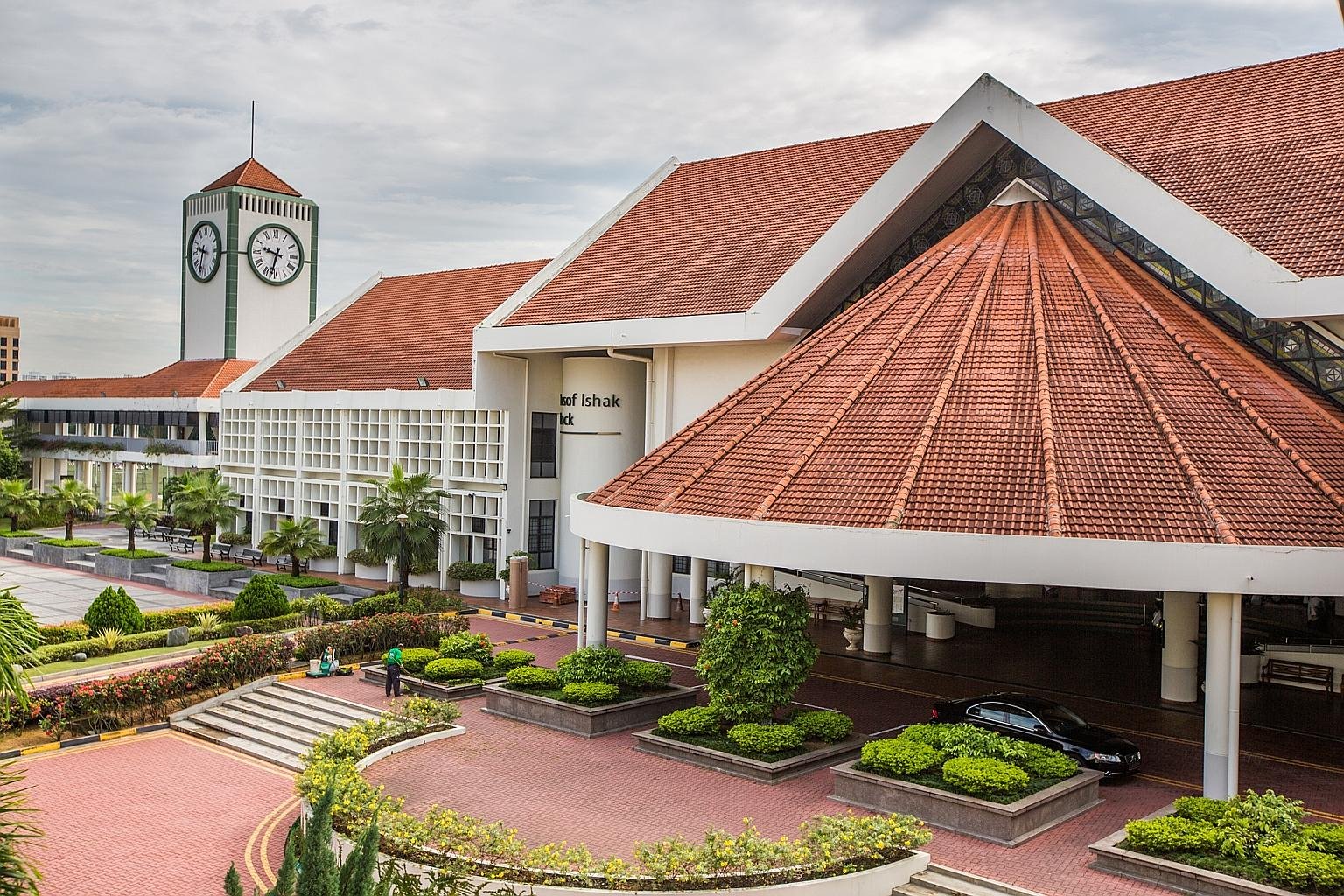
34. Campus and Educational Environment
The physical environment of a school can influence student life.
Over its long history, Raffles Institution has occupied different locations and developed different campuses.
The school’s modern environment reflects the requirements of contemporary education.
Classrooms, laboratories, libraries, sports facilities, performing arts spaces, and technology resources support different dimensions of learning.
A modern school campus must accommodate both traditional academic instruction and collaborative, experiential learning.
35. Tradition and Modernity
One of the most interesting aspects of Raffles Institution is the balance between tradition and modernity.
The school has a history stretching back to 1823.
Few educational institutions can claim such a long continuous connection with Singapore’s development.
Yet students today use technologies and study subjects that could not have been imagined when the school was founded.
This creates an unusual combination.
The school can preserve historical traditions while simultaneously preparing students for the future.
This balance is essential for an institution with such a long history.
36. Raffles Institution and National Development
Raffles Institution has contributed significantly to Singapore’s national development.
Its graduates have participated in almost every major sector of society.
Government and public administration have benefited from Rafflesian graduates.
The legal profession has benefited from them.
Medicine, science, engineering, education, finance, business, technology, and the arts have also benefited from generations of former students.
The school therefore forms part of Singapore’s broader human-capital development.
37. Education Beyond Examinations
Although examination results remain important, education at Raffles Institution extends beyond examination preparation.
Students are encouraged to explore ideas and develop intellectual curiosity.
Research projects can teach students how to investigate questions independently.
Debate can teach them how to construct arguments.
Community service can teach responsibility.
Sports can teach resilience.
Performing arts can develop creativity.
Leadership activities can develop confidence and communication.
Together, these experiences contribute to a broader concept of education.
38. Critical Thinking
Critical thinking is increasingly important in the modern world.
Students are exposed to enormous amounts of information through the internet and social media.
Not all information is reliable.
Students therefore need to know how to evaluate evidence, identify bias, compare sources, and reach reasoned conclusions.
A strong academic education should help students develop these skills.
Raffles Institution’s emphasis on inquiry and intellectual development supports this objective.
39. Communication Skills
Communication is another important component of education.
Students must learn to write clearly, speak confidently, listen carefully, and explain complicated ideas.
These skills are useful in almost every career.
Debates, presentations, essays, research projects, group discussions, and performing arts can all contribute to communication development.
Students who can communicate effectively are better prepared for university and professional life.
40. Creativity and Innovation
Creativity is sometimes associated mainly with the arts, but it is also essential in science, engineering, business, and technology.
Students need to learn how to approach problems from different perspectives.
Innovation requires curiosity and willingness to experiment.
A modern education therefore needs to combine knowledge with creativity.
Raffles Institution’s broad range of academic and co-curricular activities provides opportunities for students to develop these qualities.
41. Service to Society
One of the strongest ideas associated with leadership education is service.
Education provides opportunities and knowledge.
Those opportunities can be used for personal advancement, but they can also be used to improve society.
Students involved in community projects learn about social issues and develop empathy.
This can influence their future choices.
Many graduates eventually contribute to public service, charities, educational organizations, healthcare, research, and other community-focused activities.
42. The International Dimension
Singapore is one of the world’s most internationally connected cities.
Its economy depends heavily on global trade, technology, finance, education, and international cooperation.
Raffles Institution therefore operates in an international environment.
Students need to understand global issues.
Climate change, international economics, geopolitics, artificial intelligence, public health, energy security, and technological development are global challenges.
An education that prepares students for the future must encourage them to think beyond national borders.
43. Environmental Awareness
Environmental sustainability has become increasingly important in modern education.
Students are growing up in a world affected by climate change, biodiversity loss, pollution, resource limitations, and environmental challenges.
Schools can help students understand these issues through science, geography, environmental projects, community activities, and sustainability initiatives.
Environmental education also encourages students to consider the long-term consequences of human decisions.
44. Entrepreneurship
Entrepreneurship is another area relevant to modern education.
Singapore has developed a strong technology and business ecosystem.
Students interested in entrepreneurship can benefit from learning about economics, finance, technology, marketing, leadership, and innovation.
Entrepreneurial thinking also applies outside business.
It involves identifying problems, creating solutions, taking calculated risks, and adapting to change.
These qualities can benefit students in many careers.
45. Preparing Students for the Future
The future workplace will likely be very different from the world of the twentieth century.
Automation and artificial intelligence may change many professions.
Students will need to learn continuously throughout their lives.
Raffles Institution therefore faces the challenge of preparing students not for one specific career but for a rapidly changing world.
The most valuable skills may include critical thinking, adaptability, communication, collaboration, creativity, technological literacy, and ethical reasoning.
46. The Meaning of Academic Excellence
Academic excellence should not simply mean achieving high examination scores.
True academic excellence includes intellectual curiosity.
A student who wants to understand why something works is developing a deeper form of learning than a student who simply memorizes an answer.
Raffles Institution’s long educational tradition provides an environment in which students can pursue demanding academic goals.
However, the broader purpose of education is to develop people capable of contributing meaningfully to society.
47. Raffles Institution as a Historical Institution
Raffles Institution is historically significant because its story overlaps with the story of Singapore.
When the school was founded in 1823, Singapore was a young trading settlement.
Today, Singapore is a highly developed global city.
The school has witnessed this transformation.
Generations of students have studied in different historical periods.
They experienced colonial rule, war, political change, independence, industrialization, globalization, and technological transformation.
The school has therefore served as both an educational institution and a witness to history.
48. Why Raffles Institution Remains Important
The continued importance of Raffles Institution can be explained by several factors.
First, it has a very long history.
Second, it has developed a strong academic reputation.
Third, it has produced generations of influential graduates.
Fourth, it provides opportunities beyond the classroom.
Fifth, it has adapted to changes in Singaporean society.
Finally, it continues to emphasize leadership and service.
These characteristics help explain why the school remains one of Singapore’s most recognizable educational institutions.
49. Challenges for the Future
Even highly successful schools face challenges.
One challenge is maintaining academic excellence while protecting student well-being.
Another is adapting education to artificial intelligence and rapidly changing technology.
Schools must also ensure that students develop ethical judgment.
Globalization creates another challenge.
Students need international awareness while also understanding their responsibilities to Singapore and their communities.
Finally, the school must continue to balance tradition with innovation.
50. The Future of Raffles Institution
The future of Raffles Institution will depend on its ability to adapt while preserving its core values.
The institution’s historical legacy provides a strong foundation.
However, history alone cannot guarantee future success.
Future students will face challenges that previous generations could not have imagined.
Artificial intelligence, climate change, biotechnology, cybersecurity, automation, demographic changes, and geopolitical uncertainty will influence the world they enter.
Raffles Institution will need to continue developing educational approaches that encourage students to think independently and responsibly.
51. Lessons from the History of Raffles Institution
The history of Raffles Institution provides several important lessons.
The first is that education can influence national development.
The second is that institutions must adapt to changing circumstances.
The third is that academic knowledge should be combined with character and responsibility.
The fourth is that leadership is most valuable when connected to service.
The fifth is that tradition can provide identity while innovation provides a path toward the future.
These lessons are relevant not only to Singapore but to educational institutions around the world.
52. Raffles Institution and the Meaning of Success
Success at school can take many forms.
For some students, it means academic achievement.
For others, it means winning a sports competition, performing on stage, completing a research project, leading a community initiative, or developing a lifelong passion.
A strong educational institution should provide opportunities for different types of success.
Raffles Institution’s broad educational environment allows students to explore many areas.
The ultimate goal is not simply to produce high-performing students but capable and responsible individuals.
53. Frequently Asked Questions
When was Raffles Institution founded?
Raffles Institution was founded in 1823. It traces its origins to the Singapore Institution established during the early development of Singapore as a British trading settlement.
Who founded Raffles Institution?
The institution was established with the support and vision of Sir Stamford Raffles, who believed that education was important for the development of Singapore and the region.
Where is Raffles Institution located?
Raffles Institution is located in Singapore. Its modern educational operations are associated with its Bishan campus.
Why is Raffles Institution famous?
Raffles Institution is famous for its long history, academic excellence, leadership programmes, strong co-curricular activities, distinguished alumni, and contribution to Singaporean society.
Is Raffles Institution a secondary school?
Yes. Raffles Institution provides secondary education and also offers pre-university education through its integrated educational structure.
What is the Raffles Programme?
The Raffles Programme is an integrated educational programme that provides a continuous pathway from secondary education into pre-university studies for participating students.
Who are some famous Raffles Institution alumni?
The school’s alumni include numerous prominent Singaporean politicians, public servants, academics, business leaders, doctors, lawyers, scientists, and other professionals. Lee Kuan Yew is among its most famous former students.
Does Raffles Institution focus only on academics?
No. While academics are very important, the school also places emphasis on sports, performing arts, leadership, community service, research, clubs, societies, and other co-curricular activities.
Why is Raffles Institution historically important?
Its history dates to 1823, making it one of Singapore’s oldest educational institutions. Its development has closely followed the development of Singapore itself.
What values are associated with Raffles Institution?
Academic excellence, leadership, service, intellectual curiosity, responsibility, resilience, and community are among the values strongly associated with the institution.
Conclusion
Raffles Institution occupies a unique position in Singapore’s educational history.
Founded in 1823, the school began during the early years of Singapore’s development and has continued through almost two centuries of extraordinary change. It survived periods of political transformation, war, economic development, independence, globalization, and technological revolution.
Its history is therefore much larger than the story of a single school.
Raffles Institution has contributed to Singapore through generations of students who became teachers, scientists, doctors, lawyers, entrepreneurs, engineers, civil servants, politicians, academics, artists, and community leaders.
Its educational philosophy has also evolved. While academic excellence remains a major priority, modern education at Raffles Institution encompasses research, leadership, creativity, sports, performing arts, community service, international awareness, and technological literacy.
Perhaps the most important feature of the institution is its ability to combine heritage with change.
The school carries a historical legacy dating back to the nineteenth century, yet its students live in a highly modern and technologically advanced society. They must therefore learn from the past while preparing for an uncertain future.
As Singapore continues to develop, Raffles Institution will likely remain an important part of the country’s educational landscape. Its future success will depend on maintaining high academic standards while continuing to develop thoughtful, creative, ethical, resilient, and socially responsible young people.
The story of Raffles Institution ultimately demonstrates the lasting power of education. From its beginnings as an ambitious nineteenth-century educational project to its modern role as a leading Singaporean institution, Raffles Institution has influenced countless lives and contributed significantly to the intellectual and social development of Singapore.
Its history remains a powerful example of how schools can become more than places where students study. They can become communities, traditions, networks, and institutions whose influence continues across generations.