Introduction
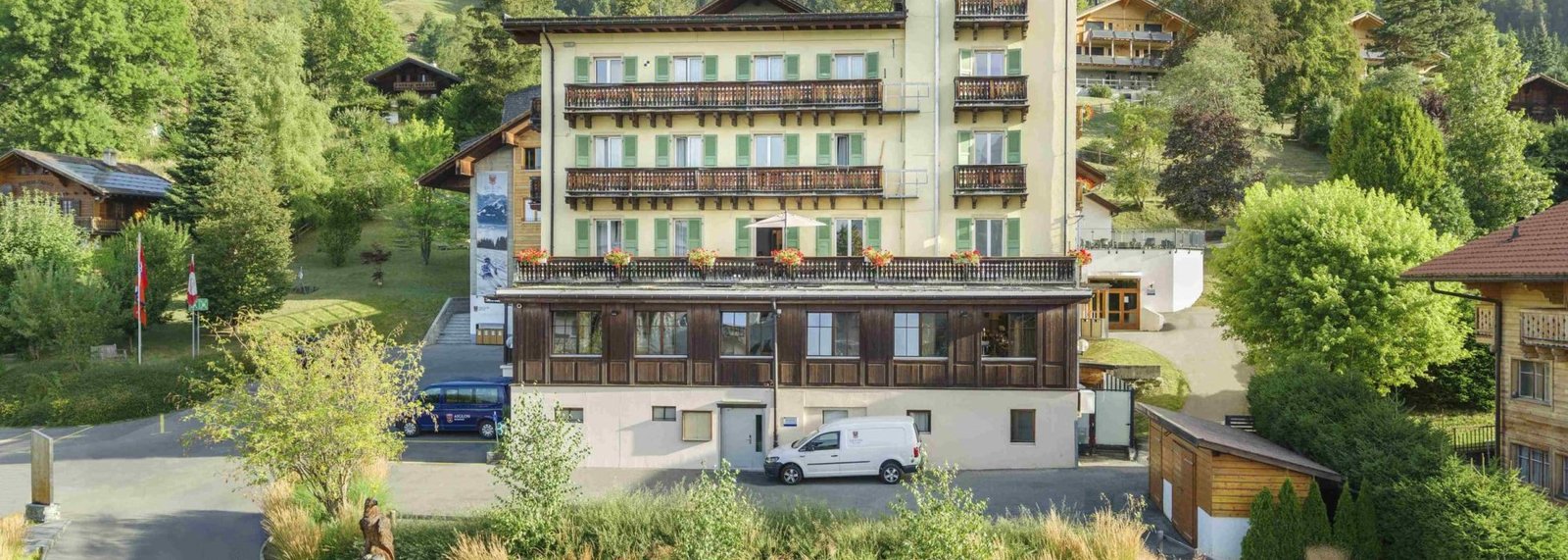
Aiglon College is one of Switzerland’s best-known international boarding schools, situated in the spectacular Alpine environment of Villars-sur-Ollon in the canton of Vaud. The school is particularly distinctive because it combines an academically ambitious international education with mountain living, outdoor adventure, personal development, and a strong emphasis on character.
Founded in 1949 by John Corlette, Aiglon College was established with an educational philosophy that went beyond conventional classroom learning. Corlette believed that young people should be educated not only intellectually but also physically, emotionally, socially, and spiritually. This philosophy became an important part of Aiglon’s identity and continues to influence school life.
Over the decades, Aiglon has developed from a relatively small boarding school into a highly international educational community. Students from many different countries live and study together, creating an environment where cultural exchange is a natural part of everyday life.
The school’s location is equally important. Villars-sur-Ollon is surrounded by the Swiss Alps, giving students opportunities to participate in skiing, hiking, climbing, mountaineering, and other outdoor activities. Rather than treating outdoor education as an occasional excursion, Aiglon has traditionally incorporated adventure and physical challenge into the wider educational experience.
This article explores the history and development of Aiglon College, its educational philosophy, academic programmes, boarding experience, campus, traditions, outdoor education, international community, admissions, student life, and continuing influence in international education.
1. The Foundation of Aiglon College
Aiglon College was founded in 1949 by John Corlette. His vision was influenced by the idea that education should develop the whole person rather than concentrate exclusively on academic achievement.
At the time of Aiglon’s foundation, many traditional schools focused heavily on examinations, classroom instruction, discipline, and conventional academic subjects. Corlette wanted to create something different.
His educational philosophy emphasized several interconnected areas:
- Academic development
- Physical fitness
- Outdoor education
- Personal responsibility
- Leadership
- International understanding
- Self-discipline
- Reflection and character development
The school was established in the Swiss mountain village of Villars, an environment that naturally supported Corlette’s vision.
The Alps provided a living classroom. Students could experience physical challenges, changing weather conditions, demanding journeys, and the responsibilities associated with outdoor activities.
This combination of academic study and mountain life became one of Aiglon College’s defining characteristics.
2. John Corlette and His Educational Vision
John Corlette remains one of the most important figures in the history of Aiglon College.
His educational philosophy was based on the belief that students should become independent and capable human beings. Academic knowledge was important, but it was only one part of education.
Corlette wanted students to develop qualities such as courage, resilience, cooperation, responsibility, and self-awareness.
The mountain environment of Switzerland offered a perfect setting for this approach.
A student climbing a mountain, skiing down a difficult slope, completing a long expedition, or working as part of a team could learn lessons that were difficult to reproduce inside a traditional classroom.
For Corlette, these experiences could teach students how to:
- Manage uncertainty
- Make decisions
- Cooperate with others
- Overcome difficulties
- Accept responsibility
- Understand personal limitations
- Develop confidence
These principles gradually became deeply connected with Aiglon’s culture.
3. Why Switzerland Was Chosen
Switzerland has long been associated with international education and boarding schools. Its political stability, multicultural society, natural environment, and multilingual culture have helped make it a popular destination for international students.
Aiglon’s location in Villars-sur-Ollon was especially significant.
Villars is located in the Swiss Alps, surrounded by dramatic mountain scenery. The environment offers opportunities for skiing in winter and hiking, climbing, cycling, and other outdoor pursuits during warmer months.
The location also gives students a lifestyle very different from that of a large urban school.
Instead of spending most of their free time in a city, students are surrounded by mountains, forests, trails, and alpine landscapes.
This geographical setting became an essential component of Aiglon’s educational philosophy.
4. Aiglon College Through the Decades
Since its establishment in 1949, Aiglon College has experienced considerable development.
The early school was much smaller than the international institution it is today. As its reputation developed, the school attracted students from increasingly diverse backgrounds.
The international nature of the community became one of its most recognizable features.
Students from different continents and cultural traditions could live together in the same boarding environment. This created opportunities for cultural exchange that extended far beyond the formal curriculum.
Over time, Aiglon developed more sophisticated academic facilities, residential facilities, sports programmes, and support systems.
The school also adapted its academic programmes to the changing needs of international education.
Today, Aiglon is particularly associated with an international academic curriculum and a strong emphasis on experiential learning.
5. Aiglon College’s Educational Philosophy
The educational philosophy of Aiglon can be understood through the idea of educating the whole person.
A student’s development is not viewed exclusively through examination results.
Academic performance matters, but so do character, leadership, physical wellbeing, relationships, creativity, and personal responsibility.
This broad philosophy gives students opportunities to develop in several dimensions.
Academic Development
Students are challenged intellectually through a demanding academic programme.
They study traditional disciplines while also developing skills such as critical thinking, communication, research, and independent learning.
Physical Development
Sport and outdoor activities are an important part of school life.
The Alpine environment provides an unusual range of opportunities for physical challenge.
Character Development
Students are encouraged to become responsible members of a community.
Boarding life itself requires students to learn independence, cooperation, and respect.
International Understanding
Because the student body is highly international, students regularly interact with people from different cultures.
This can help develop international awareness and broaden perspectives.
6. The International Community
One of Aiglon College’s most distinctive characteristics is its international student population.
Students come from a wide range of countries and cultural backgrounds. This creates an environment in which internationalism is not simply a subject discussed in class; it is part of everyday life.
Students share classrooms, dining spaces, residences, activities, sports teams, expeditions, and social events.
This environment can help students develop cultural awareness and communication skills.
For many students, friendships formed at international boarding schools continue long after graduation.
The diversity of Aiglon’s community also means that students may encounter traditions, languages, foods, celebrations, and perspectives different from their own.
Such experiences can be valuable preparation for university and professional environments that are increasingly international.
7. Academic Education at Aiglon College
Academic education is a central part of life at Aiglon.
The school has traditionally offered an academically rigorous international curriculum designed to prepare students for universities around the world.
The International General Certificate of Secondary Education, commonly known as IGCSE, forms an important part of the secondary academic programme.
For older students, Aiglon offers the International Baccalaureate Diploma Programme.
The IB Diploma is internationally recognized and requires students to study a broad range of disciplines while also completing components such as the Theory of Knowledge course, an extended essay, and Creativity, Activity, Service.
This structure encourages students to become independent thinkers rather than simply examination candidates.
8. The International Baccalaureate at Aiglon
The International Baccalaureate Diploma Programme is particularly suited to an international school such as Aiglon.
Students study subjects from different academic areas and develop connections between disciplines.
The programme encourages:
- Critical thinking
- Independent research
- Academic writing
- International awareness
- Reflection
- Time management
- Intellectual curiosity
The extended essay requires students to investigate a topic in depth.
Theory of Knowledge encourages students to examine how knowledge is produced, justified, interpreted, and communicated.
Creativity, Activity, Service encourages students to engage with activities beyond conventional academic study.
Together, these elements reflect Aiglon’s broader philosophy of educating students as complete individuals.
9. The Importance of Outdoor Education
Outdoor education is one of Aiglon College’s most recognizable features.
Few schools can use the surrounding environment as extensively as a Swiss Alpine boarding school.
Students can participate in activities such as:
- Skiing
- Snowboarding
- Hiking
- Mountaineering
- Climbing
- Cycling
- Camping
- Outdoor expeditions
These activities provide physical exercise but can also teach practical skills.
Mountain environments require preparation and responsibility. Weather conditions can change rapidly, routes need to be planned, and students must cooperate with one another.
As a result, outdoor education can become a practical lesson in leadership and risk management.
10. Skiing and Winter Activities
Winter transforms Villars into an environment particularly suited to snow sports.
Skiing has an important place in Aiglon’s traditions.
Students can develop their skiing abilities according to their experience and confidence.
For beginners, the emphasis may be on learning fundamental skills and safety.
More experienced students can pursue advanced techniques and challenging terrain.
Winter activities also contribute to the community atmosphere because students frequently participate in sports together.
The mountains become more than scenery. They become part of daily student life.
11. Hiking and Mountain Expeditions
During warmer months, the Alps offer opportunities for hiking and expeditions.
Mountain expeditions can teach students how to prepare for demanding journeys.
Students may need to consider:
- Weather
- Navigation
- Equipment
- Food and water
- Physical endurance
- Teamwork
- Safety
The experience can help young people understand the connection between preparation and achievement.
A difficult expedition can also demonstrate that success often depends on teamwork rather than individual ability alone.
12. Character Building Through Challenge
Aiglon’s emphasis on challenge is closely connected to its approach to character development.
Students are regularly encouraged to move beyond their comfort zones.
This does not mean that every challenge must be extreme. Everyday challenges can also contribute to personal growth.
For example, students may be asked to:
- Speak publicly
- Lead a group
- Complete a difficult assignment
- Participate in unfamiliar activities
- Work with students from other cultures
- Organize community projects
- Manage their own schedules
Such experiences can gradually increase confidence and independence.
13. Boarding Life at Aiglon College
Boarding is central to the Aiglon experience.
Unlike a day school, where students return home after classes, boarding schools create a residential community.
At Aiglon, students live together and participate in school activities outside normal classroom hours.
Boarding life can teach practical skills that students will need later in life.
Students learn how to:
- Organize personal belongings
- Manage schedules
- Share spaces
- Respect community rules
- Cooperate with peers
- Resolve disagreements
- Take responsibility for personal decisions
The boarding environment also creates opportunities for strong friendships.
14. House Life
Like many traditional boarding schools, Aiglon organizes students into residential communities.
House life can create a smaller social environment within the larger school.
Students develop relationships with their housemates and participate in competitions, activities, events, and traditions.
House systems can also support pastoral care.
Older students may help younger students adjust to boarding life, while staff members provide guidance and supervision.
This structure helps create a sense of belonging.
15. Daily Life at Aiglon
A typical day at Aiglon can include a combination of academic lessons, activities, meals, study time, sports, and community responsibilities.
Morning routines prepare students for the academic day.
Classes occupy a significant part of the school schedule.
After lessons, students may participate in sports, clubs, outdoor activities, or other programmes.
Evenings can include supervised study, social activities, house events, or personal preparation for the next day.
The schedule encourages students to balance different responsibilities.
This balance is particularly important because international boarding students must manage both academic demands and community life.
16. Student Leadership
Leadership is an important aspect of the Aiglon educational philosophy.
Students can develop leadership skills through formal positions as well as ordinary community responsibilities.
Leadership may involve:
- Organizing events
- Leading teams
- Supporting younger students
- Participating in student organizations
- Taking responsibility during expeditions
- Coordinating community projects
The school environment provides students with opportunities to practise leadership rather than simply study it theoretically.
Effective leadership requires communication, responsibility, empathy, and decision-making.
17. Arts and Creative Activities
Although Aiglon is strongly associated with academics and outdoor education, creative development is also important.
Students can participate in artistic and cultural activities.
Depending on the programme and year, opportunities may include:
- Music
- Drama
- Visual arts
- Performance
- Creative writing
- Photography
- Cultural events
Creative activities provide students with alternative ways of expressing ideas.
They can also strengthen confidence and collaboration.
A school community becomes richer when students can explore both analytical and creative interests.
18. Sports at Aiglon College
Sport plays an important role in student life.
The Alpine setting naturally encourages winter sports, but students can participate in a broader range of athletic activities.
Sport provides benefits beyond physical fitness.
Students learn about:
- Discipline
- Competition
- Teamwork
- Goal setting
- Perseverance
- Sportsmanship
Team sports can also strengthen relationships between students from different backgrounds.
19. Community and Service
Community service is another important dimension of a holistic education.
Students are encouraged to recognize that education carries responsibilities beyond individual achievement.
Service activities can involve helping communities, supporting charitable initiatives, or participating in projects that address social and environmental concerns.
Such experiences can encourage students to think about how their skills and resources can benefit others.
This philosophy is especially relevant in international schools, where students may eventually become leaders in different countries and professional fields.
20. The Alpine Environment as a Classroom
One of the most interesting aspects of Aiglon College is the way its geographical location influences education.
At many schools, outdoor activities are occasional events.
At Aiglon, the mountains are part of the school’s identity.
Students can observe natural environments directly.
They can study weather, geography, ecology, geology, and environmental issues through real-world experiences.
This creates opportunities for experiential learning.
Instead of learning only from textbooks, students can sometimes experience concepts physically and practically.
21. Environmental Awareness
Living in the Alps also creates an opportunity to understand environmental responsibility.
Mountain ecosystems are sensitive to changes in climate, tourism, development, and human activity.
Students can develop awareness of topics such as:
- Climate change
- Biodiversity
- Water resources
- Conservation
- Sustainable tourism
- Environmental protection
This is particularly valuable for young people growing up in an era when environmental issues influence economics, politics, technology, and everyday life.
22. International Friendships
A major benefit of attending an international boarding school is the opportunity to form friendships across national boundaries.
At Aiglon, students may live with peers whose backgrounds are very different from their own.
A student might share a residence with classmates from several continents.
These relationships can challenge stereotypes and encourage curiosity.
Students learn that people from different cultures can have different traditions while sharing many common goals and experiences.
The result can be a strong sense of international community.
23. Preparing Students for University
Aiglon’s academic and extracurricular structure is designed to prepare students for higher education.
University preparation includes more than examination performance.
Students must learn how to:
- Manage independent study
- Write academic essays
- Conduct research
- Give presentations
- Meet deadlines
- Balance competing responsibilities
- Communicate effectively
The boarding environment can also help students become more independent before leaving school.
This can make the transition to university life easier.
24. University Destinations
Graduates of internationally oriented boarding schools commonly apply to universities in multiple countries.
Aiglon students have historically pursued higher education in destinations including the United Kingdom, United States, Europe, Canada, and other parts of the world.
The IB Diploma is particularly useful for students seeking international university options because it is widely recognized.
The school’s university guidance services can help students understand admissions requirements and make informed choices.
25. Admissions to Aiglon College
Admission to Aiglon is selective.
Families considering the school generally need to examine several factors, including academic readiness, personal qualities, age, interests, and suitability for boarding.
Because Aiglon is a residential school, admissions decisions involve more than academic results.
The school seeks students who are likely to contribute positively to the community.
Applicants and families should consult the school’s current official admissions information for exact requirements, application deadlines, entrance procedures, and available places.
26. What Makes Aiglon Different?
Aiglon differs from many traditional schools because of the combination of several features.
First, it is an international boarding school.
Second, it is located in an Alpine environment.
Third, it has a long tradition of outdoor education.
Fourth, it emphasizes personal development alongside academics.
Fifth, its international community exposes students to many cultures.
The combination creates a distinctive educational experience.
A school may offer excellent academics without having a major outdoor programme. Another school may provide outdoor adventure without offering the same international academic environment.
Aiglon attempts to combine these elements.
27. The Role of Discipline
Boarding schools require clear expectations because students live together throughout the school week.
Discipline at a school such as Aiglon is not simply about rules.
It is also connected with personal responsibility.
Students must understand that individual choices affect the wider community.
This is particularly important in shared residential environments.
Learning to respect other people’s time, privacy, belongings, and wellbeing is part of becoming an independent adult.
28. Personal Responsibility
Personal responsibility is one of the qualities Aiglon seeks to develop.
Students are encouraged to take ownership of their academic work, activities, relationships, and personal development.
Boarding life naturally increases responsibility.
A student cannot always rely on parents to solve everyday problems.
Instead, students gradually learn to make decisions themselves while receiving appropriate support from teachers and boarding staff.
29. The Importance of Resilience
Resilience means the ability to respond positively to difficulty.
At Aiglon, resilience can be developed through academics, sport, outdoor activities, social experiences, and leadership responsibilities.
A challenging examination, a demanding mountain expedition, a difficult team competition, or an unfamiliar cultural situation can all become opportunities to develop resilience.
The goal is not to eliminate difficulty but to help students learn how to respond constructively when difficulties arise.
30. Cultural Diversity and Global Citizenship
Global citizenship is especially relevant to an international boarding school.
Students learn that their future lives may involve international universities, multinational organizations, global challenges, and cross-cultural collaboration.
Living with students from different countries provides practical experience in international communication.
Students may encounter different approaches to:
- Education
- Family life
- Communication
- Leadership
- Religion and traditions
- Food
- Social expectations
These differences can encourage students to become more adaptable.
31. The Social Experience
School is not only about classrooms and examinations.
Friendships, traditions, competitions, celebrations, and shared experiences often become some of the most memorable aspects of adolescence.
At Aiglon, residential life means that students experience school as a community rather than simply a place they visit during the day.
Shared meals, sports, house events, expeditions, performances, and celebrations can create lasting memories.
32. Teachers and Mentoring
Teachers at a boarding school often have responsibilities beyond classroom teaching.
Because students live on campus, educators and residential staff can play important roles in student wellbeing and personal development.
Students may seek advice about academic choices, university plans, relationships, activities, or personal challenges.
This creates a mentoring dimension that is less common in large day-school environments.
33. The Importance of Balance
Aiglon’s educational model emphasizes balance.
Students are expected to work hard academically, but they are also encouraged to participate in physical activity, creative pursuits, community life, and personal reflection.
This balance can help prevent education from becoming narrowly focused on examination scores.
A well-rounded student can develop intellectual ability while also becoming physically active, socially confident, and personally responsible.
34. Aiglon and the Meaning of Success
At Aiglon, success can be understood in broader terms than academic grades.
Academic achievement remains important, but personal growth is also significant.
A student may succeed by:
- Becoming more confident
- Developing leadership skills
- Overcoming fear
- Discovering a new talent
- Becoming more independent
- Helping others
- Developing international understanding
This broad concept of success reflects the school’s founding philosophy.
35. The Importance of Traditions
Long-established schools often develop traditions that connect current students with previous generations.
Traditions can provide continuity.
They help students understand that they are part of a community with a history extending beyond their own years at school.
At Aiglon, traditions surrounding houses, outdoor activities, community events, celebrations, and school life contribute to its distinctive identity.
36. Aiglon College in the Modern Era
The modern world has changed significantly since Aiglon was founded in 1949.
Technology has transformed education.
Universities have become increasingly international.
Students face new challenges involving digital communication, climate change, global economics, artificial intelligence, and changing career patterns.
Aiglon has had to evolve while maintaining the principles established by its founder.
The central question remains how to prepare students for an unpredictable future.
37. Technology and Modern Learning
Modern students use technology extensively for research, communication, collaboration, and learning.
International schools must therefore balance traditional educational methods with digital tools.
Technology can provide access to enormous amounts of information, but students also need to learn how to evaluate sources critically.
Critical thinking is particularly important in a world where misinformation can spread rapidly.
A strong education should therefore teach students not only how to find information but also how to determine whether information is reliable.
38. Academic Ambition and Personal Wellbeing
High academic standards can create pressure.
A modern boarding school must therefore consider student wellbeing alongside achievement.
Students need appropriate opportunities for rest, physical activity, friendships, and personal reflection.
The combination of outdoor activity and residential community can support a balanced lifestyle.
At the same time, students must learn healthy ways to manage academic expectations and long-term goals.
39. Why Parents Choose International Boarding Schools
Families choose international boarding schools for many different reasons.
Some seek a strong academic programme.
Others value international exposure.
Some are attracted to boarding because it develops independence.
Aiglon offers an unusual combination of all these features together with its Alpine setting.
For internationally mobile families, the school can provide continuity in an English-language international education while offering a multicultural environment.
40. Challenges of Boarding School Life
Boarding education also has challenges.
Living away from home can be difficult, particularly during the first weeks or months.
Students may experience homesickness.
They must adjust to shared living spaces, schedules, rules, and new social environments.
Academic pressure can also be demanding.
However, these challenges can become part of the learning process when students receive appropriate support.
The experience can help students become more independent and resilient.
41. Aiglon’s Place in Swiss Boarding Education
Switzerland is famous for its private boarding schools.
Institutions across the country attract students from around the world.
Aiglon occupies a distinctive position within this landscape because of its combination of international academics and Alpine outdoor education.
Its identity is strongly connected with the mountains and the educational philosophy of John Corlette.
This gives the school a character that differs from schools located in major cities.
42. The Importance of Location for Student Experience
Location can influence education more than many people realize.
Students at a city school may have access to museums, businesses, cultural institutions, and urban networks.
Students at Aiglon have access to mountains and outdoor environments.
Neither approach is automatically better.
The important point is that geography shapes opportunities.
At Aiglon, the natural environment supports an educational culture based on activity, challenge, exploration, and adventure.
43. Aiglon’s Educational Legacy
More than seven decades after its foundation, Aiglon remains closely associated with the principles established by John Corlette.
Its legacy can be understood through several themes:
- International education
- Outdoor adventure
- Character development
- Academic excellence
- Personal responsibility
- Community
- Leadership
These principles have helped distinguish Aiglon from more conventional academic institutions.
44. Notable Alumni and the Aiglon Network
A successful boarding school develops a network that can continue long after students graduate.
Aiglon alumni have gone on to pursue careers and further education in different parts of the world.
The international nature of the school means that alumni can be spread across multiple countries and professional fields.
Such networks can provide graduates with valuable connections.
However, the strongest legacy of a school is not simply the list of famous graduates. It is the influence the institution has on thousands of students who carry its values into later life.
45. The Aiglon Experience
Describing Aiglon only as an academic institution would miss an important part of its identity.
The Aiglon experience is built from many interconnected elements:
- Classroom learning
- Residential life
- Outdoor adventure
- Sport
- Arts
- Community service
- Leadership
- International friendships
- Reflection
Together, these create a distinctive educational environment.
46. Aiglon for International Students
For international students, Aiglon can provide an opportunity to study in an English-speaking environment while living in Switzerland.
Students can develop academic English alongside intercultural communication skills.
They also gain experience living away from their home countries.
This can be valuable preparation for universities and careers in international environments.
47. The Value of Experiential Learning
Experiential learning means learning through direct experience.
Aiglon’s outdoor programmes provide strong examples of this approach.
A student planning a mountain expedition may need to understand geography, weather, physical fitness, teamwork, and safety.
The knowledge becomes meaningful because it is connected to a real situation.
Experiential learning can make education memorable.
48. Education Beyond the Classroom
One of the central ideas behind Aiglon is that education does not stop when a class ends.
A conversation with a roommate can teach communication.
A sports competition can teach resilience.
An expedition can teach leadership.
A community service project can teach empathy.
A performance can build confidence.
A difficult academic assignment can teach perseverance.
In this sense, the entire school environment becomes educational.
49. Preparing Young People for Leadership
The world needs leaders who can work across cultural and professional boundaries.
Aiglon’s international environment gives students opportunities to develop these abilities.
Leadership is not simply about holding a title.
It is about taking responsibility, listening to others, making decisions, solving problems, and accepting consequences.
These skills can be developed through everyday school experiences.
50. Aiglon College and the Future
The future of education will likely require students to become adaptable.
Technology will continue to change workplaces.
Some careers that exist today may look very different in the future.
New careers will emerge.
Students therefore need more than memorized information.
They need curiosity, resilience, communication, creativity, critical thinking, and the ability to learn continuously.
Aiglon’s holistic educational model is well suited to these broader challenges because it emphasizes development beyond examination results.
Conclusion
Aiglon College has built a distinctive reputation in international education since its foundation in 1949.
The school began with John Corlette’s ambitious belief that education should develop the whole person. Academic learning was important, but so were physical development, character, responsibility, leadership, international understanding, and personal growth.
Its location in Villars-sur-Ollon gives Aiglon an extraordinary natural environment. The Swiss Alps are not simply a beautiful background; they are an important part of the school’s educational experience.
Through skiing, hiking, climbing, expeditions, sport, and other outdoor activities, students encounter practical challenges that can develop resilience, teamwork, confidence, and responsibility.
At the same time, Aiglon provides a rigorous international academic education. Its programmes prepare students for universities in different countries and encourage independent thinking, research, communication, and intellectual curiosity.
The boarding environment adds another dimension. Students live together, share experiences, develop friendships, and learn how to manage responsibilities away from home.
Perhaps the most important feature of Aiglon College is the way these elements work together. Academics, adventure, community, leadership, and internationalism are not isolated components. They form a connected educational philosophy.
For students who want an education that combines academic ambition with personal challenge and international exposure, Aiglon represents a particularly distinctive model.
Its history demonstrates how one school’s founding philosophy can continue to influence generations of students. More than seven decades after its creation, Aiglon College remains a notable example of holistic international boarding education in Switzerland.
Frequently Asked Questions About Aiglon College
1. When was Aiglon College founded?
Aiglon College was founded in 1949 by John Corlette.
2. Where is Aiglon College located?
Aiglon College is located in Villars-sur-Ollon in the Swiss Alps, in the canton of Vaud, Switzerland.
3. What type of school is Aiglon College?
Aiglon is an international boarding school offering education for students in their secondary and pre-university years.
4. What curriculum does Aiglon College offer?
The school has offered international programmes including IGCSE and the International Baccalaureate Diploma Programme.
5. Why is Aiglon College famous?
Aiglon is particularly known for its international student community, rigorous academics, boarding environment, Alpine location, outdoor education, and holistic approach to personal development.
6. Does Aiglon College have outdoor activities?
Yes. Outdoor education is an important part of the school’s identity, with opportunities connected to the Alpine environment, including skiing, hiking, climbing, and expeditions.
7. Is Aiglon College an international school?
Yes. It has a highly international student community and prepares students for universities and careers in different parts of the world.
8. What is boarding life like at Aiglon?
Boarding life involves living with other students, participating in school activities, managing personal responsibilities, studying, and contributing to the residential community.
9. Does Aiglon College focus only on academics?
No. The school’s educational philosophy includes academic learning as well as physical development, character, leadership, outdoor education, community participation, and international understanding.
10. Who founded Aiglon College?
Aiglon College was founded by John Corlette in 1949.
11. Why is the Swiss location important?
The Alpine environment provides opportunities for outdoor education and adventure while also creating a distinctive residential setting.
12. Is Aiglon suitable for international students?
Its international curriculum and multicultural community make it particularly suited to students seeking an international boarding-school experience.
Final Thoughts
Aiglon College represents a distinctive approach to education in which the classroom is only one part of the learning experience. Its history, international community, academic programmes, boarding traditions, and Alpine outdoor activities combine to create an environment focused on developing capable, confident, and globally minded young people.
For families researching leading international boarding schools in Switzerland, Aiglon College is an institution worth understanding not only because of its academic programme but also because of its unusual philosophy: education should challenge the mind, strengthen the body, develop character, and broaden the way students understand the world.