Introduction
The Groton School is one of the best-known independent boarding schools in the United States. Located in Groton, Massachusetts, the school has developed a distinctive reputation for combining rigorous academic education with community life, character development, athletics, arts, leadership, and public service. Since its establishment in the nineteenth century, Groton has played an important role in the history of American preparatory education.
The school was founded by the Rev. Endicott Peabody in 1884. Peabody envisioned an educational institution that would prepare young people not only for colleges and professional careers but also for lives of responsibility and service. His educational philosophy placed considerable emphasis on character, discipline, moral development, intellectual curiosity, and participation in a close-knit community.
Over the decades, Groton School has changed in many ways. Its curriculum has expanded, its student body has become more diverse, its facilities have developed, and its educational approach has responded to changing ideas about teaching and learning. Yet many of the principles associated with the school’s founding remain important to its identity.
Today, Groton is recognized as a selective college-preparatory boarding school serving students in the upper-school grades. Its campus, traditions, academic programs, residential community, extracurricular opportunities, and emphasis on service contribute to an educational environment designed to develop the whole student.
This article explores the history of Groton School from its origins to the modern era and examines why the institution has remained influential in American independent-school education.
The Founding of Groton School
Groton School was founded in 1884 by Endicott Peabody. At the time, American education was undergoing significant changes. Private preparatory schools were becoming important pathways to leading colleges and universities, particularly for families seeking structured academic and personal development for their children.
Peabody believed that education should be about more than academic achievement. He wanted students to develop habits of responsibility, self-discipline, cooperation, and service. His vision helped shape the distinctive character of Groton.
The founding of the school reflected a broader nineteenth-century interest in educational reform. Rather than creating an institution focused exclusively on classical academic subjects, Peabody sought to create a community in which students would learn through classroom study, worship, athletics, shared responsibilities, and daily interaction.
The location in Groton, Massachusetts, provided a setting that was sufficiently close to Boston to maintain connections with the wider intellectual and social world while still offering the atmosphere of a small New England community.
From its earliest years, Groton was intended to be a boarding school. Residential education allowed students to spend much of their time within the school community. Classes were only one part of the experience. Meals, dormitory life, athletics, meetings, traditions, and community activities all became part of the educational process.
Endicott Peabody and His Educational Philosophy
Endicott Peabody was the central figure in Groton’s early history. As founder and longtime headmaster, he established many of the principles that would influence the school for generations.
Peabody believed that students should be educated for responsible citizenship. Academic excellence mattered, but he did not view academic success as the ultimate purpose of education.
His philosophy emphasized character.
Students were expected to develop integrity, responsibility, self-control, and concern for others. The school community was intended to teach young people that leadership carried obligations as well as privileges.
This philosophy became particularly visible in Groton’s emphasis on service. Students were encouraged to contribute to the community and understand that education could be used to help others.
Peabody’s influence remained significant long after his death. His name became closely associated with Groton, and the school’s traditions continued to reflect many of the ideals he established.
Early Years of the School
During its first decades, Groton School grew from a small institution into a respected preparatory school. Its early students came largely from families who valued traditional education and preparation for American colleges and universities.
The school’s curriculum emphasized subjects associated with classical preparation, including Latin, Greek, mathematics, history, literature, science, and modern languages. Over time, however, the academic program expanded to reflect developments in American education.
The boarding-school model created an unusually close relationship between teachers and students. Faculty members were not simply classroom instructors. They were also residential adults, advisers, coaches, and mentors.
This structure became one of the important characteristics of Groton’s educational model.
The school also developed traditions designed to reinforce community identity. Ceremonies, athletics, religious practices, school meetings, and shared activities helped establish a common culture.
Groton School and the New England Preparatory Tradition
Groton belongs to a long tradition of New England independent schools. These institutions historically served as preparation grounds for higher education and leadership.
The New England preparatory-school model emphasized several characteristics:
- rigorous academics
- close faculty relationships
- residential education
- athletics
- extracurricular activities
- leadership development
- community responsibility
- traditions and institutional identity
Groton developed its own version of this model.
Unlike a large university, the school could provide students with a highly structured environment. Students lived together, studied together, participated in activities together, and often developed relationships that lasted for decades.
This sense of community became an important part of the Groton experience.
The Architecture and Campus
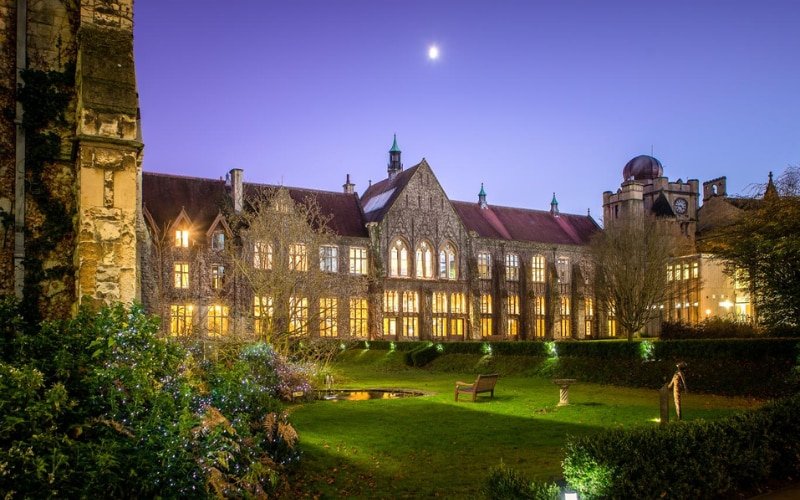
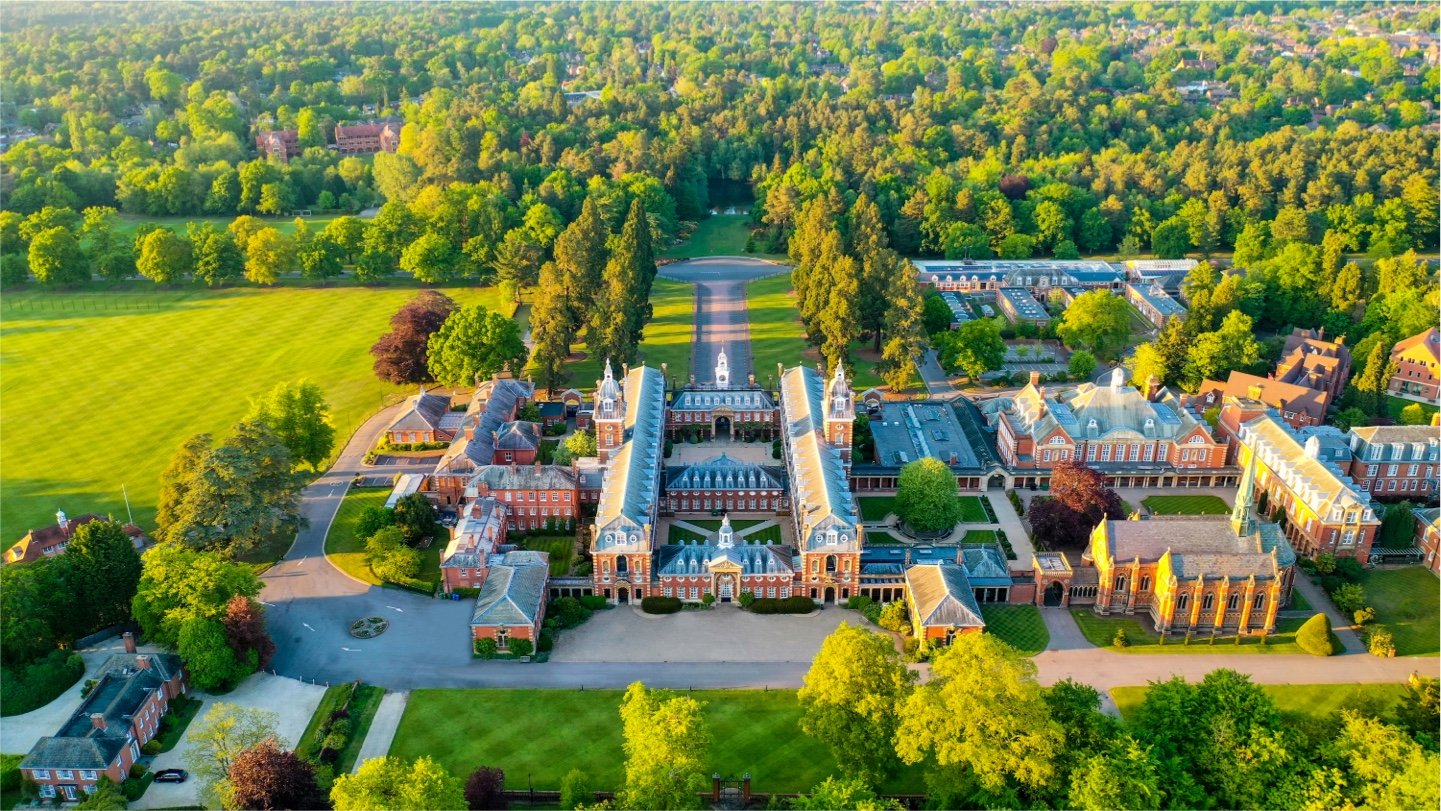
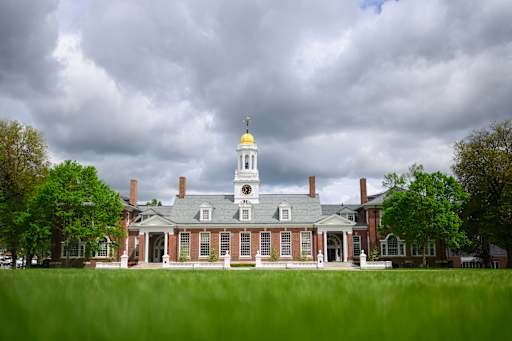
One of the most recognizable aspects of Groton School is its historic campus.
The school’s buildings reflect the architectural traditions of New England boarding schools. Central buildings and residential facilities create a compact environment in which academic, residential, spiritual, and recreational spaces are closely connected.
The Chapel is particularly important to the identity of the school. Religious and spiritual traditions have historically played a role in Groton’s community life, although the modern school serves students from a range of backgrounds.
The campus has developed considerably over time. Historic buildings have been preserved while modern facilities have been introduced to support contemporary education.
The result is a campus that combines historical character with modern educational needs.
Academic Life at Groton School
Academics are at the center of the Groton experience.
The school offers a college-preparatory curriculum designed to challenge students intellectually. Courses cover major academic fields including English, mathematics, science, history, languages, arts, and interdisciplinary subjects.
Students are generally expected to engage actively with their studies rather than simply memorize information. Discussion, writing, research, laboratory work, presentations, and independent thinking are important elements of the educational experience.
Because Groton is a residential school, academic life extends beyond the classroom. Students can continue conversations with teachers, classmates, and advisers after formal lessons.
This creates opportunities for mentoring and intellectual exchange.
English and Literature
English courses develop reading, writing, interpretation, and communication skills.
Students encounter literature from different periods and cultures while learning how to analyze texts critically.
Writing is an important part of the curriculum. Students may write analytical essays, creative pieces, research projects, and other forms of academic work.
Mathematics
Mathematics education at Groton is designed to develop logical reasoning and quantitative understanding.
Depending on preparation and grade level, students can progress through increasingly advanced mathematical subjects.
The goal is not simply to solve equations but to develop problem-solving skills that can be applied in many fields.
Science
Science education includes laboratory-based learning and theoretical study.
Students may explore subjects such as biology, chemistry, physics, environmental science, and related areas.
Laboratory work provides opportunities for students to test ideas, analyze evidence, and understand scientific methods.
History and Social Sciences
History courses help students understand political, cultural, economic, and social developments.
Students are encouraged to examine historical events from multiple perspectives and evaluate evidence.
This approach can help prepare students for college-level research and discussion.
Languages
Language education has traditionally been an important part of preparatory-school education.
Groton provides opportunities for students to study languages and develop communication skills while learning about different cultures.
Language study can also contribute to broader global awareness.
The Importance of Faculty Relationships
One of the strengths of boarding-school education is the close relationship between teachers and students.
At Groton, faculty members have historically played multiple roles. A teacher may also be a dormitory adult, coach, adviser, club leader, or mentor.
This creates many opportunities for students to interact with faculty outside traditional classroom hours.
These relationships can be particularly valuable when students face academic challenges or are trying to decide which subjects and activities to pursue.
The residential structure also means that faculty members can see students in different contexts.
A student who struggles with mathematics, for example, may demonstrate leadership or creativity in another setting. A teacher who knows the student well can provide more complete guidance.
Student Life
Life at Groton is not limited to academics.
Students participate in a wide range of activities, including athletics, performing arts, visual arts, clubs, community service, student organizations, and other extracurricular programs.
Because students live on campus, participation in community life is an everyday experience.
Meals are social occasions. Dormitories provide opportunities for friendship and conversation. School meetings bring students together. Athletic contests create shared experiences.
These activities contribute to the development of a strong community identity.
Boarding School Community
The boarding-school environment is one of Groton’s defining characteristics.
Students live away from home during much of the academic year. This creates both opportunities and responsibilities.
Students learn how to manage schedules, relationships, personal responsibilities, and academic demands.
Living with classmates also teaches students about cooperation.
People have different personalities, backgrounds, interests, and perspectives. A residential school requires students to learn how to live respectfully with others.
This can become an important part of personal development.
Athletics at Groton School
Athletics have traditionally been an important part of American boarding-school education, and Groton is no exception.
Sports can teach discipline, teamwork, resilience, leadership, and commitment.
Students can participate in team and individual sports depending on the school’s offerings and their interests.
Athletics also contribute to school spirit.
Games and competitions bring students together and create opportunities for students to represent their school.
The educational value of athletics extends beyond winning. Coaches often emphasize preparation, teamwork, sportsmanship, and learning from both success and failure.
Arts and Creativity
A complete education includes opportunities for artistic expression.
Groton’s arts programs provide students with ways to explore creativity through disciplines such as music, theater, visual arts, and other creative activities.
The arts can complement academic study by encouraging imagination and communication.
Students who participate in performances or exhibitions learn to present their work publicly and respond to feedback.
These experiences can strengthen confidence and collaboration.
Music and Performing Arts
Music has an important place in the cultural life of many boarding schools.
Students may participate in ensembles, performances, or other musical activities.
Performing in front of an audience requires preparation and discipline.
The same principle applies to theater. Students involved in productions learn acting, stagecraft, collaboration, rehearsal techniques, and public performance.
Such activities can create some of the most memorable experiences of a student’s school years.
Community Service and Leadership
Service is deeply connected to Groton’s founding philosophy.
The idea that education should prepare students to contribute to society has remained an important part of the school’s identity.
Students can engage in service activities and community-oriented projects.
Leadership is similarly viewed as a responsibility.
A student leader is expected not simply to hold a title but to contribute positively to the community.
This philosophy encourages students to think about how their decisions affect other people.
Religious and Spiritual Traditions
Groton was founded within a Christian tradition, and religious life played an important role in its early history.
The Chapel and school traditions reflect this historical foundation.
Over time, the school’s community has become broader and more diverse. Modern independent schools commonly seek to accommodate students with different religious and cultural backgrounds while preserving important institutional traditions.
At Groton, the historical importance of worship and reflection remains part of the school’s identity.
Spiritual life can provide opportunities for students to consider questions of ethics, purpose, responsibility, and community.
Groton School During the Twentieth Century
The twentieth century brought major changes to American society, and Groton evolved alongside them.
The two World Wars, the Great Depression, changes in higher education, the civil rights movement, technological development, and cultural transformations all affected American schools.
Groton’s students and alumni became involved in many aspects of American public life.
The school’s graduates entered universities, government, business, medicine, law, journalism, education, science, and other professions.
As the century progressed, educational expectations changed.
The school expanded its academic programs and adapted its approach to student life.
Diversity and Changing Enrollment
Like many historic American preparatory schools, Groton’s student body was not always representative of the broader diversity of American society.
Over time, the school made efforts to expand access and create a more diverse community.
Modern independent schools place greater emphasis on enrolling students from different geographic, cultural, racial, economic, and social backgrounds.
Diversity can strengthen an educational community by exposing students to different perspectives.
Students who learn alongside people with different experiences may develop greater cultural awareness and communication skills.
Financial Aid and Access
The cost of independent boarding-school education can be significant.
For this reason, financial aid plays an important role in access.
Groton has historically maintained financial-aid programs intended to make the school accessible to qualified students who might otherwise be unable to attend.
Financial aid changes the composition of the student body by allowing talented students from different economic backgrounds to participate in the community.
The broader goal is to ensure that educational opportunity is not determined solely by family income.
Notable Alumni
Groton School has educated many people who later became influential in American public and professional life.
Its alumni have included figures associated with politics, diplomacy, business, literature, journalism, law, education, and other fields.
The significance of an alumni network is not simply the number of famous graduates.
Former students can contribute to the institution through mentoring, philanthropy, professional connections, lectures, and community engagement.
For current students, alumni can provide examples of different educational and career pathways.
Groton and American Leadership
Throughout its history, Groton has been associated with leadership education.
This does not necessarily mean preparing every student for political office.
Leadership can take many forms.
A scientist can lead a research team. A teacher can lead a school community. A business professional can develop an organization. A physician can improve patient care. A community volunteer can organize local initiatives.
The school’s educational philosophy encourages students to consider responsibility as part of achievement.
Success is therefore connected with what students do with their knowledge and opportunities.
The Role of Tradition
Tradition is an important feature of old educational institutions.
At Groton, traditions help connect current students with generations of former students.
School ceremonies, architecture, institutional stories, athletic rivalries, and community practices contribute to this sense of continuity.
However, traditions can also evolve.
A healthy institution must balance respect for history with the needs of contemporary students.
Groton’s history demonstrates this process of continuity and change.
Modern Education at Groton
In the twenty-first century, education has become increasingly interdisciplinary.
Students need more than memorized information. They need to analyze evidence, communicate effectively, work with others, understand technology, and adapt to changing circumstances.
Groton’s modern educational environment reflects these broader trends.
Technology has become part of academic life.
At the same time, traditional skills such as reading, writing, discussion, mathematics, scientific reasoning, and interpersonal communication remain important.
The challenge for a historic school is to use new tools without losing the educational principles that have proven valuable over time.
Technology and Innovation
Digital technology has transformed education.
Students now have access to enormous amounts of information.
However, access to information does not automatically produce knowledge.
Students must learn how to evaluate sources, distinguish evidence from opinion, identify unreliable information, and use technology responsibly.
A modern preparatory school therefore has an important role in developing digital literacy.
Technology can also support collaboration and research.
At the same time, residential schools continue to emphasize face-to-face relationships because communication and community cannot be replaced entirely by digital tools.
Environmental Awareness
Environmental issues have become increasingly important in education.
Schools have opportunities to teach students about climate, conservation, sustainability, agriculture, energy, and natural ecosystems.
Groton’s location in New England provides an environment in which students can connect classroom learning with the natural world.
Outdoor experiences can complement academic study and encourage environmental responsibility.
Preparing Students for College
College preparation is one of the central purposes of Groton’s academic program.
Students are expected to develop strong academic foundations before entering higher education.
However, successful college preparation involves more than earning good grades.
Students need to learn how to manage time, communicate with professors, conduct research, participate in discussions, and work independently.
The boarding-school environment can help students develop these habits.
The Importance of Independent Learning
As students move toward college, they need increasing independence.
Teachers can provide guidance, but students must eventually take responsibility for their own education.
Independent learning encourages students to ask questions, investigate subjects beyond the syllabus, and develop intellectual interests.
This is especially important in advanced courses.
The goal is to transform students from passive recipients of information into active learners.
Personal Development
Education at a school like Groton involves personal development as well as academic development.
Students are at an age when they are forming identities, discovering interests, and developing long-term goals.
The school environment can provide opportunities to experiment with new activities.
A student might discover a passion for theater, science, athletics, writing, music, public service, or another field.
Failure is also part of development.
Students learn that not every competition is won, not every assignment receives the desired grade, and not every idea succeeds.
Learning how to respond constructively to setbacks is an important life skill.
Friendships and Alumni Connections
Boarding-school friendships can be unusually strong because students spend so much time together.
Classmates share academic experiences, meals, activities, celebrations, challenges, and traditions.
These relationships can continue after graduation.
Alumni networks provide opportunities for former students to reconnect and support one another.
The resulting community can extend across generations.
The Importance of Character Education
Character education remains one of the most distinctive elements of Groton’s heritage.
Academic knowledge is powerful, but it must be accompanied by judgment.
Students need to understand honesty, responsibility, empathy, respect, and accountability.
These qualities are relevant in every profession.
A highly intelligent person who lacks integrity can cause significant harm, while a knowledgeable person with strong ethical judgment can use expertise constructively.
Groton’s founding philosophy recognized this relationship between knowledge and character.
Challenges Facing Historic Boarding Schools
Historic schools also face challenges.
The cost of education, changing demographics, competition among schools, evolving expectations from parents, technology, mental health concerns, and questions about institutional traditions all require thoughtful leadership.
Schools must determine which traditions remain educationally valuable and which practices should change.
They must also balance academic ambition with student well-being.
Modern students face pressures that earlier generations did not experience in the same way.
A contemporary boarding school therefore needs systems that support students academically, socially, and personally.
Groton’s Continuing Legacy
More than a century after its founding, Groton School remains closely associated with the educational ideals established by Endicott Peabody.
Its legacy can be understood through several themes:
- Academic rigor
- Character development
- Community
- Leadership
- Service
- Athletics
- Arts
- Residential education
- Tradition
- Preparation for higher education
These elements work together.
The school does not treat education as something that happens only during class hours.
Instead, the entire residential community becomes part of the educational experience.
Why Groton School Remains Historically Important
Groton School is historically important because it represents a particular vision of American education.
It demonstrates how a small boarding school can combine academic preparation with community life and character education.
Its history also reflects broader changes in American society.
The school began in a nineteenth-century world shaped by traditional religious and classical education. It later adapted to modern science, changing social expectations, expanding diversity, new technology, and contemporary educational practices.
Studying Groton therefore provides insight not only into one school but also into the development of American independent education.
Frequently Asked Questions
When was Groton School founded?
Groton School was founded in 1884 by the Rev. Endicott Peabody.
Where is Groton School located?
Groton School is located in Groton, Massachusetts, United States.
Is Groton School a boarding school?
Yes. Groton is an independent college-preparatory boarding school.
What grades does Groton School serve?
The school serves students in the upper-school years, traditionally corresponding to grades 8 through 12.
What is Groton School known for?
Groton is known for rigorous academics, residential education, character development, athletics, arts, community life, traditions, and service.
Who founded Groton School?
The school was founded by the Rev. Endicott Peabody.
Does Groton School offer financial aid?
The school provides financial-aid opportunities for qualifying families, helping make attendance more accessible.
What makes boarding-school education different?
Boarding schools combine classroom education with residential community life. Students live on campus and interact with teachers and classmates in many different settings.
Is Groton School college preparatory?
Yes. Groton provides a rigorous college-preparatory education intended to prepare students for higher education.
Why is Endicott Peabody important to Groton’s history?
Endicott Peabody founded the school and established its early educational philosophy, particularly its emphasis on character, service, responsibility, and community.
Conclusion
The history of Groton School is the story of an educational institution that has combined tradition with change for more than a century.
Founded in 1884 by Endicott Peabody, Groton was created around the idea that education should develop the whole person. Academic achievement was important, but so were character, responsibility, leadership, service, and community.
That philosophy helped shape the school’s distinctive boarding-school environment.
Over the generations, Groton has adapted to changing educational and social circumstances. Its curriculum has expanded, its community has become more diverse, its facilities have developed, and modern technology has changed how students learn.
Yet the central idea remains recognizable: education is not simply about preparing students to pass examinations. It is about preparing them to think, communicate, cooperate, lead, serve, and contribute to society.
For students, the Groton experience can therefore be understood as a combination of classroom learning, residential life, athletics, arts, friendships, mentorship, and community responsibility.
For historians of education, Groton provides an important example of the American independent-school tradition.
For families considering boarding-school education, its history illustrates the opportunities and responsibilities that come with living and learning in a close community.
And for alumni, the school represents a continuing connection between generations.
The lasting legacy of Groton School lies not simply in its historic buildings or famous graduates, but in the educational philosophy that connects intellectual ambition with personal responsibility. That combination has helped Groton remain one of America’s notable preparatory schools and continues to shape its identity in the modern era.